
Legacy ERP workflows delay service orders by days while tying up millions in excess inventory across fragmented warehouses.
Bruviti deployment data shows automated parts workflows save 400+ engineering hours per month and cut catalog authoring time 70%. For industrial OEMs, that frees the team from hand-building part records: AI extracts, classifies, and publishes catalog data so engineers ship product instead of maintaining spreadsheets.
Service coordinators check five separate ERP screens to locate parts across regional warehouses. Each lookup delays order processing and increases risk of stockouts going undetected.
When OEM parts are unavailable, coordinators rely on outdated spreadsheets or tribal knowledge to identify alternatives. Wrong substitutions result in returned orders and delayed repairs.
Demand forecasts run weekly in batch jobs, then require manual review before triggering restock orders. By the time replenishment arrives, demand patterns have shifted.
Bruviti provides RESTful APIs and Python SDKs that integrate inventory intelligence directly into existing SAP, Oracle, or custom ERP workflows. Demand forecasting models run continuously in the background, triggering automated restock recommendations when thresholds are breached. Multi-location inventory queries return results in milliseconds via a single API call, eliminating manual screen-hopping across regional systems.
Substitute parts matching happens at the API layer: when an OEM part is unavailable, the platform returns ranked alternatives with compatibility scores based on equipment model, production year, and service history. Engineers can embed these lookups into order forms, service portals, or mobile apps without rebuilding the underlying ERP. All integration code runs in your environment with full access to retrain models on proprietary parts data.
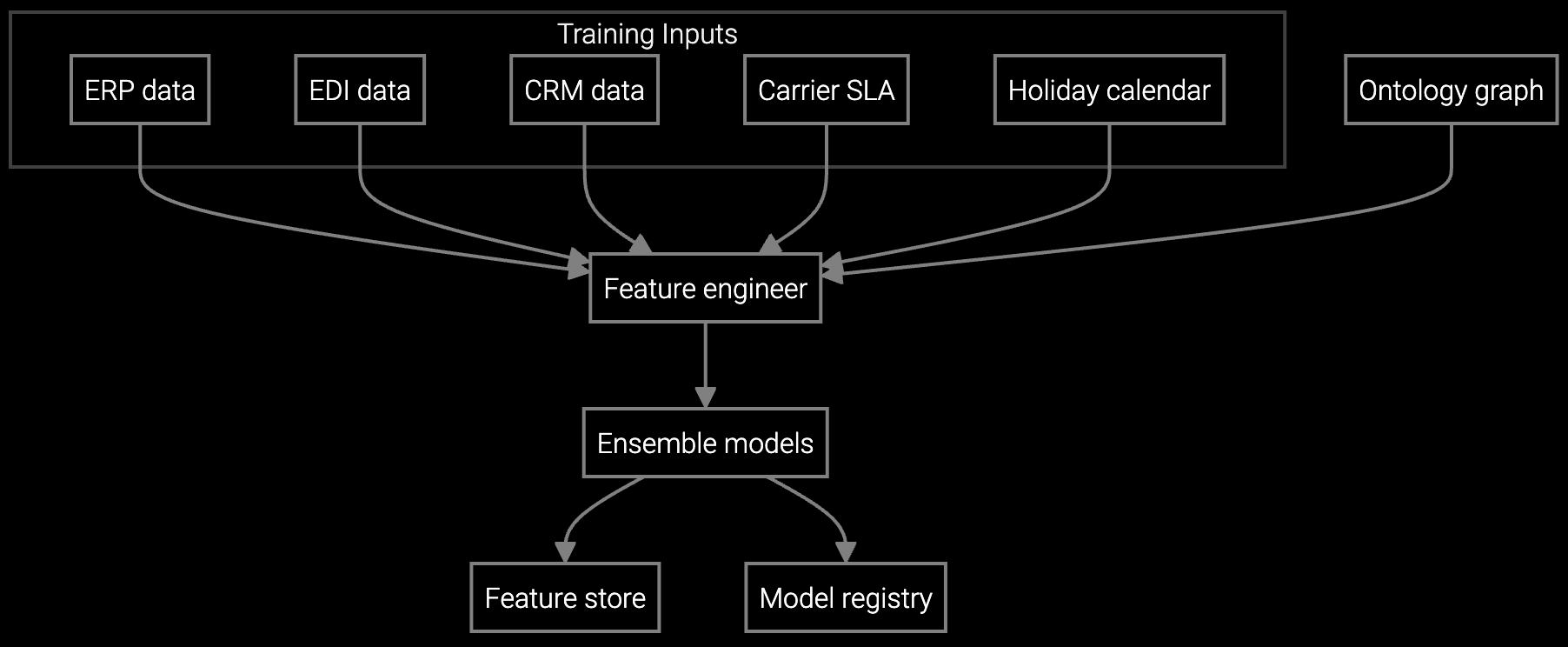
Forecasts demand by CNC model and production year, optimizing stock levels for long-lifecycle industrial machinery while reducing excess inventory costs.
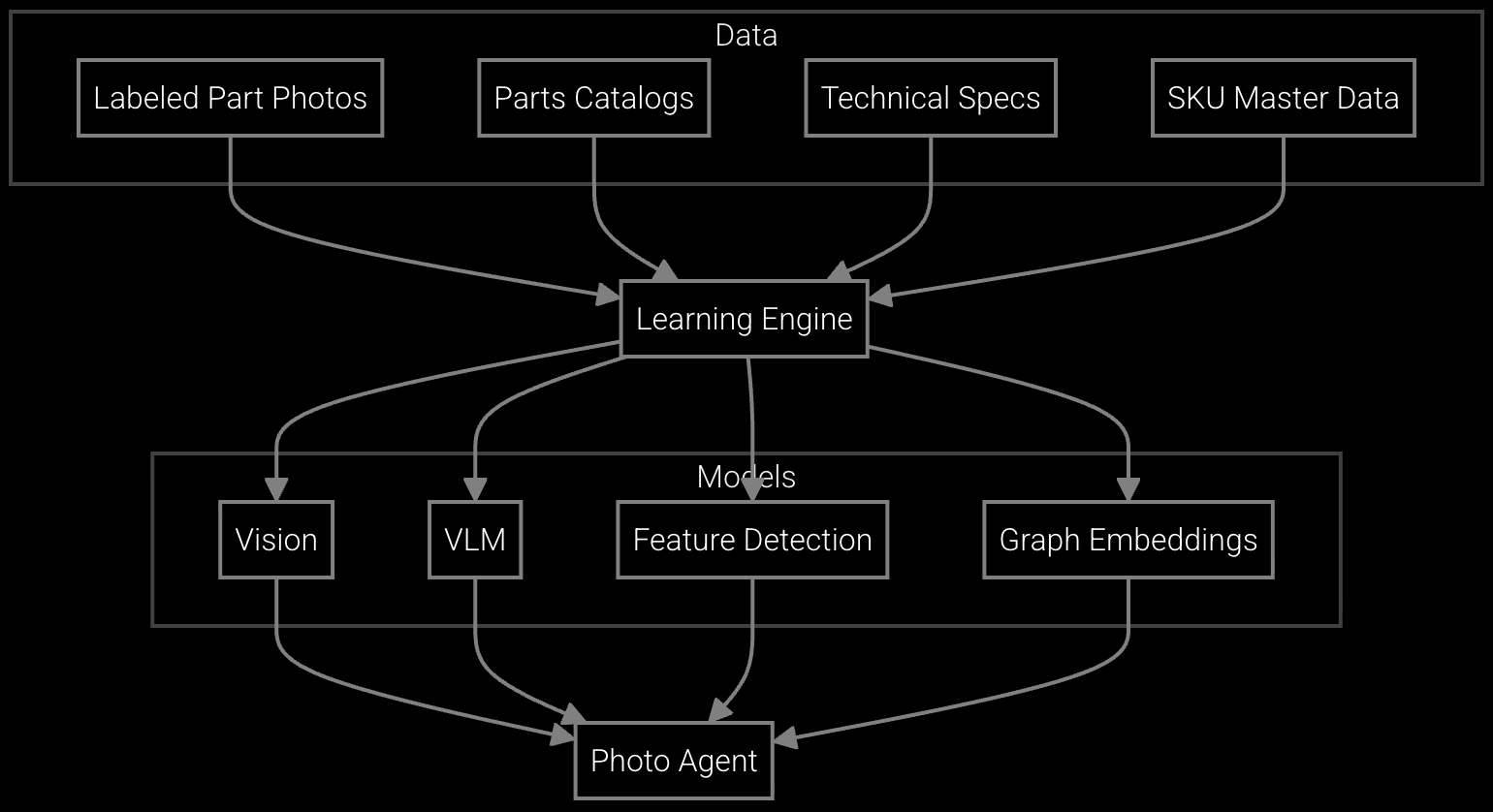
Engineers snap photos of hydraulic valves or motor assemblies to instantly retrieve part numbers and cross-warehouse availability, accelerating quote turnaround.
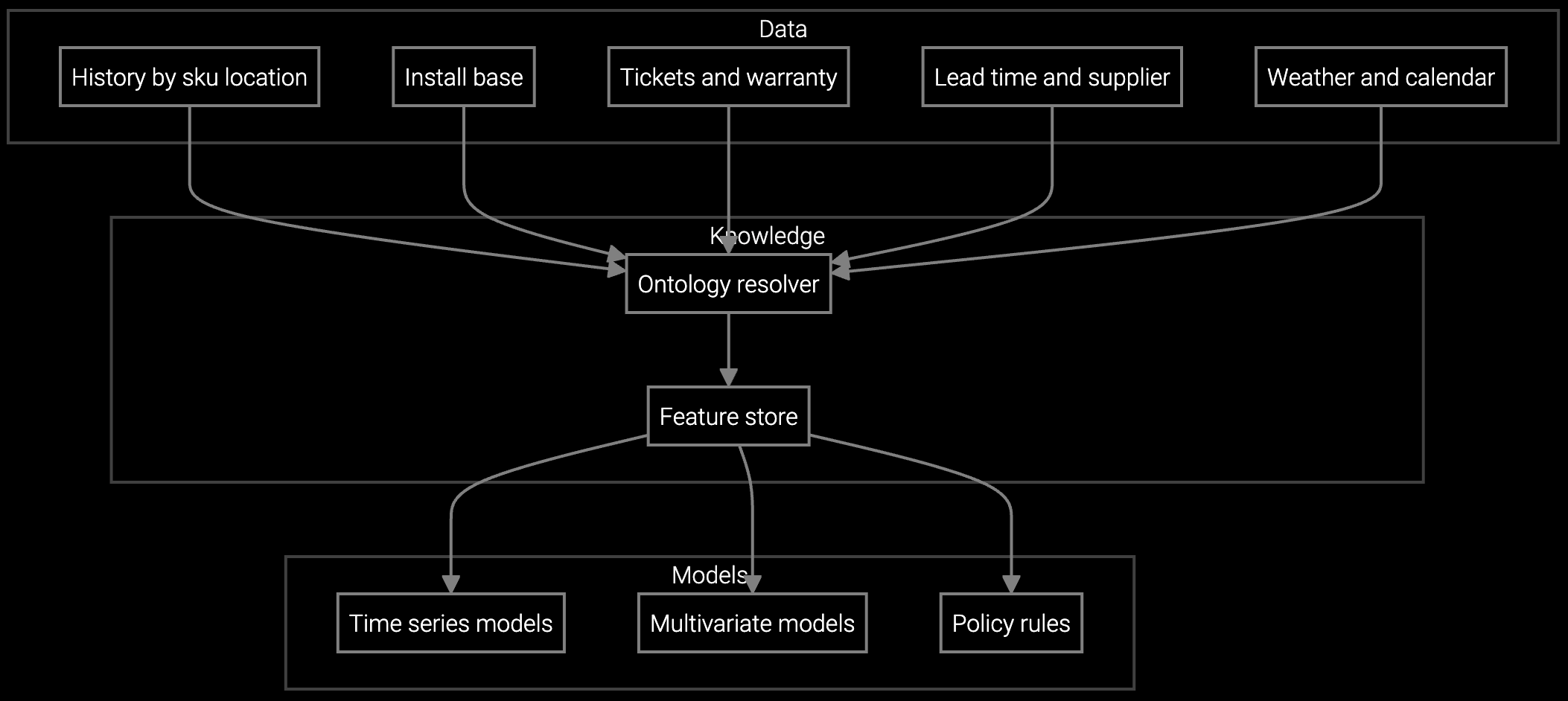
Projects consumption for wear items like seals and bearings based on installed base age, run hours, and seasonal production cycles unique to industrial equipment.
Industrial equipment manufacturers support machinery deployed 15-30 years ago, often with parts superseded multiple generations. Legacy ERP systems store part numbers but lack semantic relationships between superseded components, compatible alternatives, and equipment model variations. Manual lookups require engineers to consult decade-old service bulletins and cross-reference spreadsheets maintained by retiring staff.
API-driven workflows solve this by embedding parts intelligence directly into order entry screens. When a service coordinator enters a legacy part number for a 2008 CNC machine, the API returns the current OEM replacement, three compatible aftermarket alternatives ranked by lead time, and real-time availability across all warehouse locations. Substitute recommendations account for equipment production year and model variant, reducing compatibility errors that delay repairs.
The Parts Intelligence API accepts OEM part numbers and equipment model identifiers, returning ranked alternatives with compatibility scores. Scoring algorithms incorporate production year, service history, and supersession chains. You can retrain the ranking model on proprietary data using the Python SDK to prioritize your preferred suppliers or account for custom modifications.
Forecasting models run continuously and expose results via webhook or polling API. When projected inventory falls below configurable thresholds, the API triggers events your ERP workflow can consume to auto-generate purchase requisitions or send alerts to procurement. All forecast logic runs in your environment so you control approval gates and override rules.
Yes. The platform provides baseline demand models trained on industrial equipment service patterns, but you retrain them using your installed base data, run-hour telemetry, and seasonal production schedules. The Python SDK includes training pipelines that run on your infrastructure, so proprietary data never leaves your environment. You own the trained models.
All APIs use standard REST patterns with JSON responses. Models run in Docker containers you deploy on your infrastructure, and training code is open Python with no proprietary frameworks. If you switch platforms, your integration code works with any inventory system that exposes similar endpoints. You retain full access to trained model weights and can export them in standard formats.
The Inventory Query API federates lookups across warehouse systems defined in your configuration. A single API call returns availability, lead times, and shipping costs from all locations simultaneously. You can filter results by proximity to service site or prioritize warehouses with lower shipping costs. The API handles connection pooling and timeout management across legacy ERP endpoints.

SPM systems optimize supply response but miss demand signals outside their inputs. An AI operating layer makes the full picture visible and actionable.
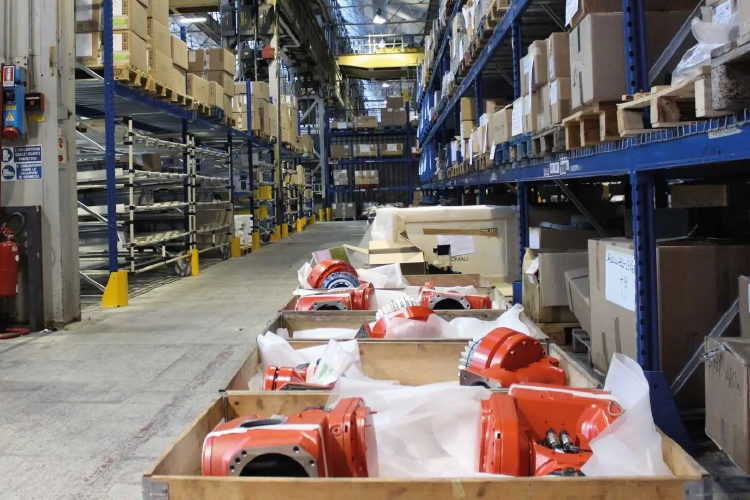
Advanced techniques for accurate parts forecasting.

AI-driven spare parts optimization for field service.
Explore API documentation and integration patterns for industrial parts workflows.
Review Technical Docs