
Every stockout delays service hours. Every excess part ties up capital that could improve uptime elsewhere.
Bruviti deployment data shows a global industrial manufacturer raised first-time fix rate 25% with AI parts intelligence, contributing to $2M in annual savings. Operators see it on the floor: the right part predicted before dispatch means fewer return trips and fewer parts sitting idle waiting on a second visit.
Over-stocking critical parts for CNC machines, pumps, and turbines ties up capital. You carry safety stock because forecasting decades-old equipment failures is guesswork without usage data.
Missing parts for industrial robots or material handling equipment means expedited shipping or production downtime for your customers. Every delay erodes trust and service contract value.
Searching part numbers across legacy systems, PDFs, and regional warehouses burns time when equipment is down. Substitute parts matching for obsolete components takes even longer.
Bruviti's platform connects to your ERP, service records, and installed base telemetry to predict which parts will be needed where and when. Demand forecasting models trained on decades of equipment run hours, failure patterns, and seasonal trends optimize stock levels across warehouses. You reduce excess inventory while improving availability.
The system automates parts lookup and substitute matching directly in your workflow. Snap a photo of a failed component or enter a model number and the platform instantly returns part numbers, current stock levels across all locations, and compatible alternatives for obsolete parts. Service teams spend seconds instead of minutes per lookup, cutting service turnaround time.
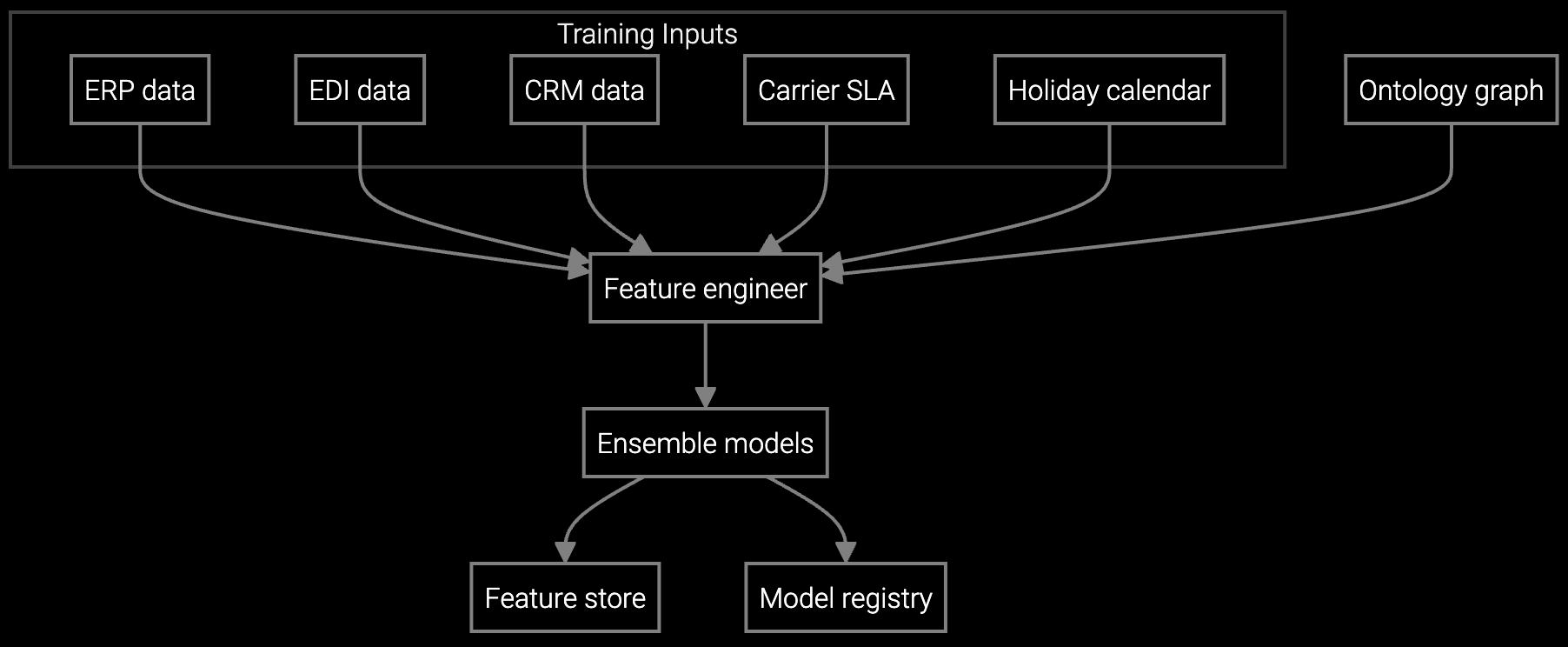
Forecast demand for industrial automation and heavy machinery parts by location and time window, reducing safety stock while maintaining service readiness.
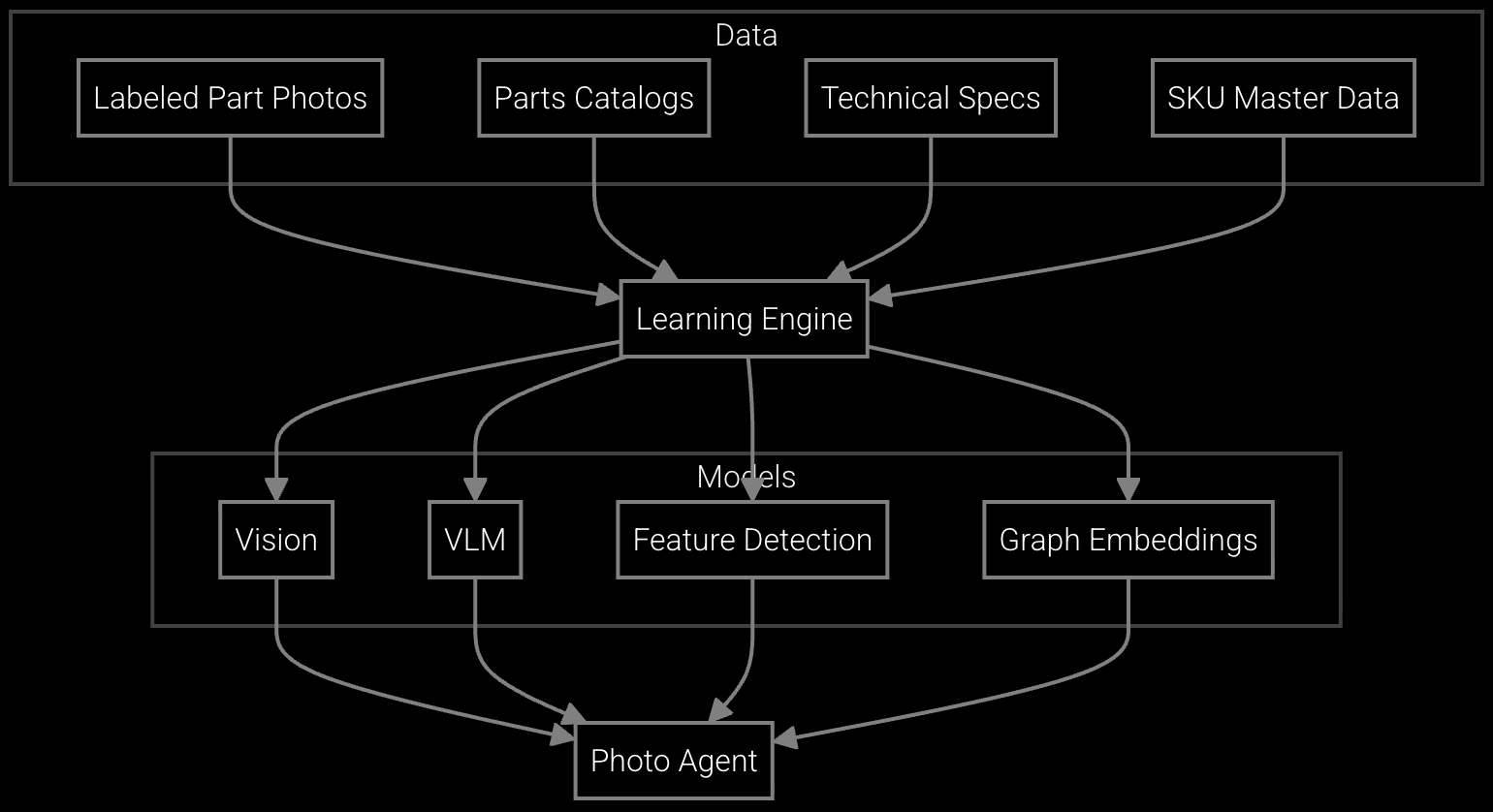
Snap a photo of a CNC component or pump seal and instantly get part numbers, availability, and compatible substitutes for obsolete parts.
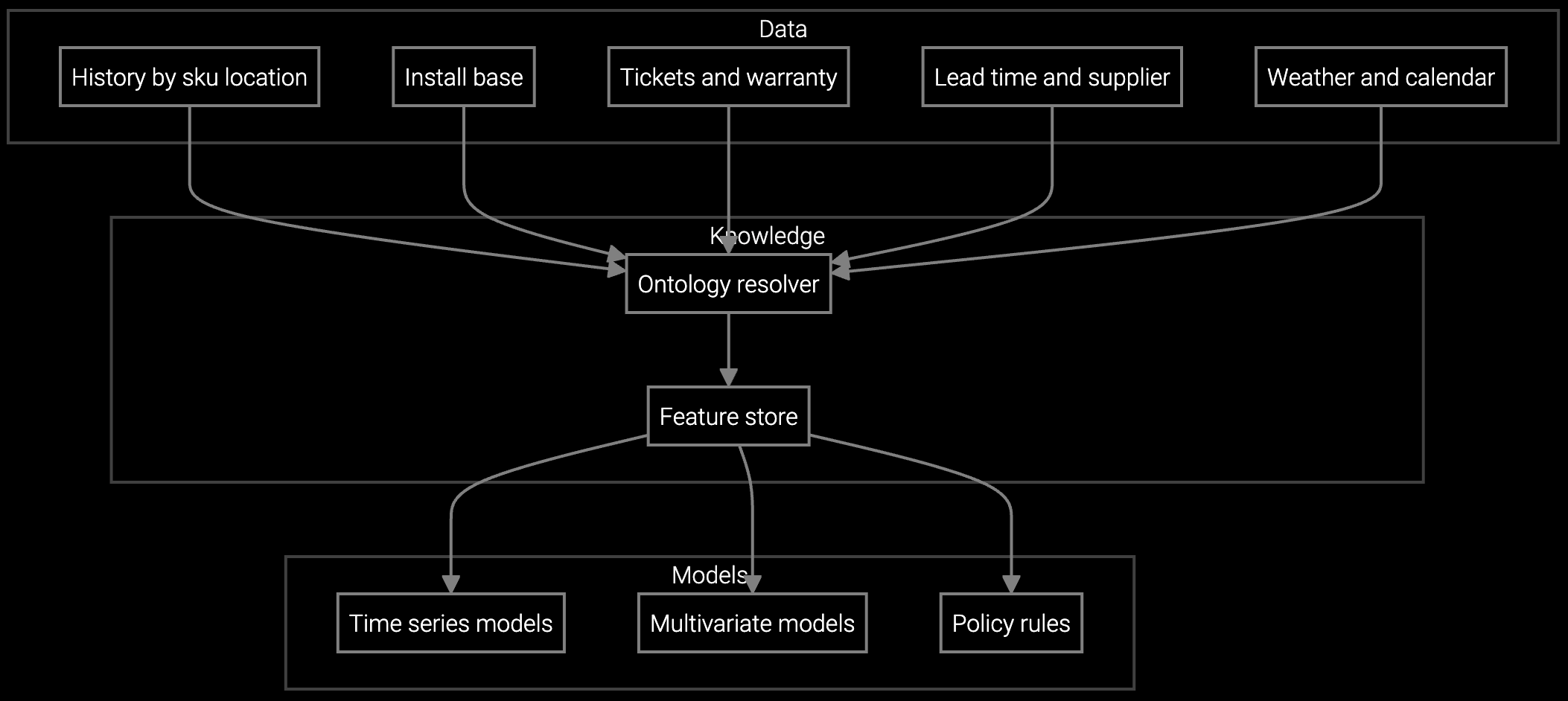
Project consumption for turbines, compressors, and material handling equipment based on installed base age, run hours, and seasonal maintenance cycles.
Industrial manufacturers manage parts for equipment with 10-30 year lifecycles across global installations. CNC machines, industrial robots, pumps, and turbines require different parts availability strategies than consumer products. Safety stock for critical components conflicts with lean inventory goals, and obsolete parts for legacy equipment require substitute matching that manual processes can't scale.
AI demand forecasting leverages telemetry from PLCs and SCADA systems to predict failures before they happen. The platform learns from decades of service records to optimize inventory turns while maintaining fill rates. For operators managing daily parts requests, this means fewer urgent calls about missing stock and faster order fulfillment that keeps customer equipment running.
Industrial manufacturers typically achieve positive ROI within 6-12 months. Early gains come from faster parts lookup and reduced emergency shipping costs. Carrying cost reduction and fill rate improvement compound over the first year as demand forecasting models learn your installed base patterns.
Track inventory turns, fill rate, carrying cost percentage, and emergency shipment frequency. For operational impact, measure average parts lookup time and stockout incidents per month. Compare baseline metrics to 90-day and 180-day results to quantify improvement.
Yes. The platform matches obsolete part numbers to current substitutes using engineering specifications, compatibility data, and service history. It also flags parts approaching end-of-life so you can plan last-time buys before obsolescence creates availability gaps.
AI models combine historical failure data with equipment age, run hours, and maintenance schedules to forecast even infrequent part needs. For high-value components like turbine blades or robot controllers, the platform optimizes safety stock levels to balance carrying cost against stockout risk.
Automated parts lookup eliminates system-switching and manual catalog searches. You see availability across all warehouses in one screen, with substitute options already ranked. Order processing becomes point-and-click instead of copy-paste across multiple systems, cutting turnaround time per request by 40-60%.

SPM systems optimize supply response but miss demand signals outside their inputs. An AI operating layer makes the full picture visible and actionable.
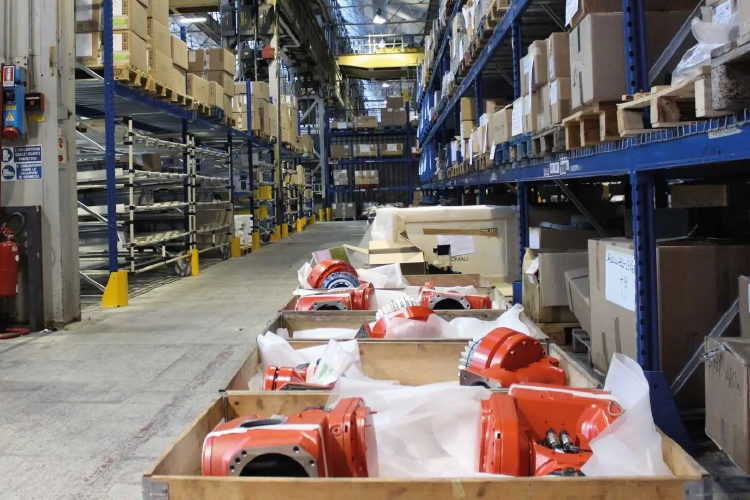
Advanced techniques for accurate parts forecasting.

AI-driven spare parts optimization for field service.
See how AI demand forecasting and automated parts lookup reduce carrying costs and stockouts in your operation.
Schedule Demo