
Legacy parts forecasting fails at industrial scale. Your 30-year equipment lifecycles demand a technical strategy that won't lock you in.
Bruviti deployment data shows a bought parts inventory AI delivers 80% faster planning cycles and under-8% MAPE on A-class SKUs out of the box. For industrial OEMs weighing build vs buy, that benchmark is the bar an in-house team must clear before a from-scratch forecasting model justifies its cost.
Custom forecasting models require dedicated ML engineers, ongoing model retraining pipelines, and continuous data labeling. Industrial equipment complexity makes general-purpose models ineffective without domain expertise embedded in the architecture.
Closed inventory platforms trap your data in proprietary schemas. When forecasting accuracy degrades or business needs change, you cannot retrain models or extract historical data without vendor cooperation. API restrictions limit integration with your existing SAP or Oracle systems.
Legacy integrations create brittle point-to-point connections between ERP, warehouse management, and forecasting systems. Each new data source requires custom ETL development. Model updates risk breaking downstream dependencies that teams forgot existed.
The optimal strategy combines pre-built foundation models with open APIs that preserve technical control. Bruviti's platform gives you Python SDKs and REST endpoints to customize demand forecasting for industrial equipment lifecycles while avoiding the infrastructure overhead of building from scratch.
The architecture separates model inference from your data layer. Your SAP installation history, warranty claims, and SCADA sensor data remain in your warehouse. API calls execute forecasting logic server-side and return JSON predictions your applications consume. When forecasting accuracy needs tuning, retrain models using your own labeled data through the Python SDK without vendor gatekeeping.
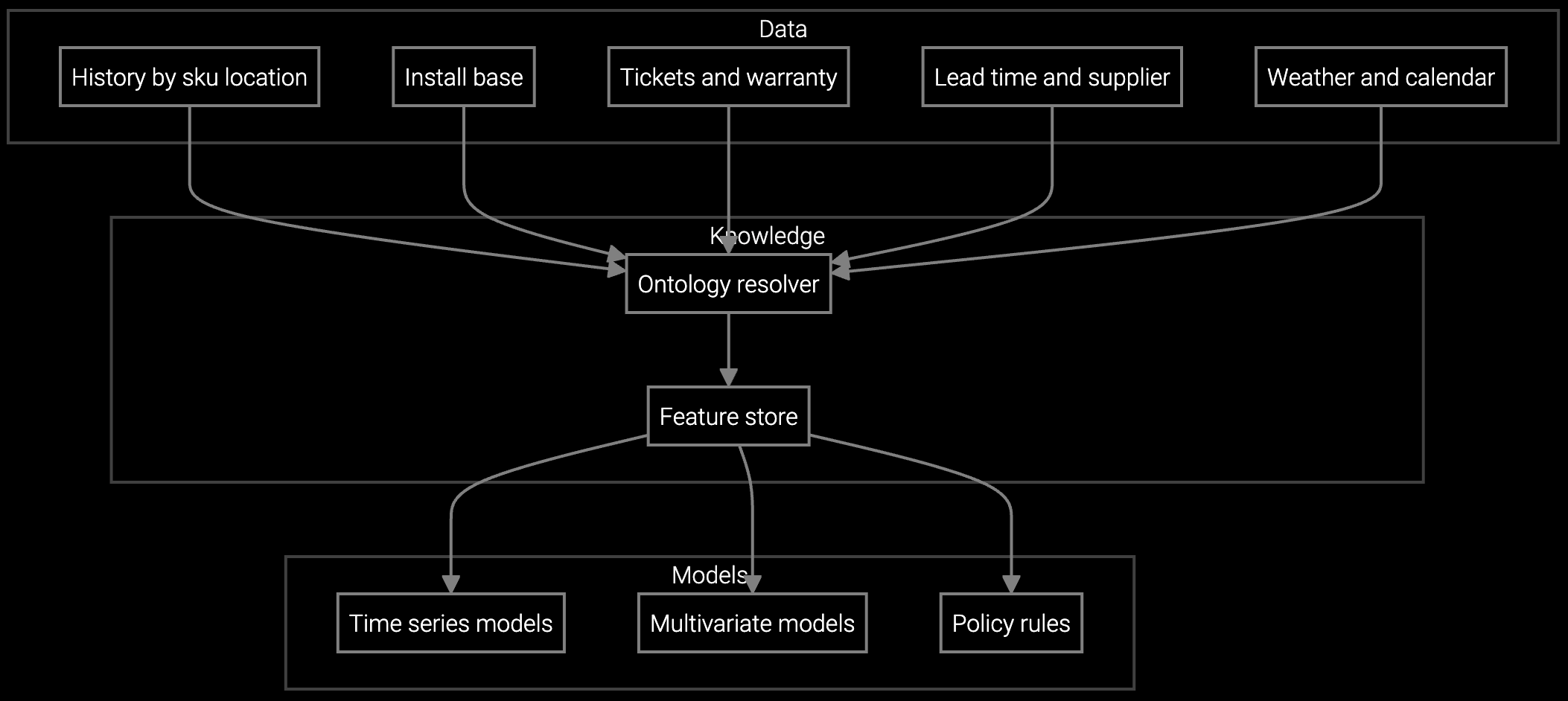
Train models on CNC machine age, run hours, and historical failure patterns to predict quarterly parts consumption by SKU and warehouse location.
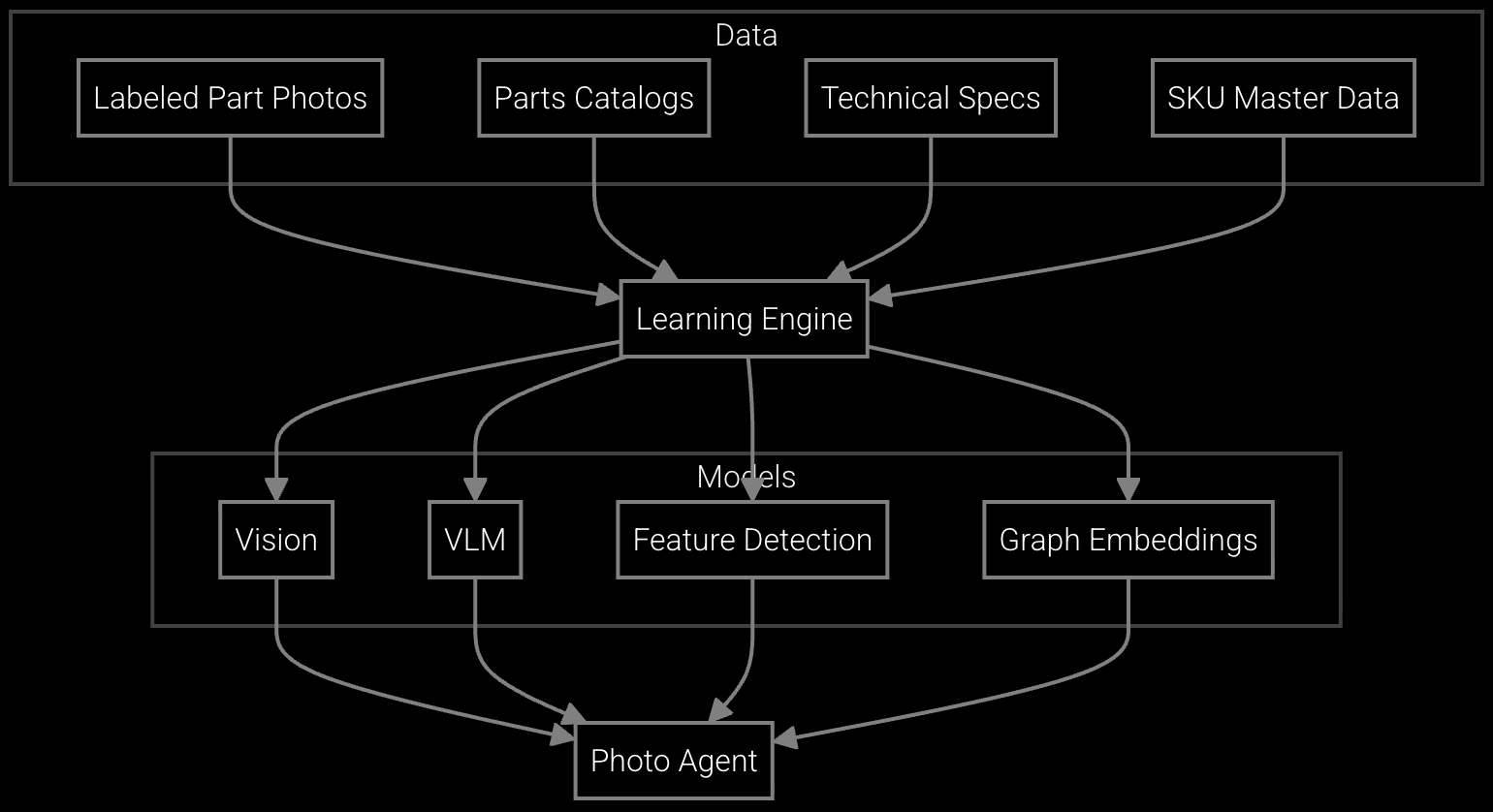
Integrate computer vision APIs into field service mobile apps to identify obsolete pump components and suggest current substitutes from your parts catalog.
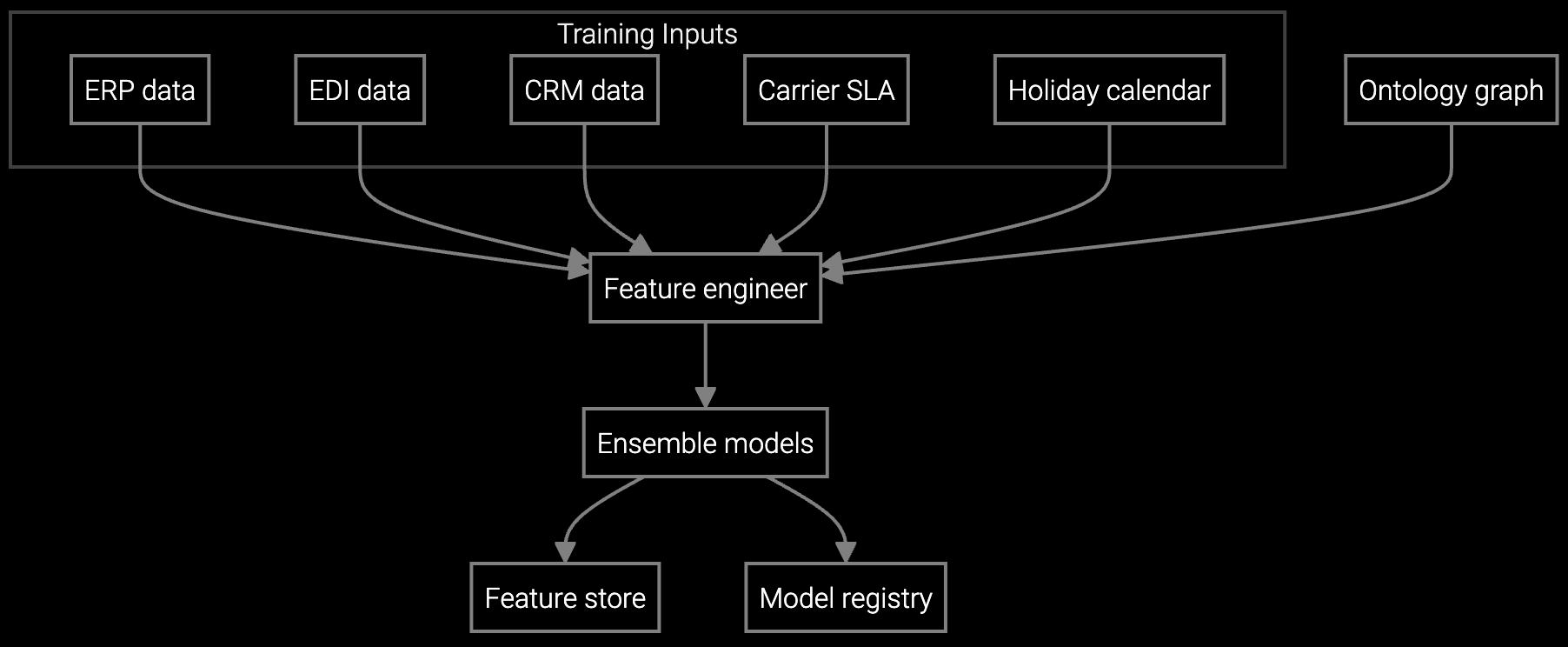
Use time-series APIs to optimize stock levels for turbine components, balancing carrying costs against stockout risk across multi-tier distribution networks.
Industrial machinery presents unique forecasting challenges. A CNC machine deployed in 1998 still requires service parts in 2025, but the original BOM data may exist only in legacy AS/400 systems. Equipment modifications over decades create configuration drift that invalidates factory-fresh forecasting assumptions.
The technical strategy must handle sparse data for obsolete components while scaling to high-volume forecasting for current production lines. API-first architectures let you connect historian databases storing 30 years of SCADA data alongside modern IoT telemetry from recently deployed equipment. Python SDKs enable feature engineering that accounts for equipment age, usage intensity, and regional operating conditions without rewriting core forecasting logic.
Yes. Bruviti supports ONNX model export, allowing you to deploy trained models in your own inference infrastructure. This eliminates runtime API dependencies for latency-sensitive applications while preserving the ability to retrain models using the cloud platform when forecasting accuracy requires updates.
The platform supports regional data residency. EU customer data stays in EU data centers, meeting GDPR requirements. API endpoints route to geographically appropriate instances based on authentication tokens. You control which datasets cross regional boundaries through API configuration rather than vendor policies.
Python and TypeScript SDKs are production-ready. Python SDK includes scikit-learn integration for custom feature engineering. TypeScript SDK supports Node.js backend integration and browser-based applications. REST APIs work with any language capable of HTTP requests, providing flexibility when SDKs don't fit your stack.
Traditional platforms store your data in proprietary schemas with limited export options. API-first architectures keep your data in your warehouse. The platform accesses data through APIs you control, executes forecasting logic, and returns predictions. If you change vendors, your historical data and integrations remain intact because they never migrated to vendor infrastructure.
Most industrial OEMs reach production in 8-12 weeks. Week 1-3 covers API authentication and initial data pipeline integration. Week 4-8 focuses on model training using historical parts consumption data. Week 9-12 handles production validation and integration with existing inventory management workflows. Timeline depends on data quality and organizational change management rather than technical complexity.

SPM systems optimize supply response but miss demand signals outside their inputs. An AI operating layer makes the full picture visible and actionable.
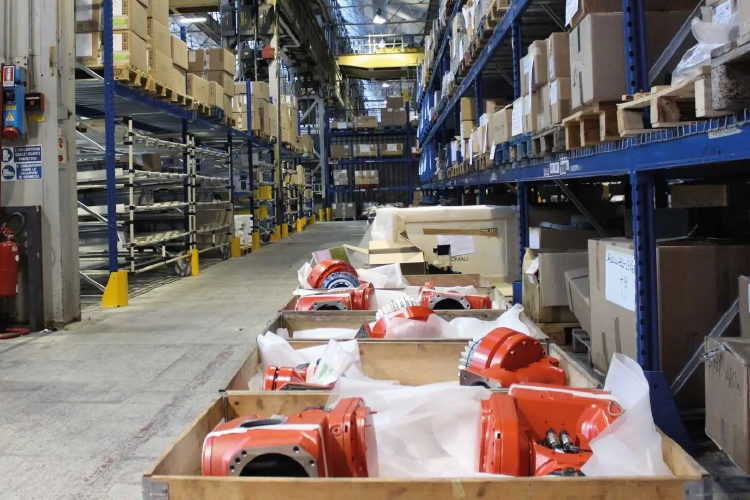
Advanced techniques for accurate parts forecasting.

AI-driven spare parts optimization for field service.
Explore how API-first design preserves technical control while accelerating deployment.
Schedule Technical Review