
Different agents giving conflicting answers on legacy machinery failures erodes customer trust and drives repeat contact volume.
Bruviti deployment data shows AI lifts first-call resolution 16% and cuts call volume 35% by giving every agent the same vetted answers in industrial equipment support. Executives close the consistency gap because junior and veteran agents now resolve cases from one source of truth, not personal recall.
Agents search across service manuals, internal wikis, email threads, and tribal knowledge from senior staff. No single source of truth means resolution quality depends on which agent answers the call and which system they remember to check.
Senior agents resolve complex machinery issues in one call. Junior agents escalate or provide incomplete guidance. Turnover and retirements widen the consistency gap, increasing cost per contact and customer frustration.
Equipment runs for decades but manuals freeze at initial release. Undocumented field fixes and engineering bulletins live in email. Agents improvise answers rather than reference guidance that doesn't exist in searchable form.
Bruviti consolidates historical case data, service bulletins, parts catalogs, and failure pattern analysis into a single AI-powered retrieval system. When an agent receives a call about a CNC machine alignment error or a compressor vibration issue, the platform surfaces the exact resolution steps that worked in similar cases, regardless of which system originally housed that knowledge.
The AI learns from every resolved case, capturing undocumented fixes and refining guidance over time. Junior agents access the same diagnostic logic that senior staff would apply, standardizing response quality across the contact center. Customers receive consistent answers whether they call the first time or escalate later.
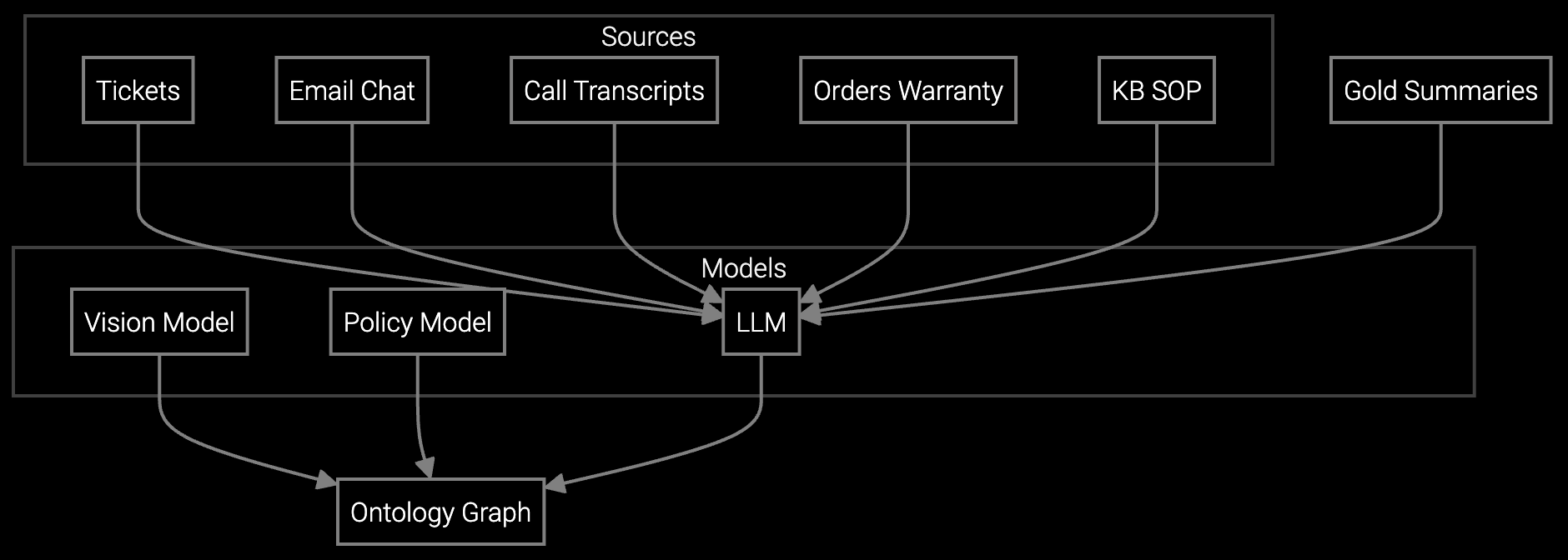
Instantly generates case summaries from emails, call transcripts, and service logs for multi-year equipment relationships, giving agents complete context without reading decades of interaction history.
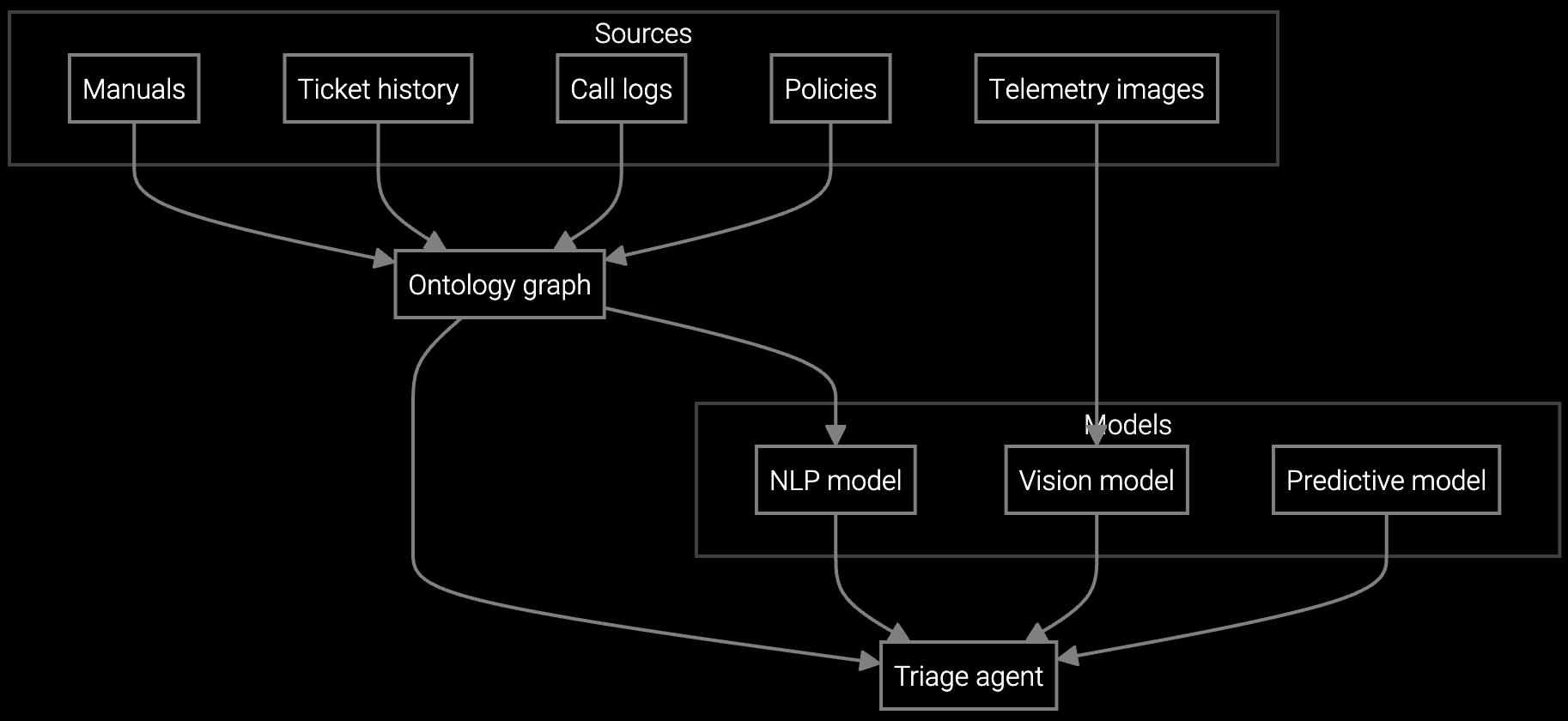
Autonomous case classification analyzes symptoms against historical failure modes for pumps, turbines, and heavy machinery, routing issues to the right specialist with diagnostic context already attached.
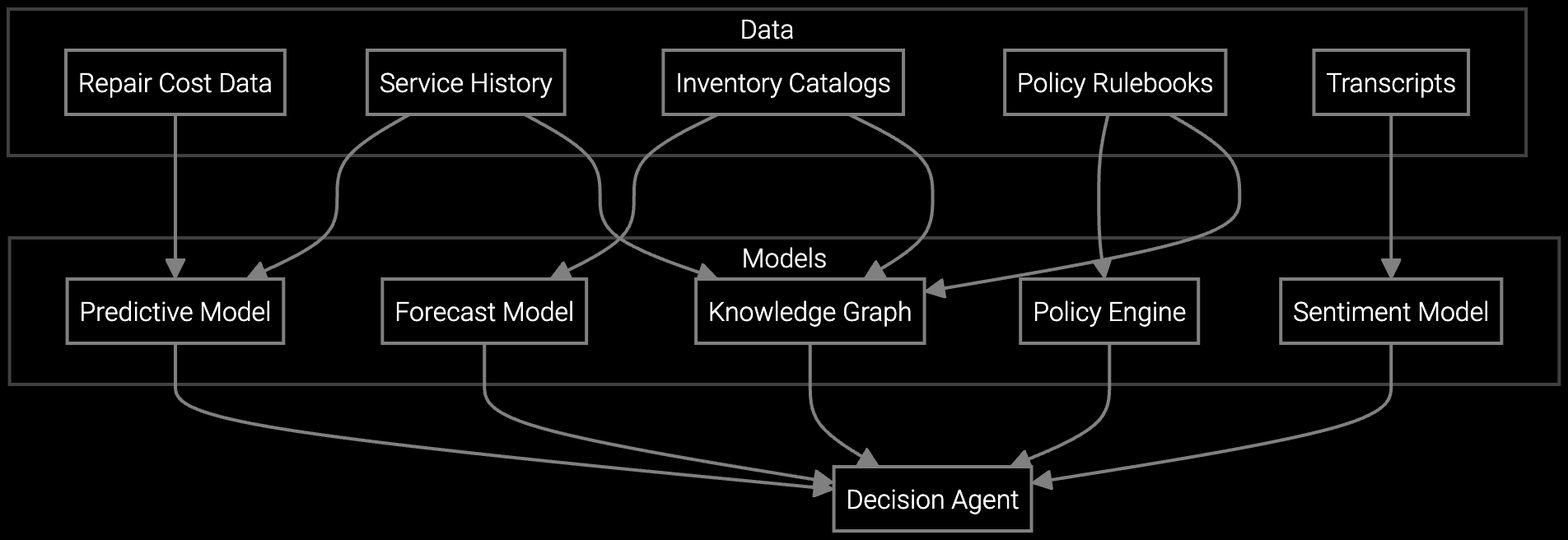
AI analyzes equipment age, failure mode, parts cost, and remaining service life to recommend the most cost-effective resolution for aging industrial machinery, standardizing recommendations across agents.
Industrial machinery manufacturers support equipment in the field for 10 to 30 years. Original engineering staff retire, taking institutional knowledge with them. Service bulletins accumulate in email inboxes. Field fixes never make it back to documentation. Agents inheriting this fragmented legacy struggle to provide consistent guidance on aging CNC machines, robotic systems, or material handling equipment where every installation has unique modifications.
Contact centers handle diverse customer bases ranging from automotive plants running precision machinery to remote mining operations with heavy equipment. Customer expectations for uptime are unforgiving—downtime costs thousands per hour. Inconsistent agent responses directly impact customer production schedules and erode confidence in the OEM's support capability.
Knowledge fragmentation across service manuals, email threads, tribal knowledge, and outdated documentation. Agents lack a single authoritative source, so response quality depends on individual experience and which system they remember to check. Senior staff retirements worsen the gap over time.
AI consolidates historical case resolutions, service bulletins, and failure patterns into a unified retrieval layer. When an agent receives a query, the system surfaces the exact steps that worked in similar cases, standardizing guidance regardless of which agent responds or their tenure.
First Contact Resolution rates typically improve within 60 to 90 days of deployment. Track FCR variance across agents and case categories before and after implementation. Reduction in repeat contact rates and improvement in CSAT scores provide quantifiable consistency metrics.
AI learns from resolved case history, capturing how senior agents actually solve problems rather than relying solely on formal documentation. As agents use the system, it absorbs successful resolution patterns and surfaces them for future cases, codifying tribal knowledge over time.
The platform integrates via API with CRM, ERP, and ticketing systems to pull customer history, parts availability, and warranty data. Agents access AI guidance within their existing workflow, eliminating the need to switch between multiple knowledge systems during customer interactions.

Understanding and optimizing the issue resolution curve.
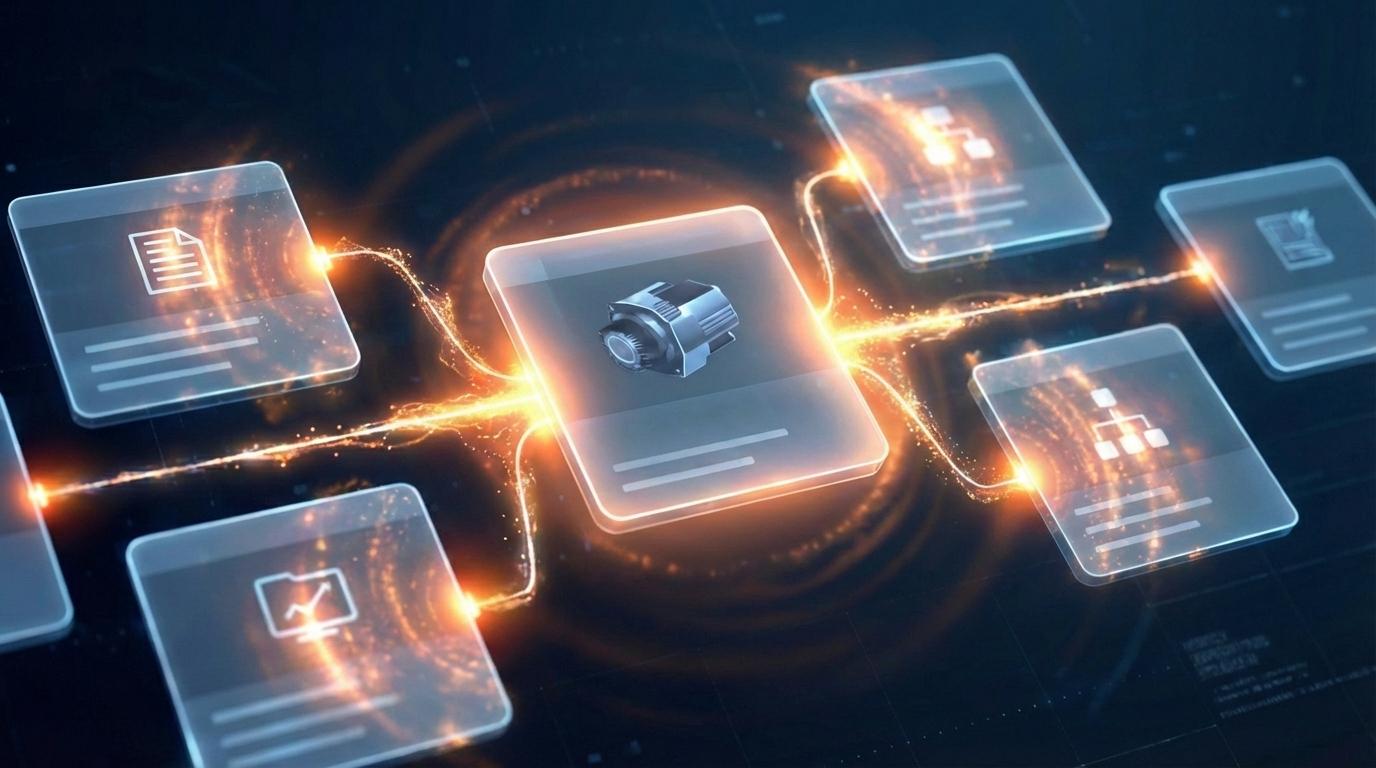
Software stocks lost nearly $1 trillion in value despite strong quarters. AI represents a paradigm shift, not an incremental software improvement.
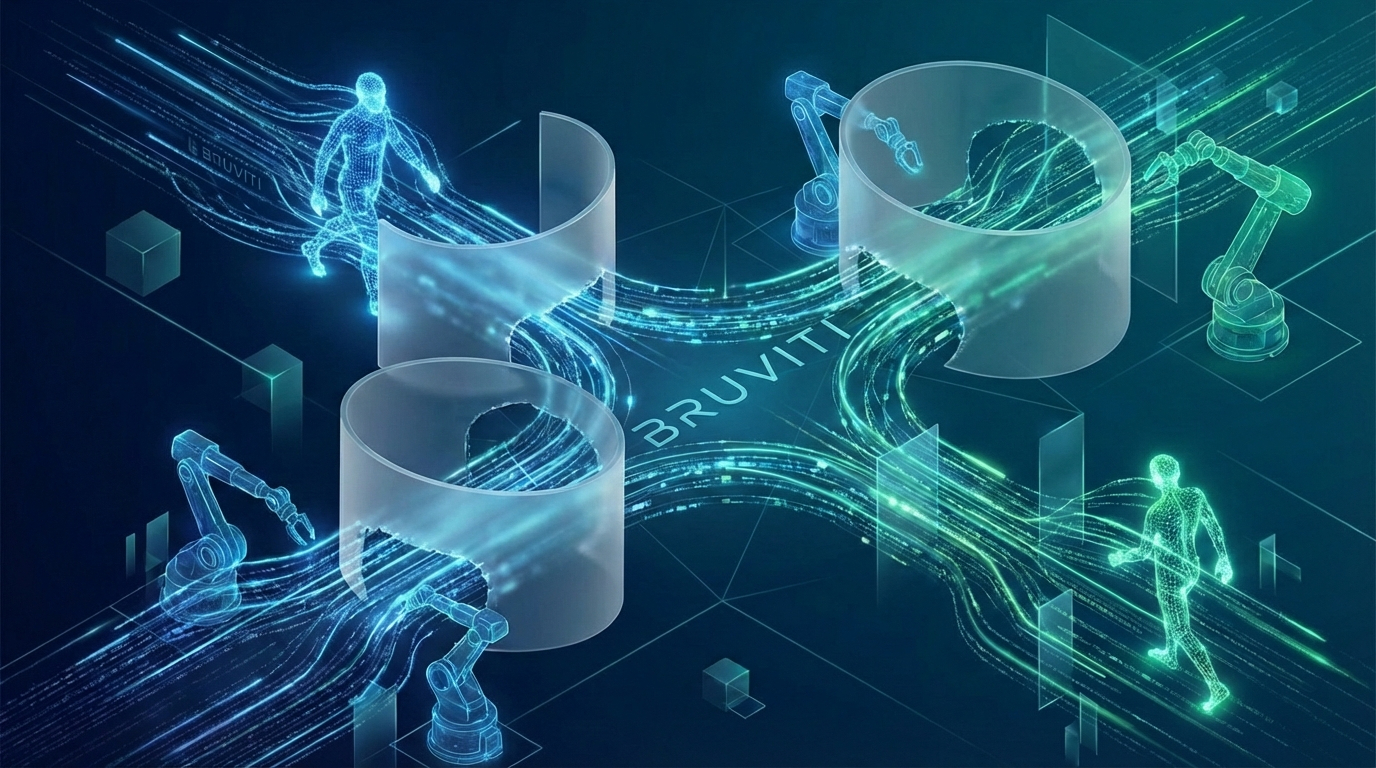
Function-scoped AI improves local efficiency but workflow-native AI changes cost-to-serve. The P&L impact lives in the workflow itself.
See how AI-powered knowledge retrieval eliminates response inconsistency and improves First Contact Resolution.
Schedule Demo