
Fab equipment warranty costs exceed $50M annually—choosing the wrong AI strategy delays NFF reduction by 18 months.
Proven warranty claims automation cuts processing time 90% and clears claims in under 1 minute for semiconductor OEMs, per Bruviti deployment data. Operators choosing build vs buy compare that against the manual 8-12 minutes per claim. Buying a tested platform delivers the speed and consistency without staffing a build team.
Building warranty AI in-house requires hiring specialized data scientists, assembling training datasets from fragmented sources, and tuning models over multiple failure cycles. By the time internal systems deliver results, warranty reserves have already eroded.
Semiconductor failure patterns reveal competitive process intelligence. Third-party warranty platforms that commingle OEM data create IP leakage risk. Internal builds avoid this but require dedicated infrastructure and security expertise.
Warranty volume fluctuates with product launches and fab expansions. Internal systems require upfront infrastructure provisioning. Cloud platforms scale on demand but lock in operational dependencies that constrain future architecture choices.
The optimal warranty AI strategy for semiconductor OEMs combines pre-trained foundation models with API-first architecture that keeps proprietary failure data on-premises. Bruviti's platform deploys in 90 days with pre-built claims coding and NFF detection models trained on cross-industry patterns, then fine-tunes using your equipment-specific telemetry without data leaving your environment.
This approach delivers immediate NFF reduction while preserving the customization control of internal builds. Your warranty team processes claims through a single interface that routes entitlement verification, fraud detection, and RMA generation automatically. When process requirements change, your engineering team extends the platform through open APIs rather than waiting for vendor roadmaps or rebuilding internal systems.
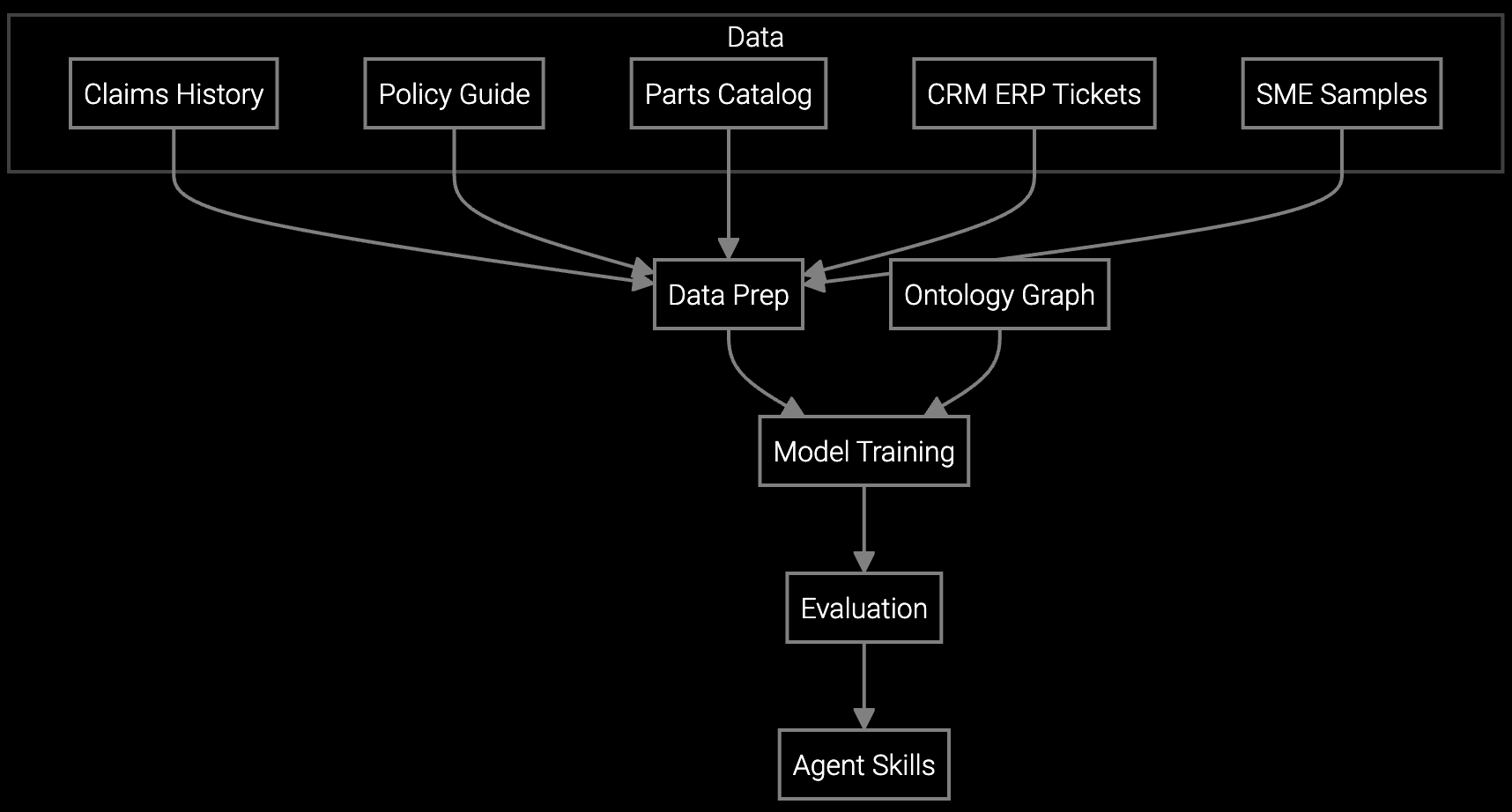
Automatically classify etch tool and lithography system claims by failure mode, reducing manual coding time from 8 minutes to 30 seconds per claim.
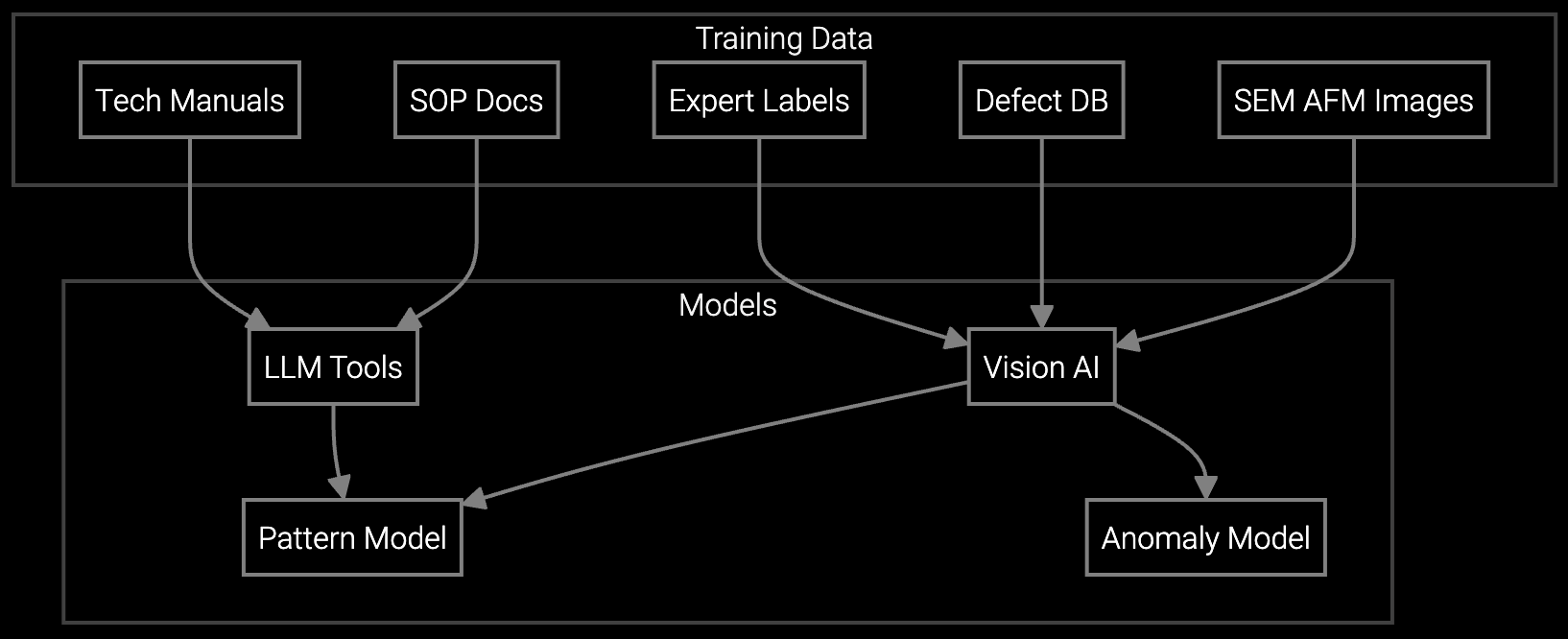
Analyze microscopic images from returned wafer inspection tools to validate defect claims and eliminate fraudulent returns masking process issues.
Semiconductor capital equipment OEMs face unique warranty pressures: $1M+ hourly downtime costs drive customers to aggressively claim defects, while sub-5nm precision makes genuine failure root cause determination highly technical. Chamber component lifecycles vary by recipe, making predictive warranty modeling complex.
Internal builds give complete control over proprietary process correlation algorithms but require rare expertise in both semiconductor physics and machine learning. Platform approaches offer faster deployment but historically required data sharing that exposes competitive intelligence about failure modes, mean time between chamber cleans, and consumable wear patterns.
Internal builds require 12-18 months minimum. First 4-6 months cover hiring data scientists with semiconductor domain knowledge and assembling training datasets from warranty systems, service logs, and equipment telemetry. Next 6-9 months involve model development and validation across multiple failure modes. Final 2-3 months handle integration with existing RMA and entitlement systems. Most OEMs underestimate data quality issues that extend timelines by 30-40%.
Traditional SaaS warranty platforms require uploading failure telemetry and claim histories to vendor clouds, creating IP leakage risk. Failure pattern correlations reveal process maturity, equipment reliability baselines, and customer fab utilization rates. Commingled data models risk cross-contamination where one OEM's failure insights inform predictions for competitors. On-premises deployment or federated learning architectures eliminate these risks by keeping proprietary data isolated.
API-first platforms enable gradual component replacement without workflow disruption. Start by deploying pre-built claims coding and fraud detection models while your team builds specialized algorithms for recipe-specific failure prediction. As internal capabilities mature, replace platform modules through standard API interfaces. This phased approach delivers immediate NFF reduction while preserving long-term architectural flexibility. Avoid platforms with proprietary data formats that complicate future migration.
CFOs focus on warranty reserve accuracy and total warranty cost as percentage of revenue. Track NFF rate reduction quarterly—40% improvement within 6 months demonstrates clear impact. Measure claims processing time to show operational efficiency gains. For strategic credibility, correlate warranty insights with product quality improvements by linking failure patterns back to manufacturing process adjustments. Document prevented fraudulent claims in dollar terms to quantify risk mitigation value.
New equipment categories like EUV lithography systems lack historical warranty data for model training. Platform approaches offer pre-trained foundation models from adjacent equipment types that transfer learn using your first 90 days of claim data. Internal builds require waiting 12-18 months to accumulate sufficient failure examples before modeling begins. Hybrid strategies train general failure classification on platform models, then fine-tune equipment-specific predictors as data accumulates, balancing speed and customization.
Software stocks lost nearly $1 trillion in value despite strong quarters. AI represents a paradigm shift, not an incremental software improvement.

Function-scoped AI improves local efficiency but workflow-native AI changes cost-to-serve. The P&L impact lives in the workflow itself.

Five key shifts from deploying nearly 100 enterprise AI workflow solutions and the GTM changes required to win in 2026.
See how Bruviti's API-first platform delivers 90-day NFF reduction while preserving your architectural control.
Schedule Strategy Session