
Your veteran technicians are retiring and $1M/hour downtime makes every troubleshooting delay catastrophic.
Bruviti deployment data shows AI lifting first-time fix rate from 75-80% to 88% on field-serviced equipment. The signal to move: when manual FTFR plateaus in the 75-80% range and repeat visits to fab tools start eating uptime, AI-assisted diagnostics is the next step that reliably closes that gap.
Senior technicians who understand chamber behavior patterns and recipe interactions are retiring faster than new hires can learn. Tribal knowledge about EUV tool quirks and preventive adjustments disappears with them.
Sub-5nm lithography and etch tools have 2,000+ sensors and interdependent process parameters. New technicians spend months learning diagnostics that AI can execute in seconds once patterns are modeled.
Every minute a lithography tool is down costs $16,000 in lost wafer throughput. Manual log analysis and step-by-step troubleshooting add 30-90 minutes to mean time to repair when AI could isolate root cause instantly.
The strategic timing question isn't whether to adopt AI-assisted diagnostics—it's when the cost of waiting exceeds the cost of implementation. For fab equipment, three triggers signal readiness: veteran technician retirements creating knowledge gaps, tool complexity overwhelming manual troubleshooting capacity, and downtime costs high enough that speed improvements deliver measurable ROI within 6 months.
The platform ingests telemetry from process tools and correlates sensor patterns with historical failure modes captured from experienced technicians. Instead of asking technicians to memorize 2,000 parameters across EUV, etch, and deposition tools, the system presents root cause analysis and recommended fixes in seconds. Technicians validate findings rather than starting from scratch, cutting MTTR by 40% on high-complexity tools where tribal knowledge previously drove resolution speed.
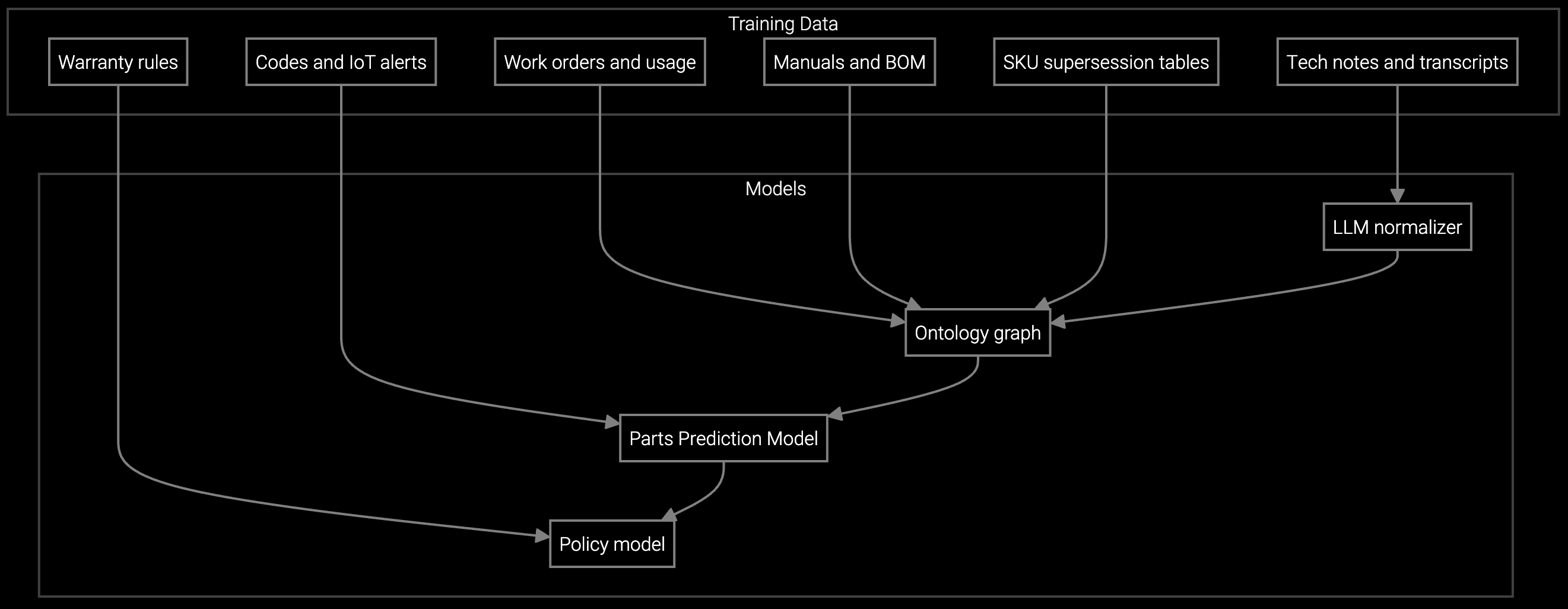
Predicts which chamber kits and consumables technicians need before dispatching to EUV or etch tools, eliminating return trips that add 4+ hours to repair cycles.
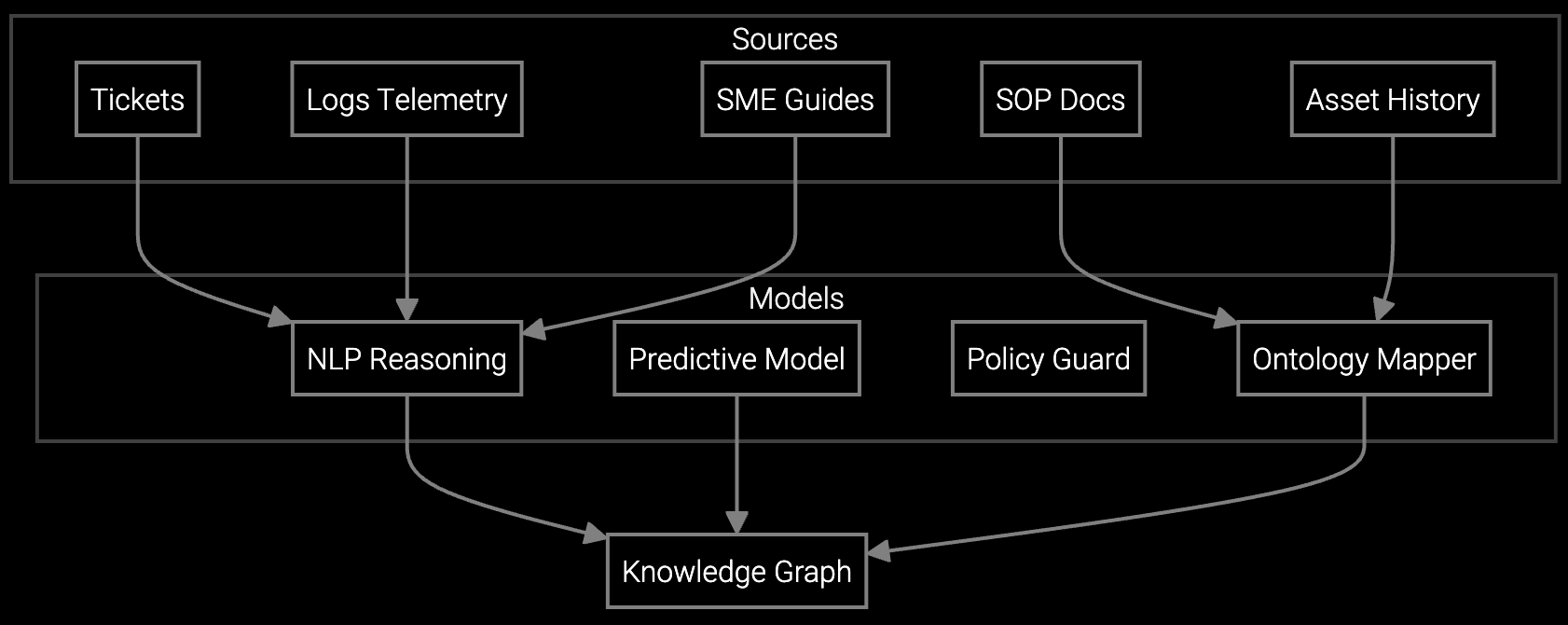
Correlates recipe drift symptoms with historical failure patterns from veteran technicians to isolate root cause in minutes instead of hours on complex lithography tools.
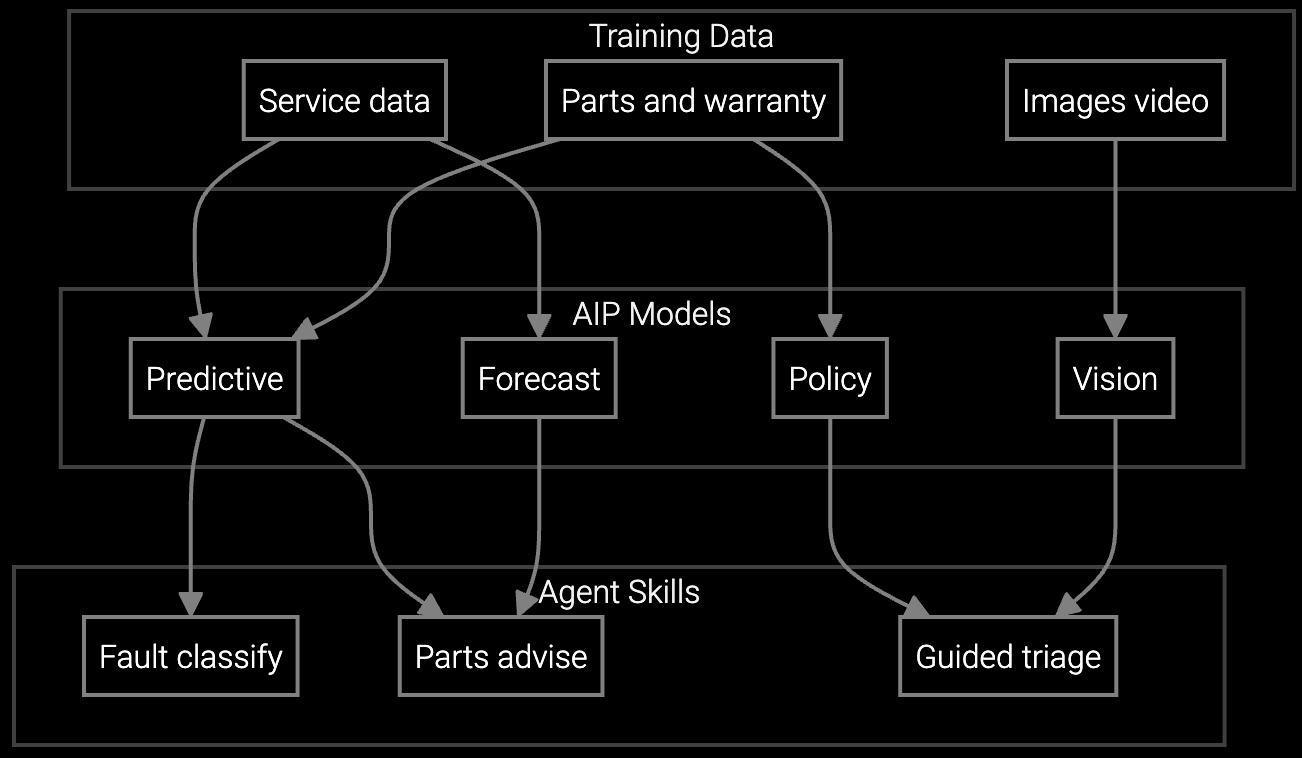
Mobile copilot provides real-time repair procedures and diagnostic recommendations specific to tool model and failure mode, eliminating manual searches through 500-page equipment manuals.
Semiconductor equipment operates at the edge of physics—sub-5nm features, nanometer precision, and microsecond timing windows. A single lithography tool represents $150M in capital investment and generates $300M in annual wafer revenue. When that tool goes down, OEE targets collapse and customer commitments slip within hours.
Your technicians service equipment where recipe interactions and chamber condition affect yield across hundreds of process steps. Manual diagnostics work when problems are simple, but recipe drift, contamination sources, and multi-variable failures require pattern recognition across terabytes of sensor logs. AI diagnostics become strategic when the complexity and financial stakes exceed human troubleshooting speed.
Prioritize tools where downtime cost per hour multiplied by frequency of unplanned stops delivers the highest annual impact. EUV lithography and critical etch tools typically top the list because $1M/hour downtime and 8-12 unplanned stops per quarter generate $10M+ in annual exposure. Start where financial justification is clearest and tribal knowledge risk is highest.
Position AI as a copilot that validates their expertise rather than replacing judgment. Show technicians how the system captures their troubleshooting patterns and makes that knowledge accessible to newer team members. Adoption accelerates when veterans see AI as a tool to extend their influence beyond retirement rather than a threat to job security.
Initial models deploy in 4-6 weeks using historical sensor logs, work order notes, and technician interviews to capture failure patterns. Accuracy improves continuously as the system observes real repairs and technicians validate or correct recommendations. Most fabs see 80% diagnostic accuracy within 90 days on modeled tool types.
Yes. The platform connects via APIs to FSM systems like ServiceMax or SAP, presenting root cause analysis and parts recommendations directly in the technician's mobile work order interface. No separate app or context-switching required—diagnostics appear as an additional tab within existing workflows.
Technicians always validate AI recommendations before acting—the system presents confidence scores and supporting evidence for each diagnosis. When misdiagnoses occur, technician corrections feed back into the model to improve accuracy. Most fabs find that even imperfect AI recommendations reduce troubleshooting time by surfacing relevant historical cases faster than manual searches.
How AI bridges the knowledge gap as experienced technicians retire.
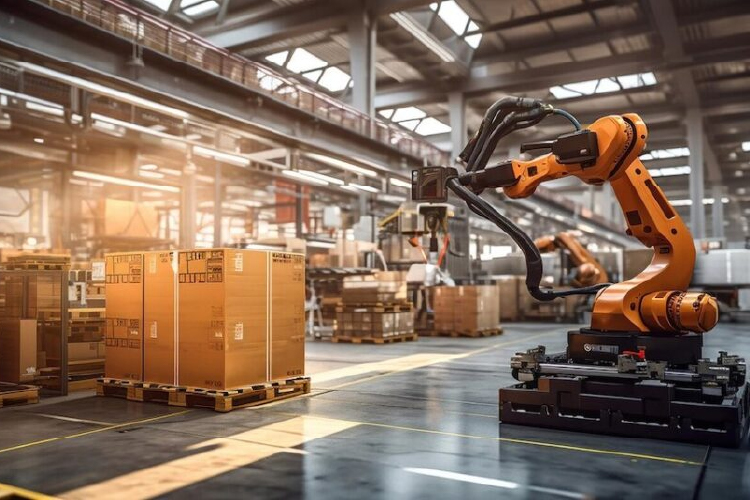
Generative AI solutions for preserving institutional knowledge.

AI-powered parts prediction for higher FTFR.
See how Bruviti helps semiconductor OEMs reduce MTTR and preserve technician expertise before it retires.
Schedule Demo