
Manual claim validation drains margins as warranty reserves spiral—semiconductor OEMs need end-to-end automation to protect profitability.
End-to-end warranty automation auto-codes 75-85% of semiconductor claims and auto-adjudicates 60-80%, per Bruviti deployment data. Executives get a workflow where most claims close untouched, analysts handle only exceptions, and 200-300 analyst hours per month return to higher-value work across the returns operation.
Warranty specialists manually cross-reference serial numbers, purchase dates, and configuration data across multiple systems to validate coverage—creating claim processing delays that frustrate fab operators and slow issue resolution.
High-value semiconductor equipment generates unpredictable warranty costs when claims lack systematic validation—invalid returns and unclear failure patterns make reserve forecasting unreliable and margin protection difficult.
Warranty teams lack tools to identify patterns indicating misuse, coverage misrepresentation, or repeat fraudulent submissions—allowing invalid claims to slip through and directly impact warranty cost ratios.
Bruviti orchestrates the complete warranty claim lifecycle—from initial submission through entitlement validation, RMA generation, and refurbishment tracking. The platform integrates with installed base records, purchase systems, and service history databases to instantly verify coverage and auto-populate claim forms with equipment configuration, maintenance history, and failure telemetry. This eliminates manual data entry and cross-system lookups that slow traditional workflows.
AI-driven fraud detection analyzes claim patterns across serial numbers, customer accounts, and failure descriptions to flag suspicious submissions before approval. The platform learns from historical warranty data to predict reserve requirements with greater accuracy, giving finance teams confidence in accrual forecasts. For semiconductor OEMs managing warranty costs on $5M+ lithography systems, this automation transforms warranty operations from a cost center into a strategic margin protection function.
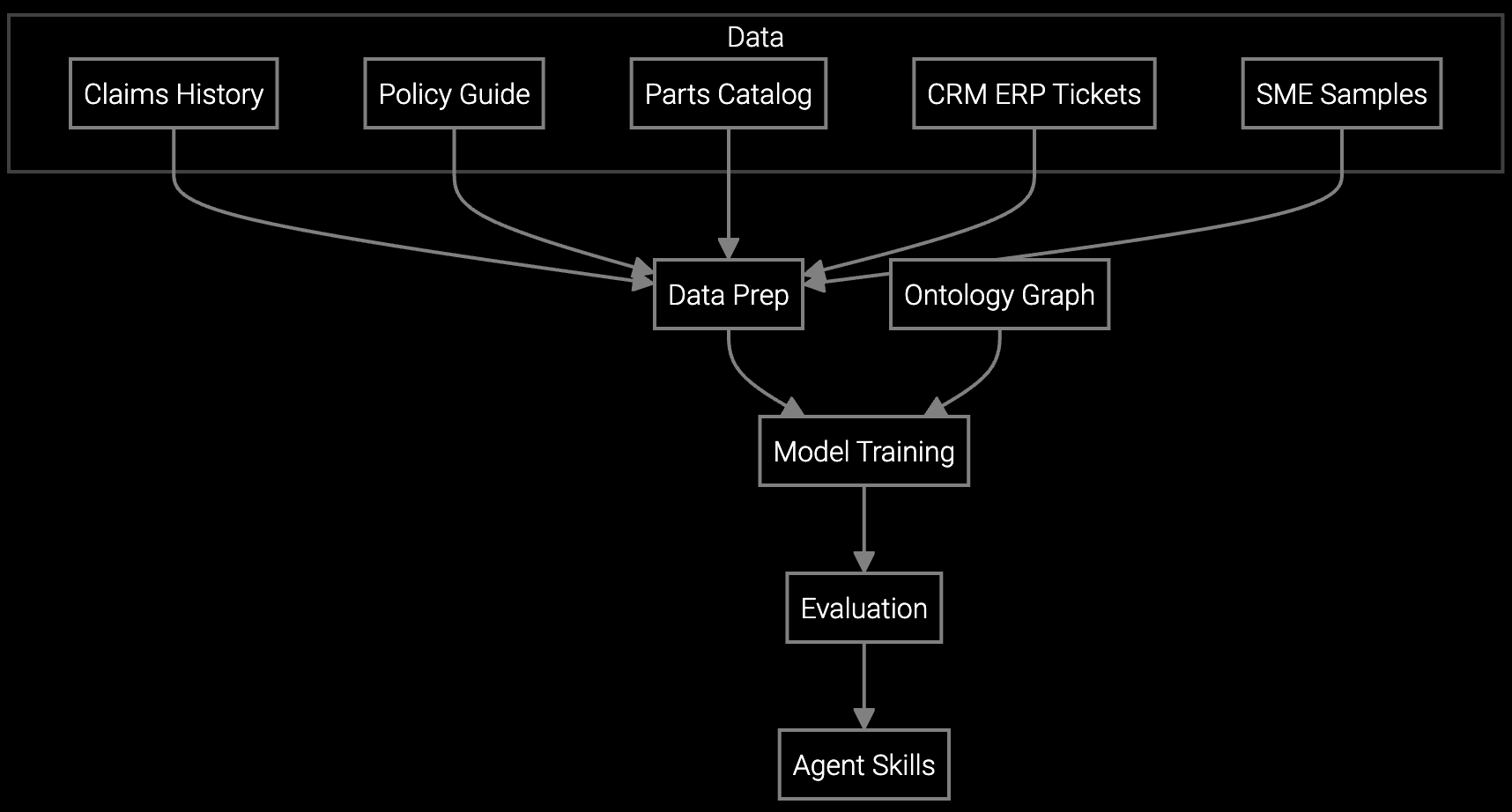
Automatically classifies and codes warranty claims for lithography and deposition tools, reducing manual processing from hours to seconds while ensuring consistent categorization for reserve analytics.
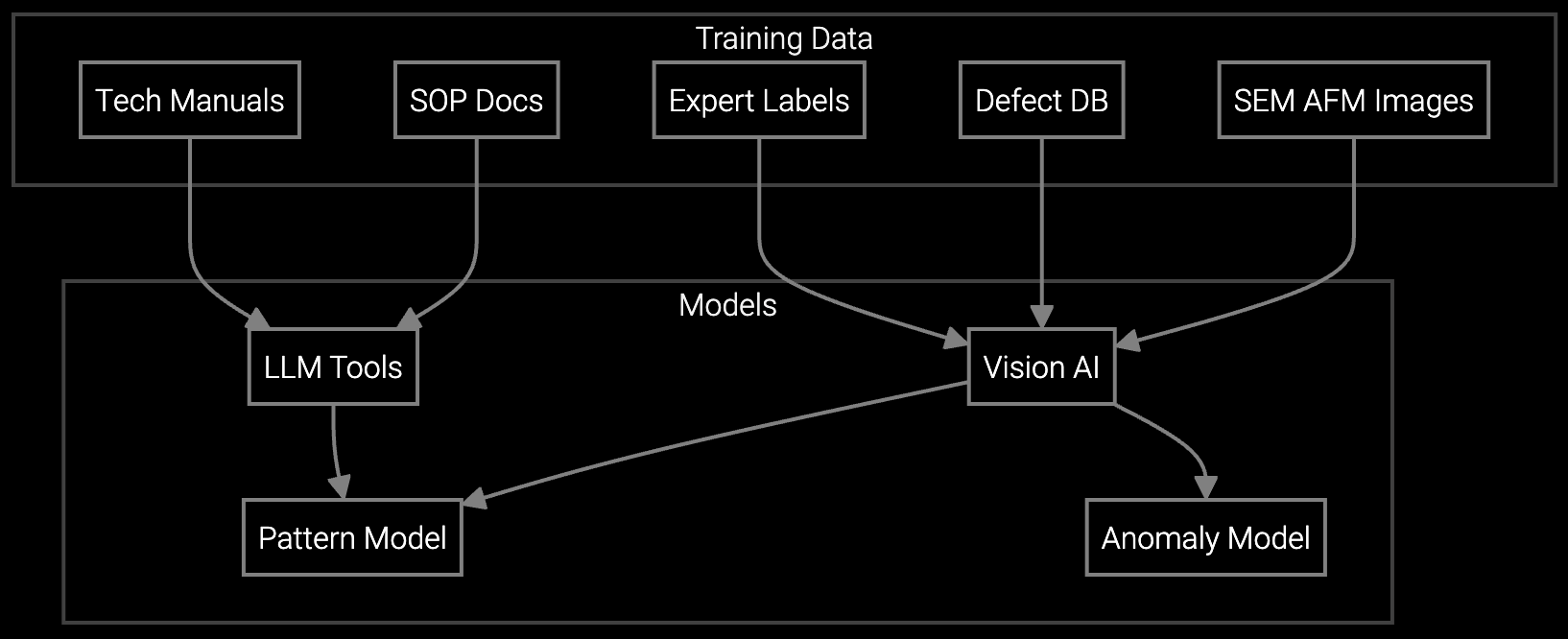
AI analyzes microscopic images from returned semiconductor equipment to validate failure claims, classify defect modes, and distinguish manufacturing defects from customer-induced damage for accurate warranty adjudication.
Semiconductor tool manufacturers face unique warranty challenges: equipment configurations span thousands of SKUs with complex BOM variations, customer fabs generate terabytes of process telemetry that can substantiate or refute failure claims, and single tool downtime costs exceed $1M per hour—creating intense pressure for rapid claim resolution. Traditional manual workflows cannot keep pace with this complexity or cost exposure.
Bruviti's platform ingests fab telemetry, equipment logs, and maintenance records to validate failure claims against actual operating conditions. For lithography tools, etch chambers, or metrology equipment, the AI correlates sensor data with warranty submissions to identify legitimate failures versus operator error or insufficient preventive maintenance. This data-driven validation protects margins while maintaining customer relationships built on accurate, defensible warranty decisions.
The platform auto-validates entitlement by querying installed base records, purchase systems, and service contracts in real time—eliminating manual lookups. For semiconductor tools with extensive configuration variations, the AI matches serial numbers to BOMs and maintenance history instantly, populating claim forms with verified data that previously required 3-5 days of manual research across disconnected systems.
Automation spans claim intake, entitlement verification, RMA generation, return logistics coordination, refurbishment tracking, and credit processing. The AI handles decision trees that previously required human judgment—such as determining whether a failure qualifies for warranty coverage based on operating conditions, usage patterns, and maintenance compliance. Only exceptions requiring policy interpretation still route to human specialists.
The platform analyzes claim patterns across customer accounts, serial numbers, and failure descriptions to identify anomalies—such as repeat claims for identical failure modes, submissions for equipment outside warranty windows, or claims inconsistent with telemetry data. Machine learning models trained on historical warranty data flag suspicious submissions before approval, allowing warranty teams to investigate high-risk claims that would otherwise pass unnoticed in manual review.
Yes—Bruviti connects via APIs to warranty databases, SAP or Oracle ERP systems, CRM platforms, and installed base registries. The platform reads entitlement data, service history, and configuration records from existing systems, then writes back claim approvals, RMA numbers, and credit authorizations. This integration preserves system of record integrity while automating workflow orchestration across the warranty ecosystem.
Key financial indicators include warranty cost as % of revenue, NFF rate reduction, claim processing cycle time, and warranty reserve accuracy. Semiconductor OEMs typically measure success by tracking claims resolved per FTE, reduction in manual entitlement lookups, and decrease in reserve forecast variance. A 40% NFF reduction on $50M annual warranty exposure delivers $20M in direct margin protection—ROI that justifies automation investment within two quarters.
Software stocks lost nearly $1 trillion in value despite strong quarters. AI represents a paradigm shift, not an incremental software improvement.
Function-scoped AI improves local efficiency but workflow-native AI changes cost-to-serve. The P&L impact lives in the workflow itself.

Five key shifts from deploying nearly 100 enterprise AI workflow solutions and the GTM changes required to win in 2026.
See how Bruviti transforms warranty operations from cost center to strategic margin protection function.
Schedule Demo