
Data center OEMs process thousands of server and storage returns monthly—manual workflows create cost erosion and slow customer resolution.
Bruviti deployment data shows automated warranty claims processing at under 1 minute per claim with 90% faster handling. For data center equipment manufacturers, that throughput clears claim backlogs and shortens cycle times, turning warranty processing from a labor bottleneck into a workflow that scales with volume.
Hyperscale operators return thousands of server components monthly under warranty. Without automated fraud detection and NFF analysis, OEMs absorb costs for valid equipment returned due to customer misdiagnosis or environmental factors.
Manual entitlement verification, failure code assignment, and RMA generation create delays. Customers with SLA commitments wait days for credits while finance teams manually reconcile warranty accruals against actual failure patterns.
Returned drives, DIMMs, and power supplies require disposition decisions—refurb, scrap, or return to supplier. Coordinating logistics across regional return centers with inconsistent failure coding creates inventory waste and recovery delays.
Bruviti orchestrates the entire warranty claims lifecycle—from customer return request through credit issuance—by automating entitlement validation, failure classification, and disposition routing. The platform ingests BMC telemetry, IPMI logs, and customer-reported symptoms to verify failure modes against warranty coverage terms, automatically flagging returns that don't match expected failure signatures.
For data center OEMs managing warranty exposure across millions of deployed servers, storage arrays, and cooling systems, the platform reduces labor-intensive claims adjudication while improving financial accuracy. Machine learning models trained on historical return data detect fraudulent patterns, identify systematic quality issues requiring supplier recovery, and optimize refurbishment routing decisions—directly impacting warranty cost as a percentage of revenue.
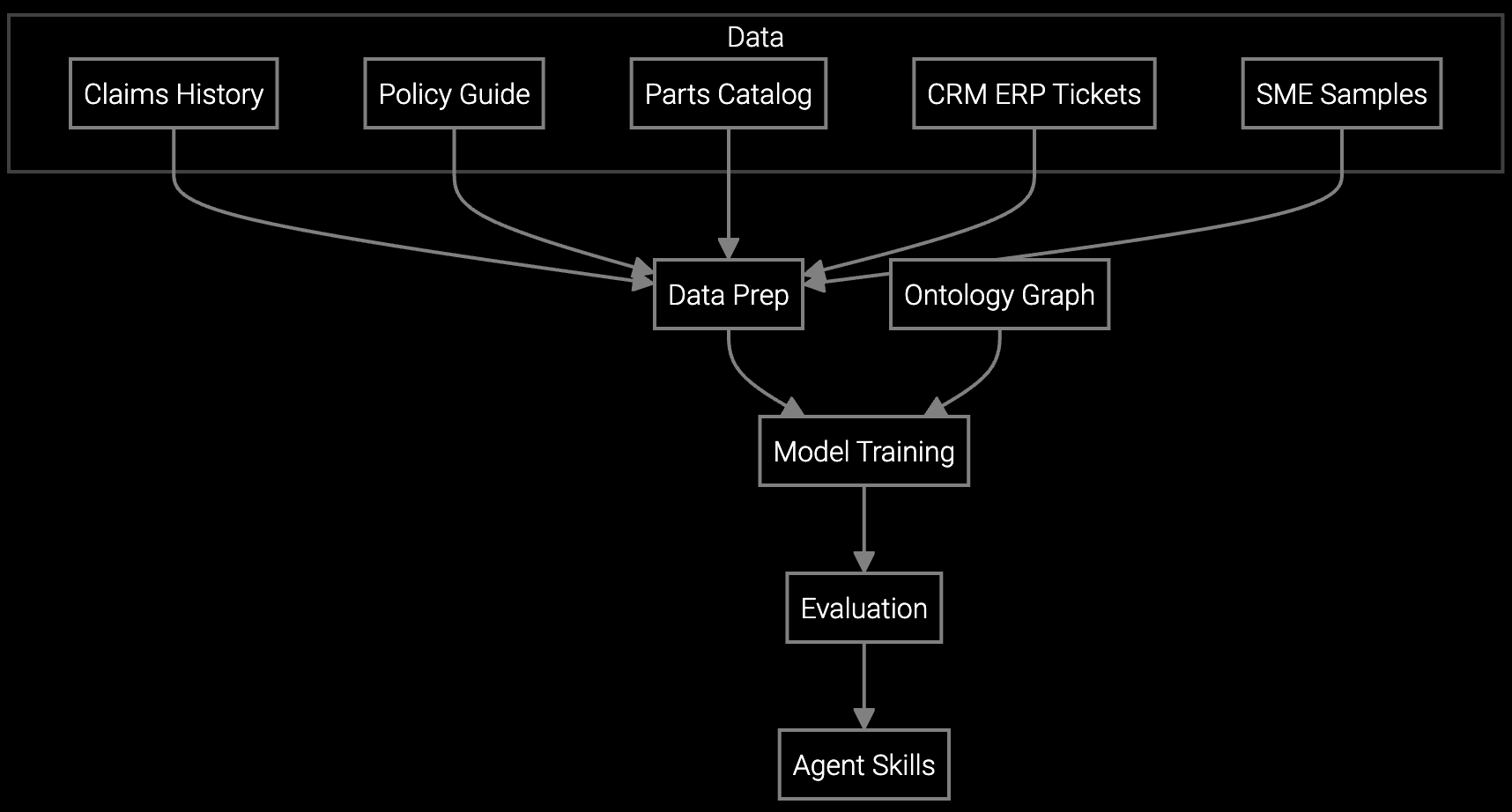
Automatically classify server and storage component failures by analyzing telemetry patterns, customer descriptions, and historical return data—reducing manual coding errors and improving warranty analytics accuracy.
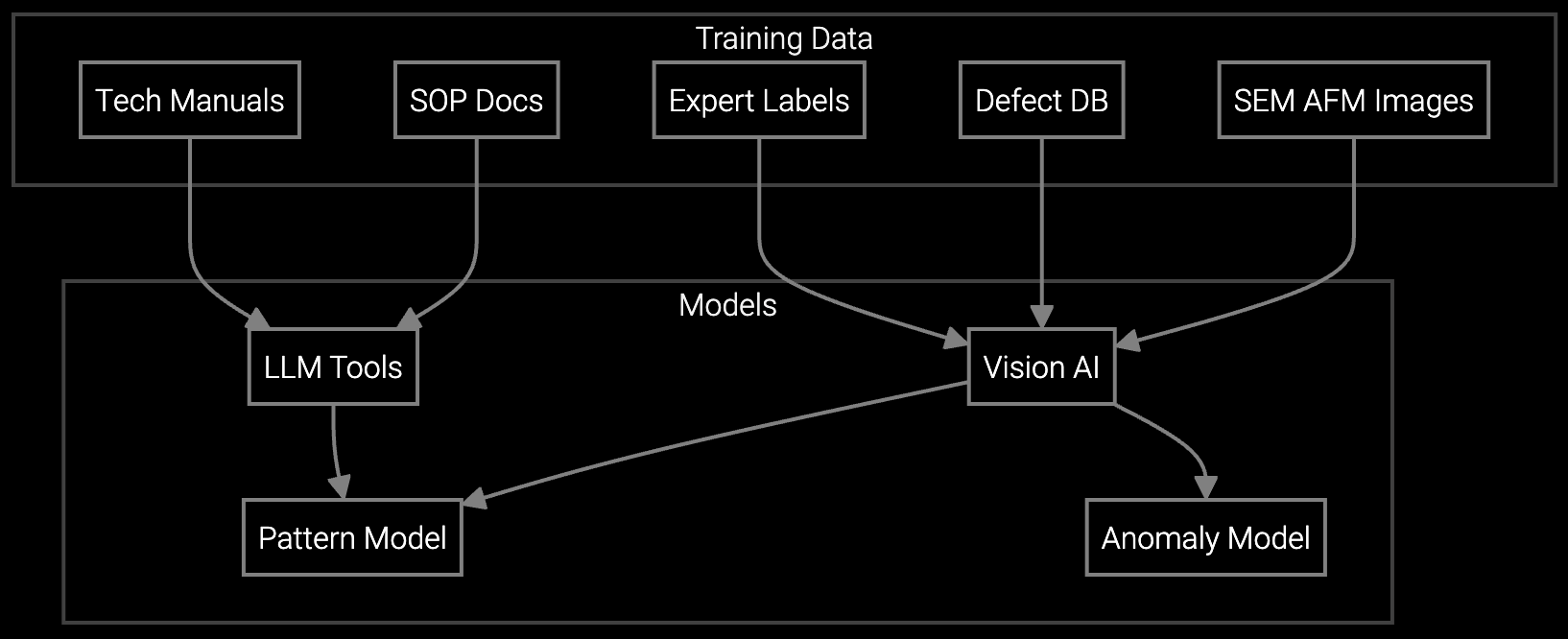
Validate warranty claims for memory and storage failures by analyzing microscopic images of returned components—detecting manufacturing defects versus customer-induced damage for accurate supplier recovery.
Data center equipment manufacturers face unique warranty challenges driven by deployment scale and customer sophistication. Hyperscale operators run predictive analytics on their own infrastructure, triggering preemptive component replacements that may or may not represent actual failures. OEMs must validate these returns against BMC telemetry, thermal logs, and RAID controller data to distinguish genuine failures from customer over-caution.
The platform integrates with existing ERP and CRM systems to create a unified claims processing workflow. When a customer initiates an RMA request for failed DIMMs or drives, the AI cross-references serial numbers against warranty registration data, analyzes failure mode descriptions against known component behavior, and routes approved claims for immediate credit issuance. Rejected claims receive automated explanations with supporting telemetry evidence, reducing dispute cycles and improving customer transparency.
Machine learning models analyze patterns across customer return history, failure mode descriptions, telemetry data from BMC and IPMI logs, and component age profiles to identify inconsistencies. Claims flagged for fraud review show symptoms that don't match expected failure signatures, come from customers with historically high NFF rates, or involve components operating within normal thermal and voltage parameters.
Entitlement verification, failure code assignment for common failure modes, RMA number generation, and credit issuance for returns matching established failure patterns can run end-to-end without intervention. High-value claims, novel failure modes, or returns from customers with active disputes still route to warranty analysts for review, but represent less than 15% of total claim volume.
Most data center OEMs see measurable reserve accuracy improvements within 90 days as the AI learns to distinguish genuine failures from NFF returns. The financial impact grows over 6-9 months as fraud detection models mature and refurbishment routing optimization reduces recovery costs. CFOs typically observe 12-18% reduction in warranty cost as percentage of revenue within the first year.
Yes. The platform connects to ERP systems like SAP, Oracle, and ServiceNow via REST APIs to pull warranty registration data, customer entitlements, and return authorization workflows. It enriches existing data with AI-powered failure classification and fraud scoring, then writes decisions back to the source system for credit processing and logistics coordination.
Automated entitlement verification and instant RMA generation eliminate multi-day delays in return authorization. Hyperscale customers receive credits within hours instead of days, reducing their own downtime costs and inventory carrying requirements for spare components. Transparent failure analysis explanations for rejected claims reduce dispute cycles and improve OEM-customer trust.
Software stocks lost nearly $1 trillion in value despite strong quarters. AI represents a paradigm shift, not an incremental software improvement.
Function-scoped AI improves local efficiency but workflow-native AI changes cost-to-serve. The P&L impact lives in the workflow itself.
Five key shifts from deploying nearly 100 enterprise AI workflow solutions and the GTM changes required to win in 2026.
See how Bruviti automates claims processing, reduces NFF rates, and protects warranty margins for data center equipment manufacturers.
Schedule Executive Briefing