

Speed Up Network Equipment Case Resolution: 22% Lower Handling Time
When network downtime costs customers $5,000+ per minute, agents can't afford to spend 20 minutes searching for answers.
In Brief
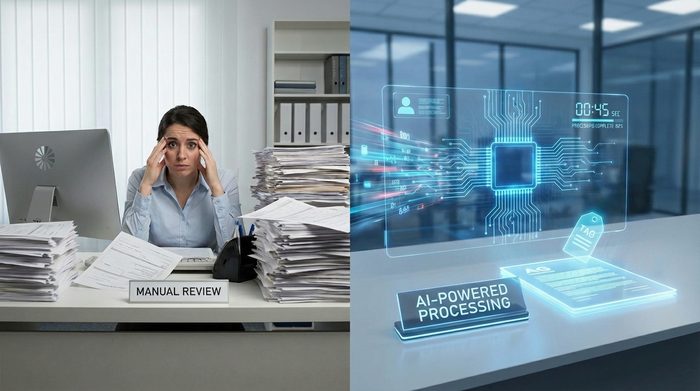
AI-assisted case handling cuts average handling time 22% on network support tickets, per Bruviti deployment data. Slow resolution comes from agents hunting through device history and docs; AI delivers a summarized case with the relevant context up front. Agents act faster on every ticket and queues drain instead of growing.
Why Network Equipment Support Cases Take Too Long
Fragmented Knowledge Sources
Agents toggle between 8–12 systems to find firmware bulletins, SNMP trap definitions, and RMA procedures. Each search burns minutes while customers wait on hold.
Manual Log Interpretation
Syslog errors and SNMP traps require specialized knowledge to decode. Junior agents escalate to senior engineers, adding queue time and delaying resolution.
Inconsistent Triage
Different agents classify the same firewall error differently, routing cases to wrong teams. Tickets bounce between hardware, firmware, and configuration groups.
How AI Accelerates Case Resolution
The platform parses syslog entries, SNMP traps, and device telemetry the moment a case opens. It matches error signatures against 500,000+ historical cases, flags known CVEs, and checks firmware version compatibility. Agents see a pre-populated diagnostic summary with recommended next steps—no manual log decoding required.
Automated triage routes cases based on failure type, device model, and SLA tier. Switch crashes go to hardware specialists with part numbers already attached. Firewall misconfigurations route to network engineers with relevant config snippets highlighted. Agents skip the 10-minute detective phase and jump straight to resolution.
What Operators Gain
- +
65% faster case resolution by surfacing answers instantly instead of searching documentation.
- +
82% reduction in misrouted cases through AI classification matching failure modes to specialist teams.
- +
Single interface replaces 8+ swivel-chair tools with unified view of logs, history, and parts.
See It In Action
Service Diagnostics & Triage
Autonomous agent correlates SNMP traps with known router firmware bugs, routes to hardware team when pattern matches failed line card signatures.
Customer Case Summarization
Instantly summarizes 47-email escalation chains about firewall packet drops, highlighting which config changes preceded the outage.
Repair vs Replace Determination
Analyzes switch age, warranty status, and failure type to recommend RMA or field upgrade, reducing unnecessary part swaps by 34%.
Network Equipment Context
Why Network Gear Support Is Different
Router and switch failures trigger cascading outages affecting hundreds of downstream devices. A misconfigured firewall rule can black-hole traffic for an entire data center. Customers expect sub-hour MTTR because every minute of downtime has a measurable P&L impact.
Network equipment generates dense diagnostic telemetry—syslog streams, SNMP trap floods, CPU/memory graphs, and routing table snapshots. Agents must decode this fire hose while simultaneously checking firmware CVE bulletins, RMA eligibility, and configuration backup histories. Traditional ticketing systems force agents to manually stitch together context from 8+ tools before they can even diagnose root cause.
Implementation for Network OEMs
- +
Start with top 10 syslog error codes to validate AI correlation against known firmware bugs.
- +
Integrate SNMP trap feed and warranty database to auto-populate RMA eligibility in case view.
- +
Measure first-contact resolution for router cases before and after AI triage over 90 days.