
Fix Slow Triage in Data Center Support: AI Cuts Call Volume 35%
When thousands of server alerts flood your queue daily, misrouted cases cost hours you don't have.
In Brief
Bruviti deployment data shows AI triage reduces support call volume 35% and lifts first-call resolution 16%. Operators solve slow triage by letting AI classify and route incoming issues instantly, deflecting routine cases and getting complex ones to the right specialist on the first attempt.
What Slows Down Data Center Triage
Manual Alert Classification
Agents read raw BMC logs and IPMI error codes to determine if the issue is power, thermal, memory, or storage. Every minute spent decoding alerts delays resolution and burns SLA time.
Misrouted Cases
Incorrectly assigned tickets bounce between teams (cooling specialists get compute issues, storage experts get PDU failures). Each handoff adds delay and frustration.
Context Switching Fatigue
Agents toggle between ticketing system, BMC interface, knowledge base, and parts inventory to gather context. The swivel-chair workflow kills throughput.
How AI Accelerates Triage
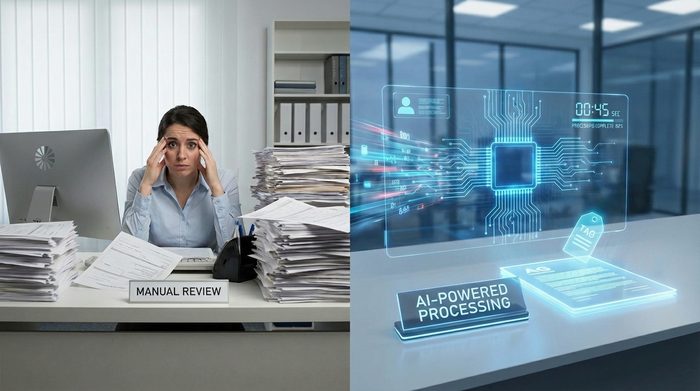
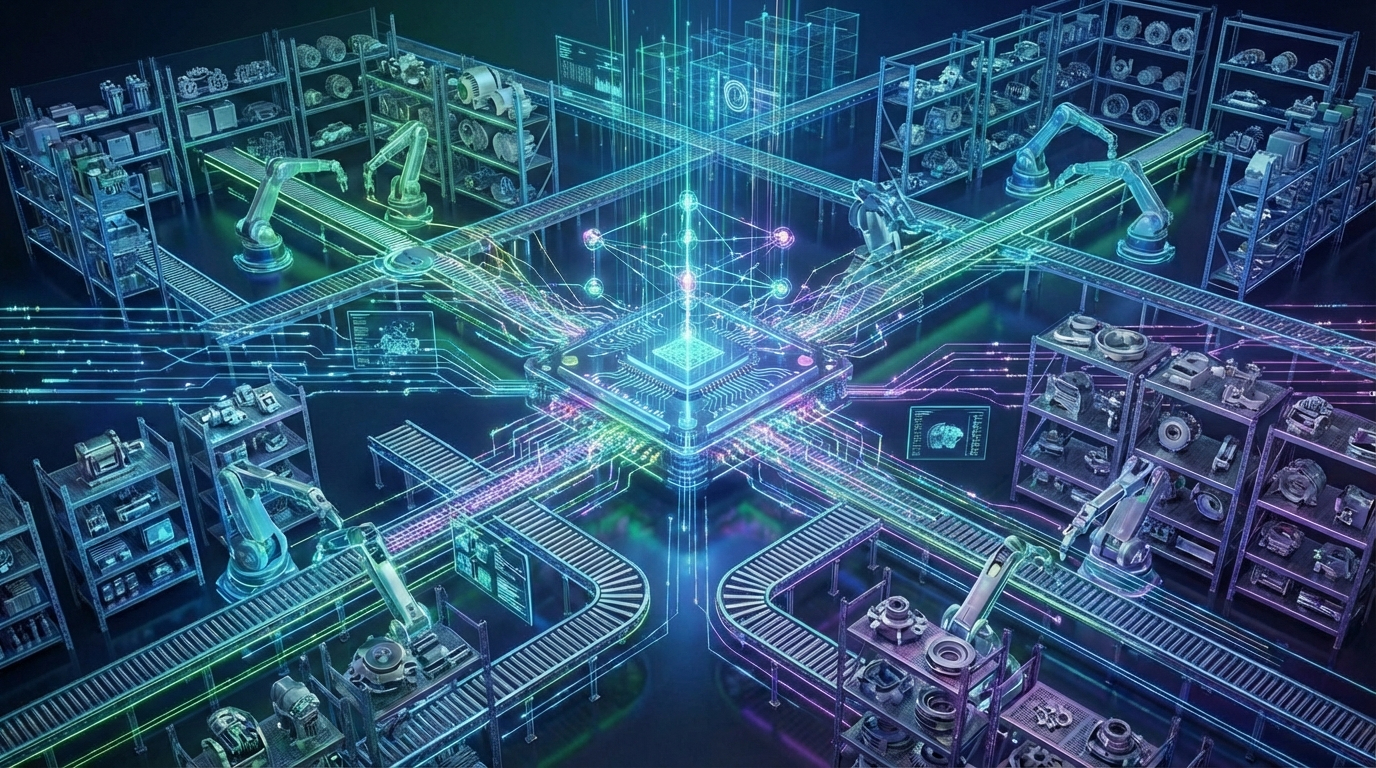
Bruviti's platform ingests BMC telemetry, IPMI alerts, and historical case data to automatically classify incidents by root subsystem. When a ticket arrives, the system parses error codes, correlates with recent failures across the fleet, and routes to the specialized team (power, cooling, compute, storage) with a diagnostic summary already attached.
Agents see pre-populated context: affected hardware, similar past cases, and recommended first steps. No manual log reading, no guessing which team should own it. Triage becomes a review task instead of an investigation. The platform learns from routing corrections, improving accuracy over time.
What Changes
- +
Triage time drops to 90 seconds with auto-classification of subsystem and severity.
- +
Misrouting falls 70% as AI learns from historical handoffs and corrections.
- +
Agent throughput increases 40% by eliminating context-switching across systems.
See It In Action
Service Diagnostics & Triage
Autonomous case classification analyzes BMC logs and IPMI alerts to route data center incidents by subsystem with diagnostic context.
Customer Case Summarization
Instantly generates case summaries from alert logs and telemetry streams so agents understand incident history without reading everything.
Repair vs Replace Determination
AI analyzes failure modes and server age to recommend RMA versus firmware update for data center hardware issues.
Data Center Triage at Scale
Why Data Centers Need Smarter Routing
Hyperscale data centers generate thousands of BMC alerts daily across power distribution, thermal management, compute nodes, and storage arrays. Generic ticketing systems treat all incidents the same, forcing agents to manually decode IPMI error codes and guess which specialized team should handle each case.
With four-nines availability targets and tight SLAs, misrouted cases directly impact customer uptime. AI triage correlates hardware telemetry with historical patterns to classify incidents by subsystem before an agent even opens the ticket, ensuring the right expert sees the right problem immediately.
Implementation Considerations
- +
Start with compute node failures, where BMC logs provide richest diagnostic signals.
- +
Connect existing BMC monitoring feeds to auto-populate case context without manual entry.
- +
Track misrouting rate weekly; 50% reduction within 60 days signals effective learning.