
Hyperscale operators demand instant resolution. Your contact center strategy determines whether you protect margins or watch them erode.
Bruviti deployment data shows a proven customer service AI platform cuts average handling time 22% and improves first contact resolution 11%. For executives, build vs buy comes down to time to those results: buying delivers benchmarked outcomes now, while building re-derives them at far higher cost.
Hyperscale customers expect instant resolution across thousands of servers. Every minute an agent spends searching knowledge bases or escalating cases adds cost without adding value.
Agents give different answers to identical BMC alerts depending on who they ask. Customer satisfaction drops when responses vary across shifts and regions.
Competitors deploying AI-first support answer faster, cost less, and win bids. The window to match capability shrinks monthly as customer expectations reset.
The build-vs-buy framing misses the real strategic question: how fast can you deploy proven capability while preserving flexibility? Data center OEMs building from scratch face 18-24 months before production deployment. Buying locked vendor solutions delivers speed but surrenders control over the margin-defining layer of customer interaction.
The platform approach starts with pre-trained models that already understand BMC telemetry, IPMI logs, and thermal failure patterns. Agents get instant answers on day one. The API-first architecture then lets you customize triage logic, integrate proprietary diagnostics, and train on your specific install base without ripping out the foundation. You compress time-to-value while keeping strategic control.
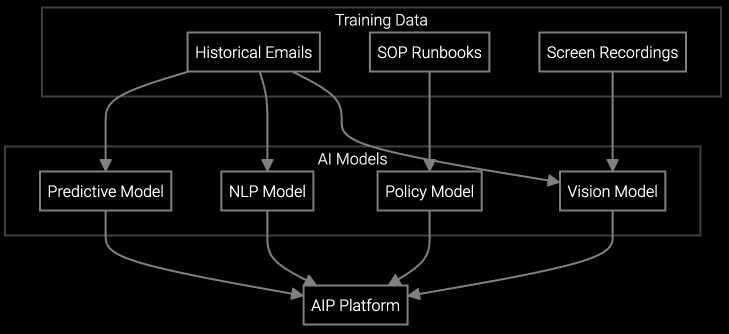
AI reads customer emails describing PDU failures or thermal alerts, classifies urgency, and drafts responses using historical case data—reducing agent handle time for routine issues.
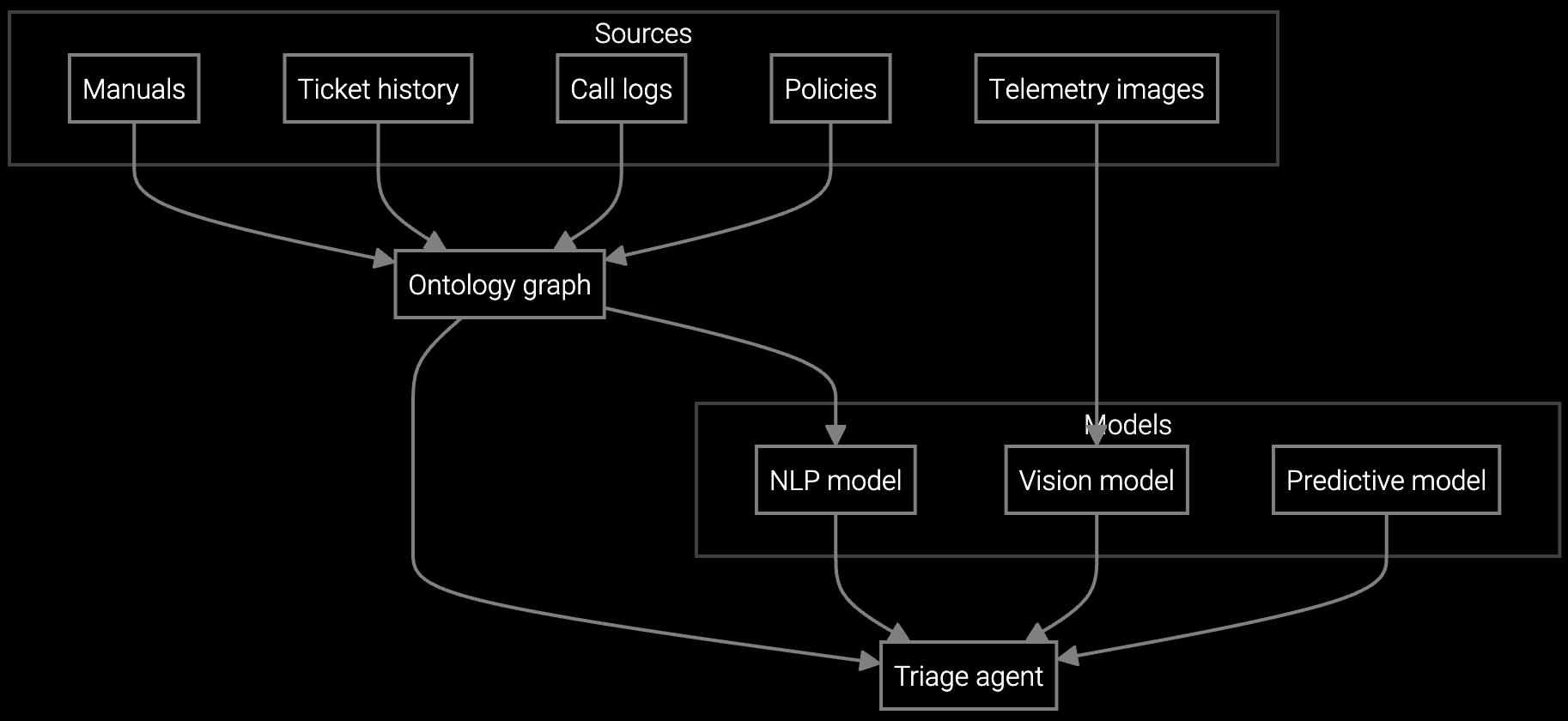
Autonomous classification analyzes BMC telemetry and IPMI logs, correlates with known failure patterns, and routes power, cooling, or compute issues to specialized teams with diagnostic context.
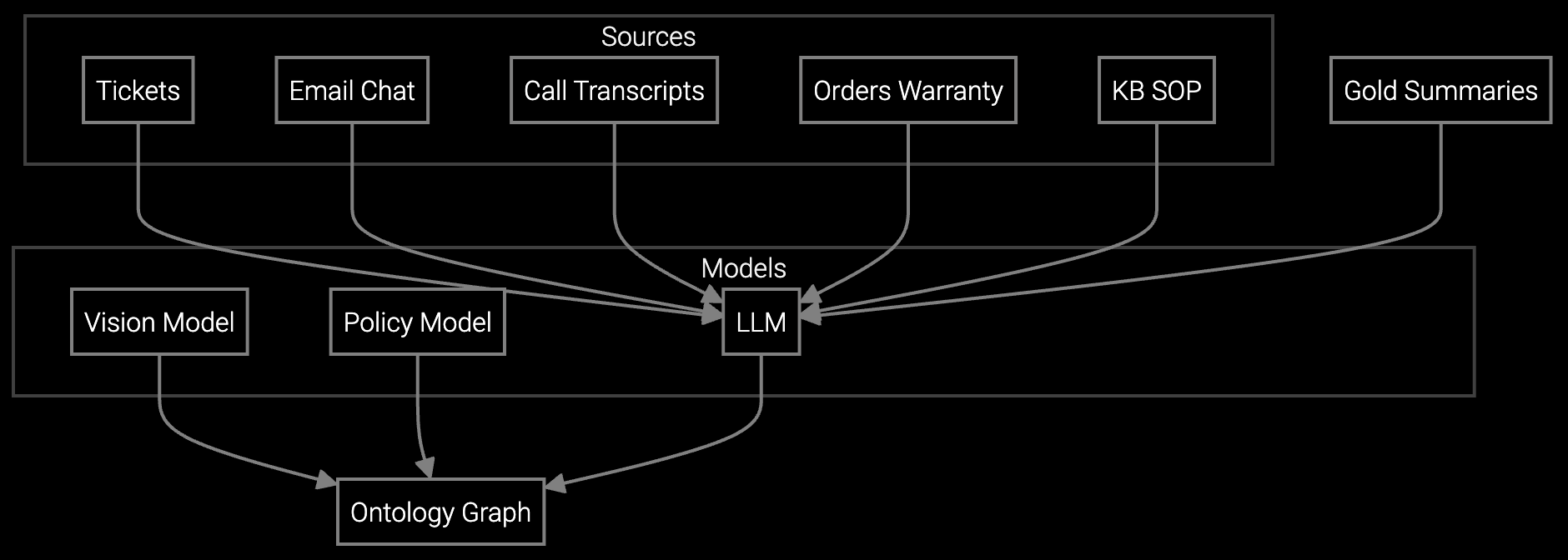
Instantly generates case summaries from chat logs, call transcripts, and prior tickets, so agents serving hyperscale accounts understand history without reading every interaction.
Hyperscale operators provision thousands of servers monthly and expect instant response when BMC alerts fire or RAID arrays degrade. Every hour of delayed resolution hits their SLA commitments to end customers. Data center OEMs competing on service quality can't afford contact centers that escalate routine thermal alerts or make customers wait while agents search knowledge bases.
The BMC and IPMI telemetry flowing from installed servers contains the diagnostic signal—but only if contact center AI can parse it instantly. Manual triage by agents introduces delay and variability. Competitors deploying AI-first support answer faster and cost less, resetting customer expectations. The strategic window to match capability narrows as buyers benchmark response times across vendors.
The primary risk is time. Building production-ready models for contact center use takes 18-24 months minimum. During that window, competitors with deployed AI answer faster and cost less, resetting customer expectations. You also need sustained executive sponsorship—AI projects that lose momentum often stall with sunk costs and no production system.
Vendor lock-in compounds over time as your contact center processes become dependent on proprietary APIs and data formats. When you need to negotiate pricing or switch platforms, migration costs can exceed 12-18 months of operational budget. API-first architectures with open integration standards let you retain control over the margin-defining layer of customer interaction.
Platforms with pre-trained models on hardware telemetry deploy in 8-12 weeks to production. That includes integration with existing CRM systems, agent training, and initial case routing logic. Custom builds take 18-24 months. The speed difference determines whether you protect margins during the competitive window or watch market share erode.
Track three metrics over 90 days: cost per contact (target 30-40% reduction), first contact resolution rate (target 20+ point improvement), and agent handle time (target 25-35% reduction). For data center OEMs, also measure escalation rate reduction—every case resolved by AI instead of senior engineers protects margin and improves customer satisfaction.
Traditional vendor purchases lock you into their roadmap and pricing. Hybrid strategies deploy proven models for instant value while preserving API-first integration so you can customize triage logic, add proprietary diagnostics, and train on your install base. You get the speed of buy with the strategic control of build, without the 18-24 month delay or vendor lock-in risk.

Understanding and optimizing the issue resolution curve.

Part 1: The transformation of IT support with AI.
Part 2: Implementing AI in IT support.
Let us show you how pre-trained models deploy in weeks without vendor lock-in.
Schedule Strategic Demo