
Seasonal demand spikes and thin margins make workflow efficiency non-negotiable for appliance service leaders.
Automating appliance customer service workflows with Bruviti saves 300+ agent hours per week, per Bruviti deployment data, by routing routine email and call intake through AI before it reaches a person. Executives gain throughput without headcount growth, redirecting saved hours toward complex, revenue-bearing service interactions.
Agents toggle between product manuals, warranty systems, and parts databases to answer basic troubleshooting questions. Each screen adds seconds that compound into minutes per contact, inflating handle time when HVAC and refrigeration emergencies spike.
Contact center teams manually read case descriptions, guess issue types, and route to wrong queues. Misrouted cases bounce between teams, extending resolution time and frustrating customers whose home appliances are offline.
Purchase history sits in one system, service contracts in another, warranty entitlements in a third. Agents ask customers to repeat information already on file, damaging satisfaction scores and increasing case duration during high-volume periods.
Bruviti's platform executes the entire case lifecycle autonomously. The AI reads incoming emails and chat messages, classifies issue type from symptom descriptions, retrieves warranty entitlement and service contract status, then routes to the optimal queue with complete diagnostic context. Agents receive cases pre-populated with recommended resolution steps drawn from 10+ years of historical cases on identical appliance models.
The system auto-drafts responses using knowledge bases built from past successful resolutions, converting institutional memory into instant answers. For refrigeration failures during summer peaks or HVAC emergencies in winter, the workflow compresses what formerly required four agent handoffs into a single automated sequence, preserving margin while scaling contact volume without proportional headcount increases.
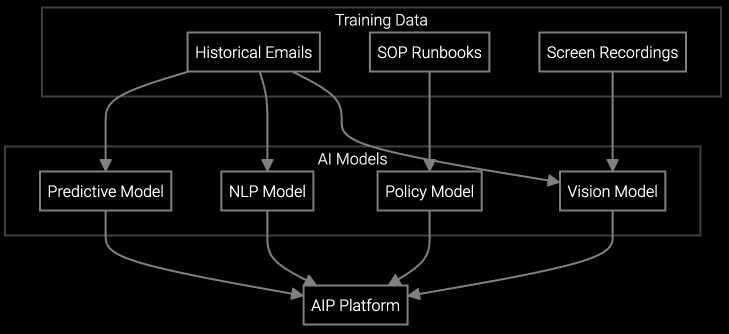
AI autonomously reads customer emails describing appliance symptoms, classifies issue type, retrieves warranty status, and drafts resolution responses for refrigerators, dishwashers, and HVAC systems using historical case data.
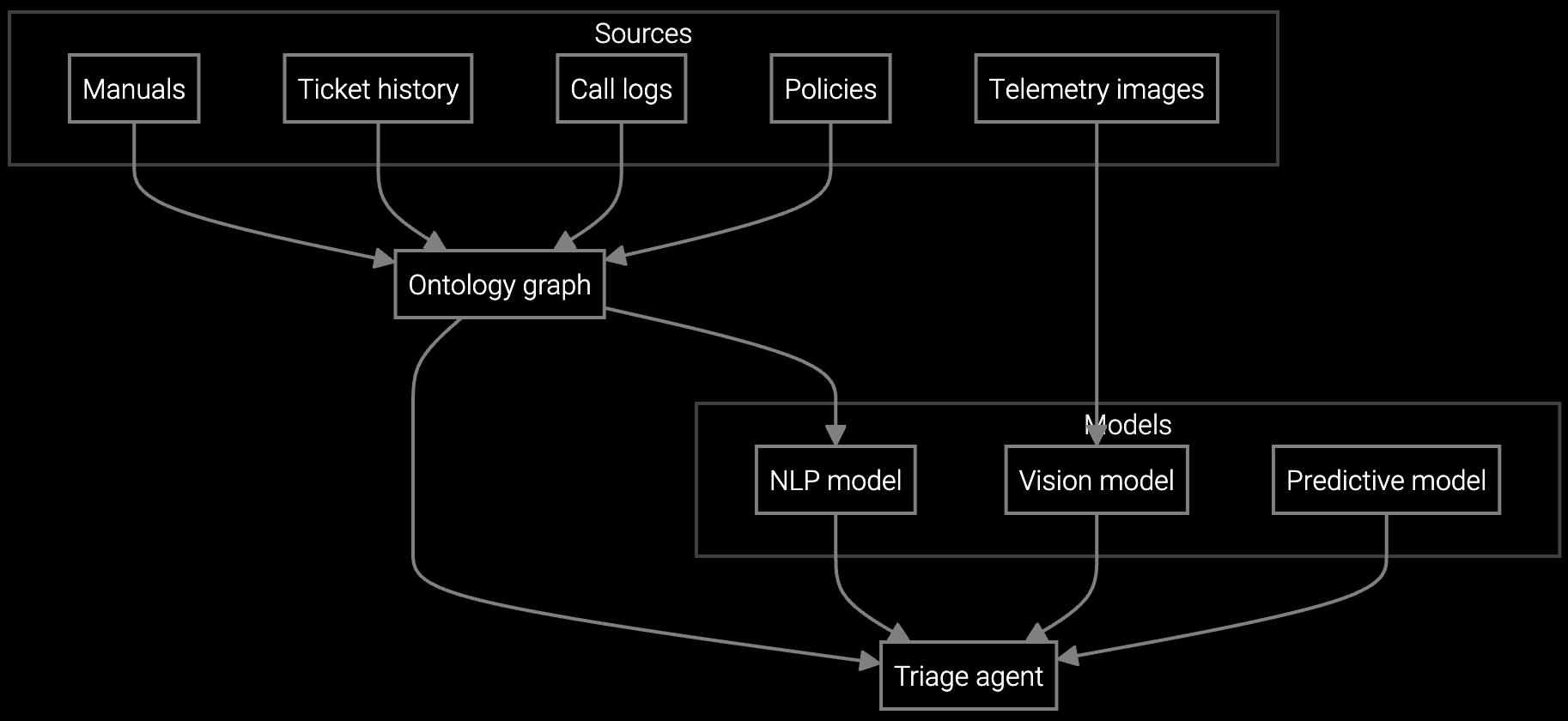
Automated classification analyzes symptom descriptions from consumers, correlates with product model and age, then routes to warranty claims, self-service repair, or technician dispatch queues with pre-loaded diagnostic context.
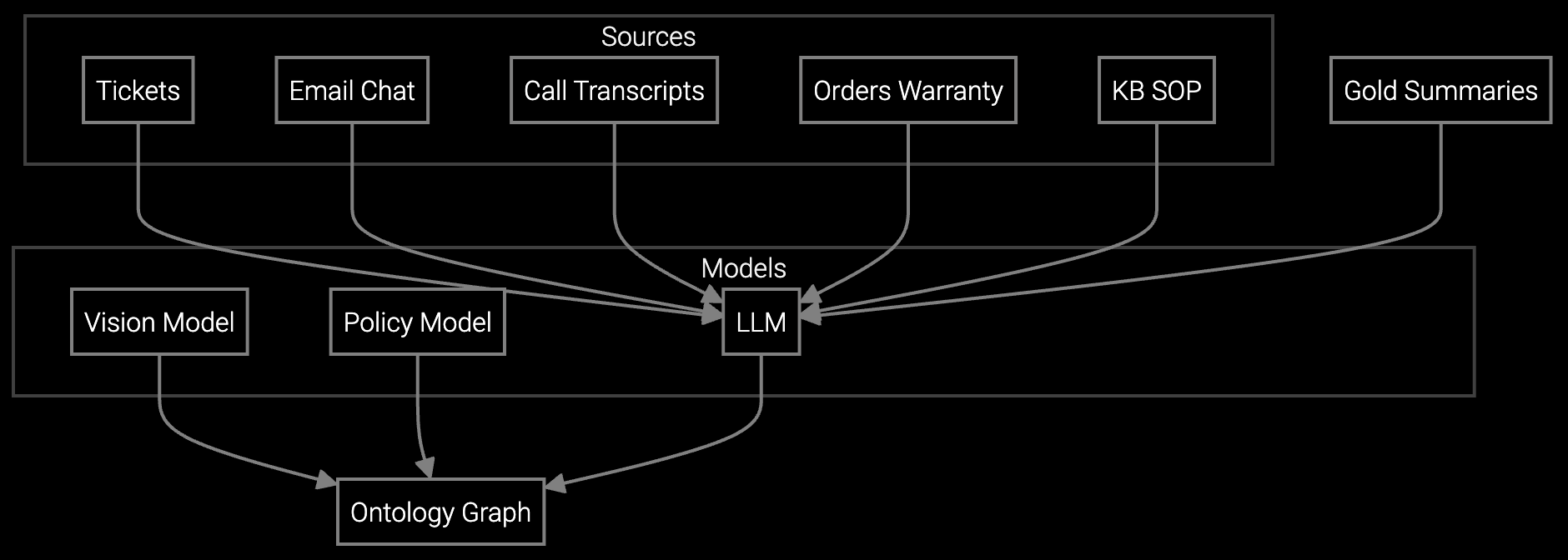
Instant summaries generated from email threads, chat logs, and call transcripts show agents complete interaction history for washers, dryers, and kitchen appliances without reading through dozens of messages.
Appliance manufacturers face predictable but extreme demand spikes—air conditioners fail during heat waves, refrigerators break down on holidays, water heaters flood basements in winter. Traditional workflows require hiring seasonal contact center staff or accepting longer wait times that damage NPS scores.
Automated workflows absorb volume elastically. The AI executes the Tier 1 triage decision tree end-to-end during summer HVAC surges or winter heating emergencies, routing only complex warranty disputes to human agents. This converts fixed labor costs into variable capacity that scales with demand, protecting margin when case volume doubles but seasonal hiring proves impossible.
Traditional routing uses static keyword matching that breaks when customers describe problems in unexpected ways. AI understands semantic meaning—whether a customer says "not cooling," "warm fridge," or "ice cream melting," the system recognizes the same failure mode and executes the identical diagnostic workflow. This eliminates misrouting and the cascading delays that inflate AHT during seasonal peaks.
FCR typically improves because the AI presents agents with complete resolution context upfront—warranty status, service history, parts availability, and recommended troubleshooting steps from similar past cases. Agents no longer place customers on hold to search multiple systems. For appliance manufacturers tracking FCR as a cost metric, the improvement directly reduces repeat contact volume and associated labor expenses.
Yes. The platform ingests warranty databases spanning 20+ years of appliance model history, matching serial numbers to purchase dates, service contract terms, and extended warranty coverage. During contact intake, the workflow auto-verifies entitlement and flags expired warranties before agents engage, preventing resolution delays and ensuring accurate cost allocation to warranty reserves.
Track three financial metrics: reduction in average handle time (converts to labor cost per case), increase in First Call Resolution (eliminates repeat contact costs), and deflection rate to self-service (reduces total case volume). For appliance manufacturers operating on thin margins, a 40% AHT reduction on 500,000 annual contacts at $12 per contact saves $2.4M annually in direct labor costs.
The system learns from correction feedback. When agents reroute misclassified cases, the AI updates its routing logic in real-time, improving accuracy across all subsequent similar symptoms. Unlike static rule engines that require IT tickets to modify, this adaptive workflow continuously refines itself, reducing misrouting rates even as product lines expand or failure modes evolve seasonally.

Transforming appliance support with AI-powered resolution.

Understanding and optimizing the issue resolution curve.
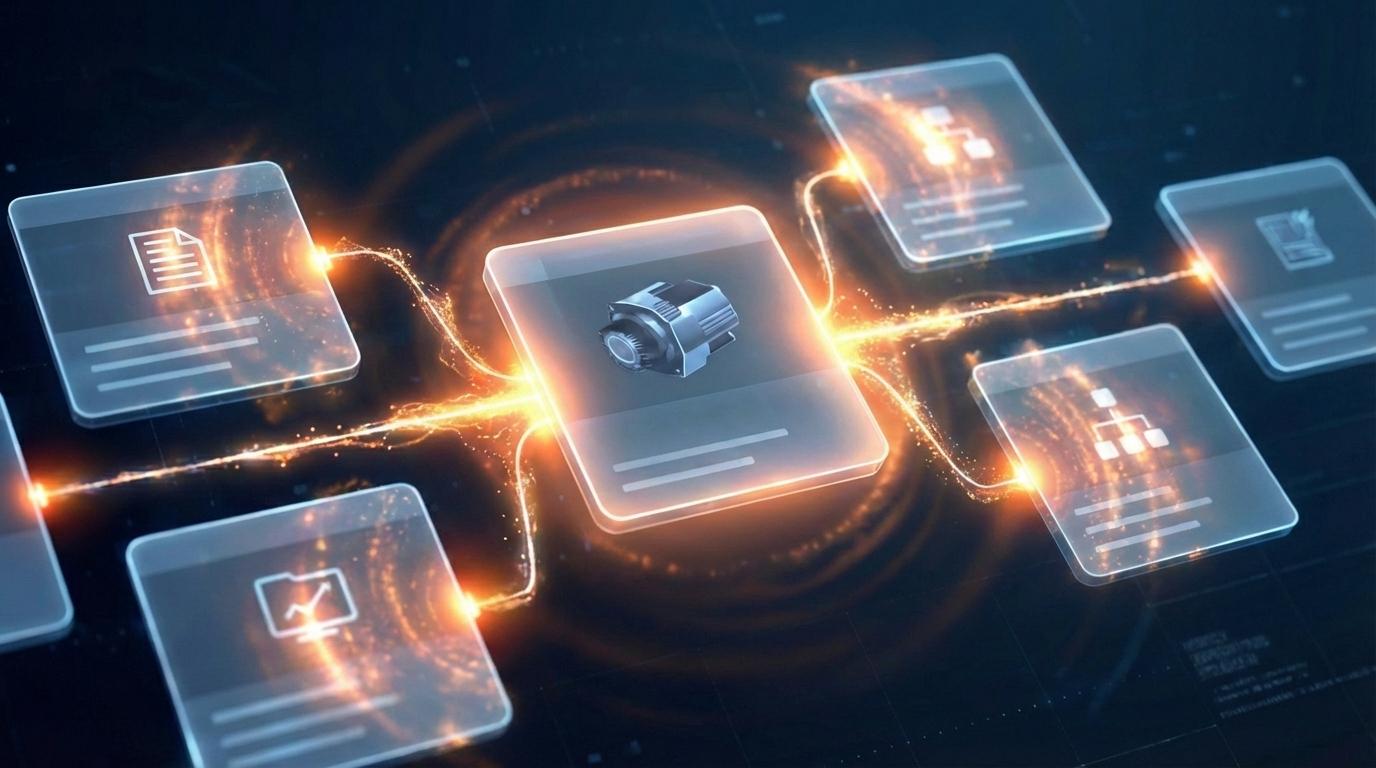
Software stocks lost nearly $1 trillion in value despite strong quarters. AI represents a paradigm shift, not an incremental software improvement.
See how automated workflows reduce cost per contact while scaling seasonal demand without proportional headcount increases.
Schedule Executive Briefing