
Manual dispatch and paperwork drain margin in a high-volume, low-margin business where every truck roll must count.
Automating field service decisions cuts cost to serve 10-15% and trims follow-on visits 20-30%, per Bruviti deployment data, by recommending repair or replace in under 5 minutes. The AI layer connects fault data, parts, and dispatch so planners stop reworking spreadsheets and technicians arrive with the right fix the first time.
Technicians guess which parts to load before dispatch. Wrong guesses mean return visits, extended downtime for customers, and wasted labor on redundant truck rolls.
Dispatch relies on availability alone, not expertise match. Junior technicians arrive at complex jobs unprepared, burning time and eroding customer confidence.
Technicians spend 45+ minutes per job manually entering notes, parts consumed, and close-out codes. This non-billable time adds up fast across hundreds of daily jobs.
Bruviti orchestrates the entire field service workflow from dispatch through close-out. The platform analyzes service history, symptom descriptions, and equipment telemetry to predict required parts with 89% accuracy, automatically populating technician manifests before they leave the depot. AI-driven dispatch matches job complexity to technician expertise, ensuring the right skills arrive on-site the first time.
Post-job documentation becomes automatic. The platform captures parts consumed, time on-site, and diagnostic findings from mobile inputs, then generates complete service reports without manual data entry. Technicians validate rather than create, slashing administrative time. Knowledge flows back into the system continuously, refining predictions and routing decisions for every subsequent job. This closed-loop automation converts field service from a reactive cost center into a margin-protecting asset.
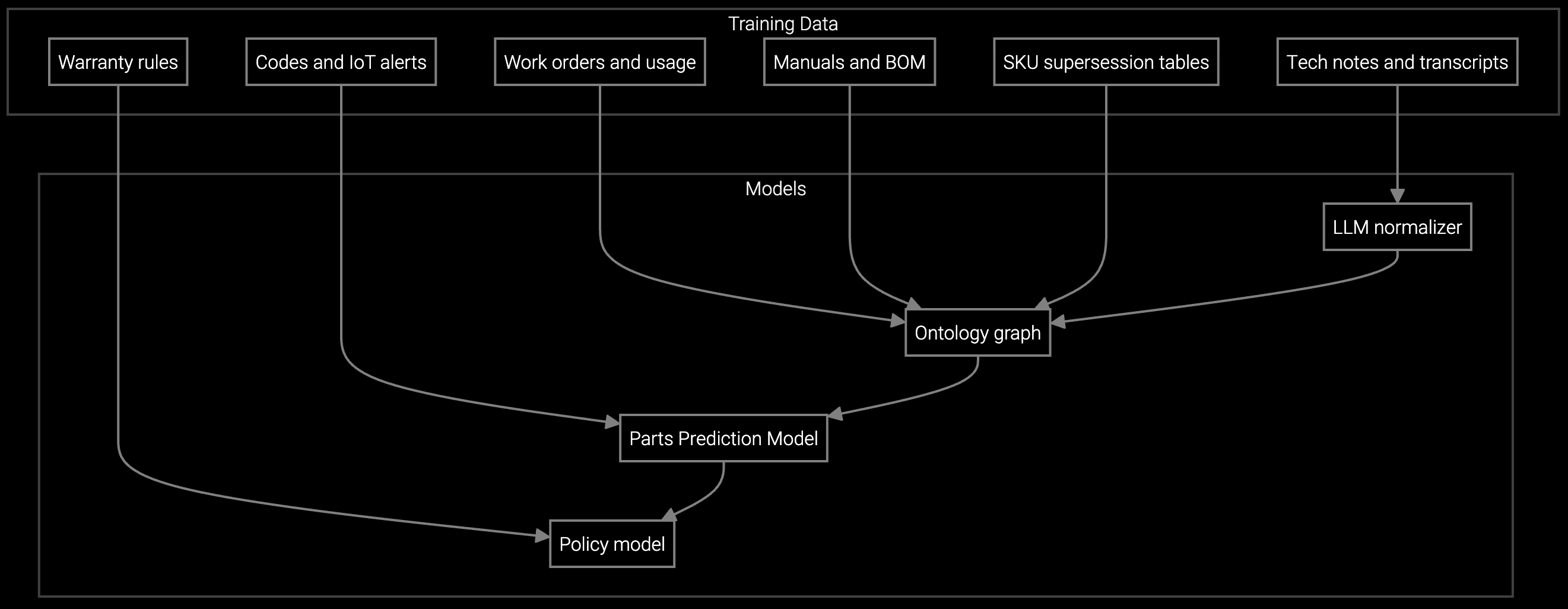
Predict exactly which refrigeration components or HVAC parts technicians need before dispatch, eliminating the guesswork that drives costly return visits to customer homes.
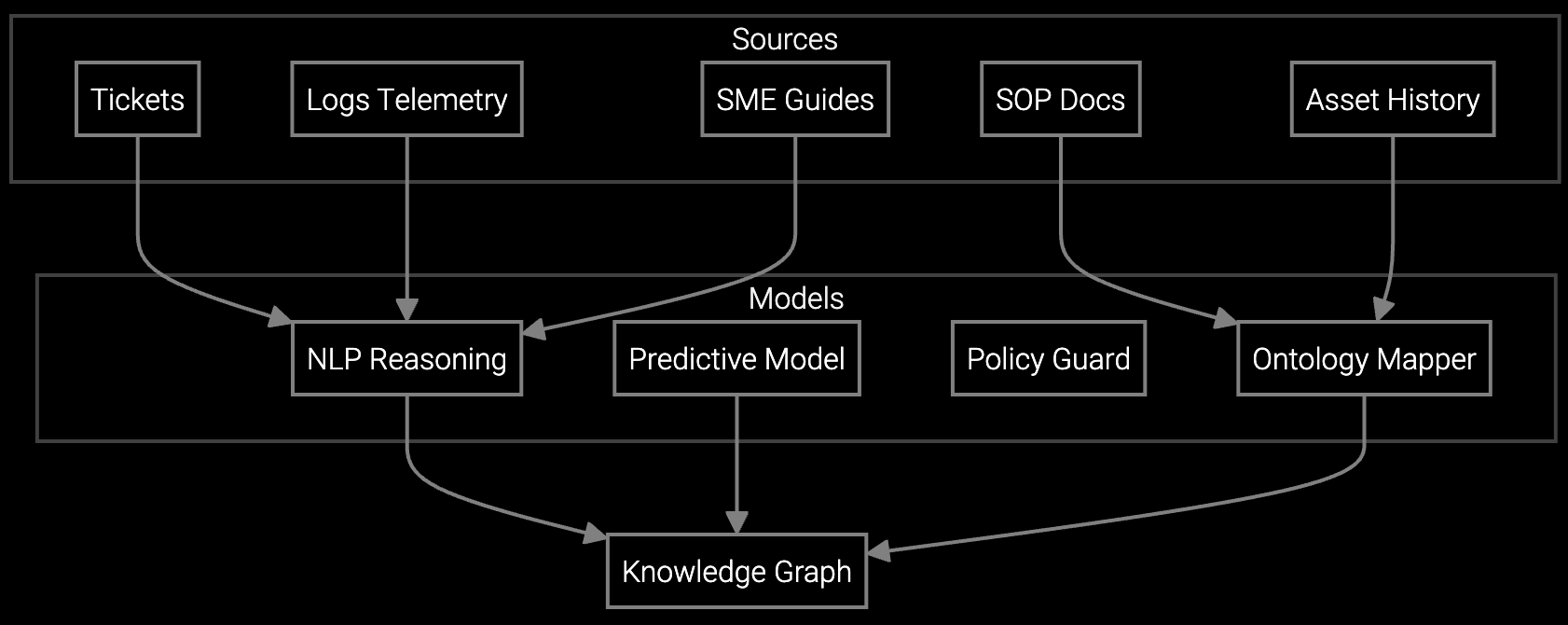
Correlate appliance symptoms with decades of service history and tribal knowledge to identify root causes faster, reducing diagnostic time on-site and improving fix accuracy.
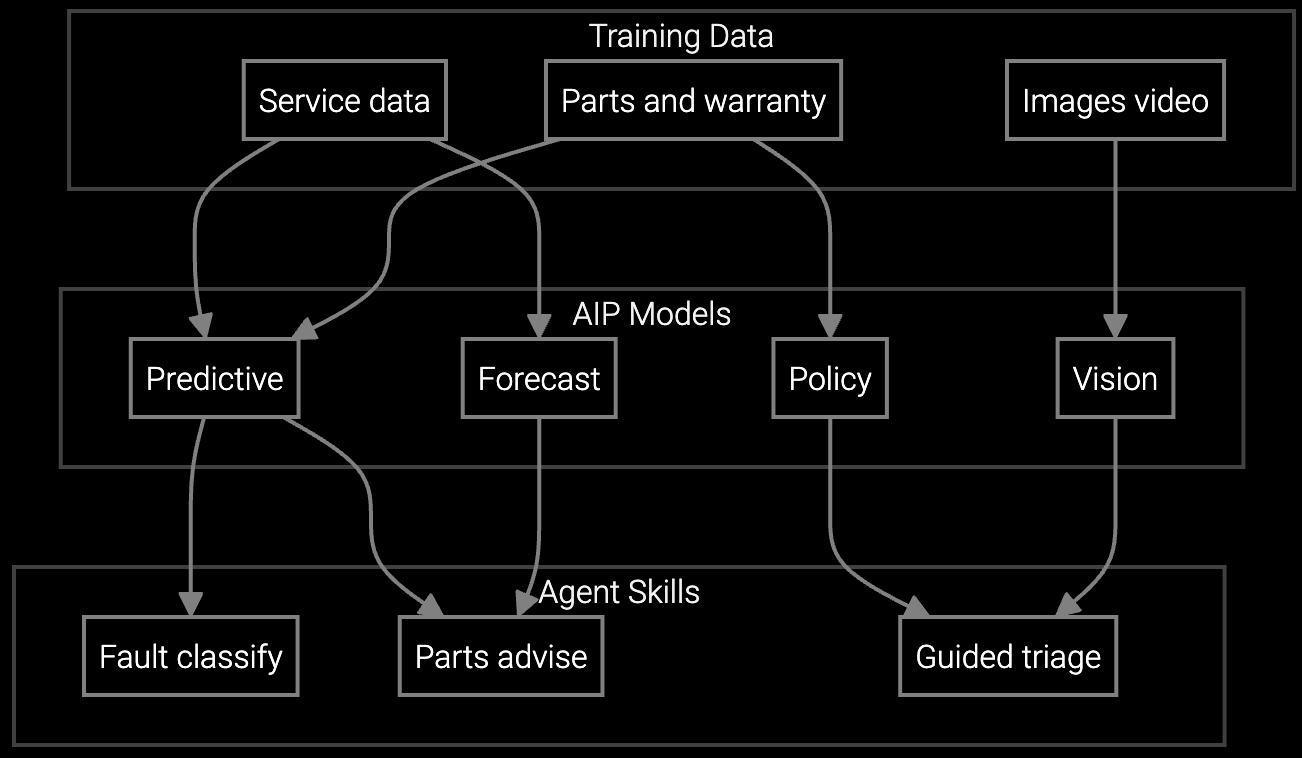
Equip technicians with a mobile copilot that provides real-time guidance, repair procedures, and diagnostic recommendations while standing in front of the customer's washer or refrigerator.
Appliance manufacturers handle thousands of daily service calls across refrigerators, washers, HVAC systems, and kitchen equipment. Seasonal spikes during summer cooling and winter heating seasons strain dispatch capacity. Manual workflow management cannot scale efficiently when you have 400+ technicians handling 2,000+ jobs daily across 12 metro regions.
AI-driven workflow automation handles this volume by continuously optimizing dispatch decisions, parts staging, and documentation capture. The platform learns from every completed job, refining predictions for HVAC compressor failures, refrigerator control board issues, and washer pump replacements. This institutional knowledge compounds over time, making your entire field operation smarter without adding headcount or management layers.
The platform analyzes service history, symptom descriptions, equipment age, and failure patterns to predict required parts with 89% accuracy. Technicians receive pre-populated manifests before leaving the depot, eliminating guesswork. Machine learning continuously refines predictions as the system learns from completed jobs, capturing which parts were actually used versus what was predicted.
End-to-end automation means the platform handles the complete job lifecycle: analyzing incoming service requests, predicting parts needs, matching technician expertise to job complexity, routing efficiently, and capturing post-job documentation automatically. Technicians validate findings rather than manually entering data. This eliminates handoff friction and administrative burden while ensuring knowledge flows back into the system for continuous improvement.
Track three core metrics: first-time fix rate improvement, reduction in truck roll costs, and decrease in technician administrative time. A 14-point FTF improvement eliminates hundreds of return visits monthly. Each avoided truck roll saves $150-280 in labor and vehicle costs. Reducing documentation time by 42 minutes per job frees capacity for additional billable visits without adding headcount. These metrics directly impact service margin and can be tied to quarterly P&L performance.
Yes. Bruviti connects via API to pull service history, work orders, technician profiles, and equipment data from your FSM platform. The AI layer sits on top, providing predictive insights and automation orchestration while your existing system remains the system of record. No rip-and-replace required. Integration typically takes 4-6 weeks depending on FSM system complexity.
Automation preserves and amplifies expertise rather than replacing it. The platform captures tribal knowledge from experienced technicians—diagnostic shortcuts, uncommon failure modes, parts substitution rules—and makes it available to the entire workforce. Junior technicians benefit from decades of institutional knowledge on every job. Senior technicians spend less time on routine documentation and more time solving complex problems. Expertise becomes a shared asset rather than walking out the door at retirement.

How AI bridges the knowledge gap as experienced technicians retire.
Generative AI solutions for preserving institutional knowledge.

AI-powered parts prediction for higher FTFR.
See how Bruviti automates dispatch, parts staging, and documentation to reduce truck roll costs and improve first-time fix rates.
Schedule Executive Briefing