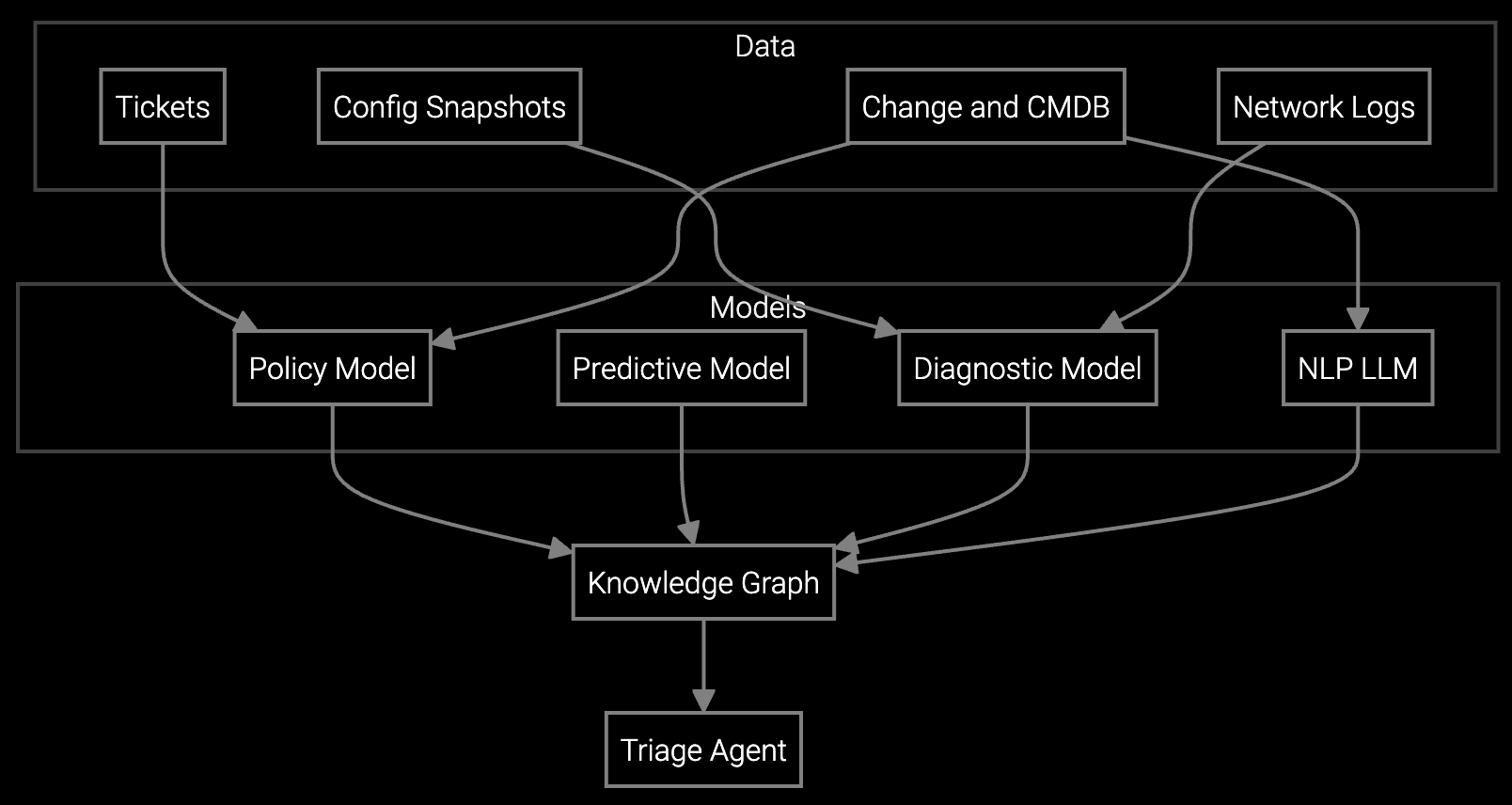
Legacy machinery with 30-year lifecycles demands a remote diagnostics strategy that outlasts your current tool stack.
Bruviti deployment data shows AI remote support cuts repeat truck rolls 38% on industrial equipment. Operators evaluating build vs buy should anchor on this benchmark, because a bought platform delivers the dispatch reduction on day one, while a homegrown tool spends months before it reliably keeps technicians off the road.
Support engineers toggle between separate platforms for PLC logs, SCADA telemetry, and remote sessions. Each product line brings its own remote access tool, creating training overhead and slowing resolution.
Thousands of machine hours generate massive log files. Support engineers spend 40+ minutes per incident parsing pressure, vibration, and temperature data to isolate root cause before recommending next steps.
Senior engineers who know how to diagnose rare compressor failures or turbine imbalances operate as bottlenecks. When they leave, that institutional knowledge disappears, forcing escalations and extending resolution times.
Building an in-house remote diagnostics system gives you full control over telemetry parsing, troubleshooting workflows, and integration with legacy equipment protocols. But it requires sustained engineering investment—data scientists to train models on machine-specific failure patterns, platform engineers to maintain session infrastructure, and ongoing model retraining as equipment ages.
Buying point solutions delivers speed but introduces new silos. One vendor handles remote access, another analyzes vibration data, a third manages case documentation. Support engineers still swivel between systems. Bruviti's platform unifies telemetry ingestion, automated log analysis, and guided troubleshooting in a single interface. API-first architecture means you can extend it without vendor dependency. Deploy pre-trained models for common industrial equipment failures, then customize for your unique machinery configurations.
Industrial machinery operates in remote facilities worldwide, generating sensor data from PLCs, SCADA systems, and IoT devices. Equipment lifecycles span decades, meaning your remote support strategy must accommodate both current CNC machines and 20-year-old turbines still under service contract.
Support engineers need unified visibility into vibration patterns, temperature spikes, pressure anomalies, and run-hour cycles—without logging into separate vendor portals. Manual correlation of these data streams delays diagnosis and escalates incidents unnecessarily. The right platform ingests all telemetry types, applies AI-driven pattern recognition, and surfaces actionable insights in real time.
Most industrial SCADA and PLC integrations complete within 2-4 weeks using standard OPC-UA or Modbus protocols. Bruviti's platform includes pre-built connectors for common industrial automation systems. Custom protocols may require additional configuration but typically don't extend beyond 6 weeks for initial telemetry ingestion.
Yes. The platform supports custom model training using your historical maintenance logs, sensor data, and resolution outcomes. You retain full ownership of your training data and models. Pre-trained industrial equipment models provide immediate value while custom models learn your unique machinery signatures over time.
Bruviti's API-first architecture allows data export in standard formats and supports integration with third-party tools. Your historical telemetry, case data, and trained models remain accessible. Unlike closed platforms, you're not locked into a proprietary ecosystem that makes migration costly or risky.
Automated log analysis identifies root cause patterns that support engineers might miss during manual review. Guided troubleshooting workflows surface the most likely resolution paths based on similar past incidents. This combination resolves more issues remotely on first contact, reducing unnecessary escalations to senior engineers or on-site visits.
No. The platform handles model retraining automatically as new resolution data accumulates. Your support engineers provide feedback on resolution accuracy through normal workflows, which continuously improves model performance. Data science expertise is only required if you want to build highly specialized custom models beyond the platform's pre-trained capabilities.
Software stocks lost nearly $1 trillion in value despite strong quarters. AI represents a paradigm shift, not an incremental software improvement.
Function-scoped AI improves local efficiency but workflow-native AI changes cost-to-serve. The P&L impact lives in the workflow itself.
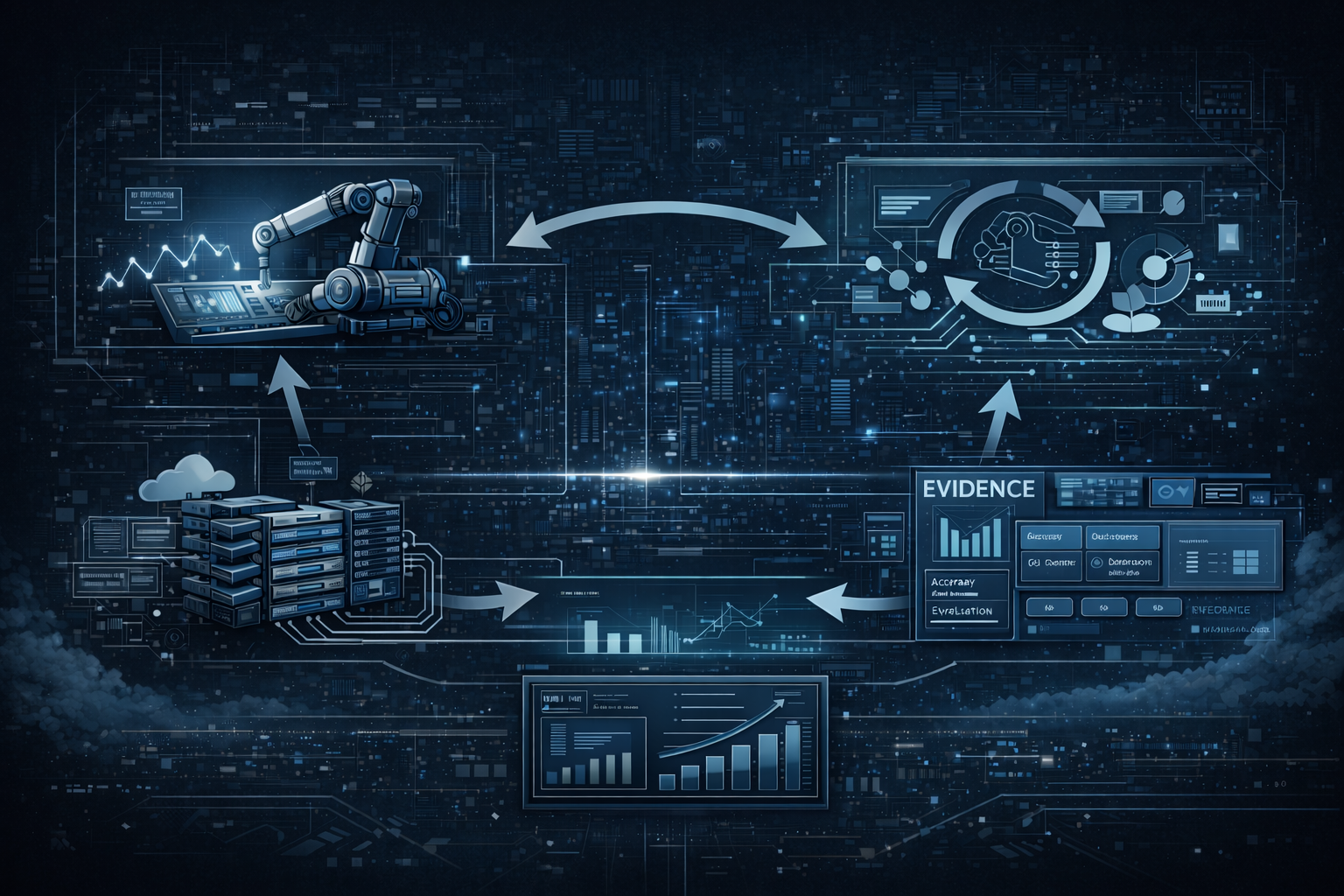
Five key shifts from deploying nearly 100 enterprise AI workflow solutions and the GTM changes required to win in 2026.
Schedule a 30-minute demo showing telemetry ingestion, automated log analysis, and guided troubleshooting on industrial machinery.
Schedule Demo