

Fix Industrial Parts Stockouts: 40%+ Fewer Stockouts with AI Demand Forecasting
When CNC machines sit idle waiting for bearings or pumps fail without backup seals on hand, production stops and customers leave.
In Brief
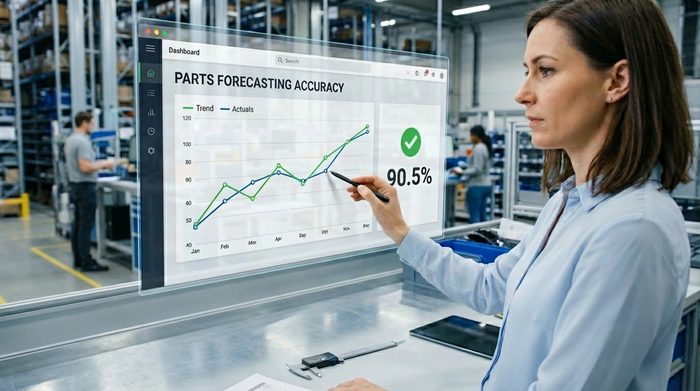
Bruviti deployment data shows AI demand forecasting reduces stockouts by 40% or more for industrial service parts. Planners get A-class SKU forecasts at under 8% MAPE, so the right part is on the shelf when a work order lands. Fewer emergency expedites, fewer delayed repairs, fewer escalations to chase.
The Parts Availability Challenge
Stockouts Delay Service
Critical parts missing when needed most. You check inventory, part shows zero, customer equipment stays down while you wait for emergency shipping. Every hour of delay costs the customer production capacity.
No Substitute Visibility
Part discontinued or backordered, but you don't know what else fits. You call engineering, dig through specs, waste hours finding a compatible alternative that might already be sitting in another warehouse.
Multi-Location Blind Spots
Parts exist somewhere in the network but you can't see where. You check your local system, it says backorder. The part is actually sitting 200 miles away but you'll never find it without calling five warehouses.
How AI Prevents Stockouts Before They Happen
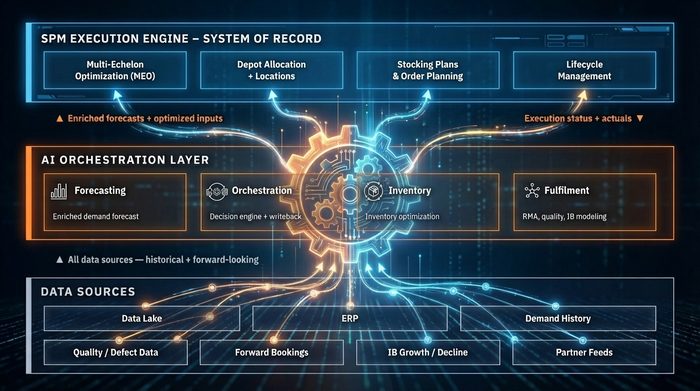
The platform ingests your installed base data, service history, and inventory levels across all locations. It learns which parts fail at which equipment ages and usage levels. For industrial machinery with 15-20 year lifecycles, this means predicting bearing replacements, seal kits, and hydraulic components before the failure call comes in.
When you search for a part number, the system shows real-time availability across your entire warehouse network plus compatible substitutes ranked by fit and availability. No more calling around or waiting for callbacks. If the exact part is backordered, you see three alternatives with cross-reference data and stock levels in one screen.
What This Gets You
- +
92% fill rate improvement cuts emergency shipments and keeps customer lines running without delay.
- +
Substitute matching in under 10 seconds eliminates hours spent calling engineering for cross-references.
- +
Multi-location visibility prevents duplicate orders and finds existing stock before placing new orders.
See It In Action
Service Parts Demand Forecasting
Predicts bearing, seal, and hydraulic component demand by analyzing equipment age, run hours, and seasonal production cycles across your industrial machinery installed base.
Predictive Inventory Planning
Optimizes stocking levels for high-value CNC machine parts by location, balancing carrying costs against the risk of production downtime from stockouts.
Parts Identification from Photos
Snap a photo of a worn compressor seal or damaged motor coupling and get instant part number identification with substitute availability across your warehouse network.
Industrial Machinery Parts Management
The Industrial Equipment Context
Industrial machinery OEMs support equipment with 15-30 year lifecycles deployed across factories, plants, and remote job sites worldwide. A single CNC machine might have 200+ serviceable parts. Heavy compressors and turbines run continuously with wear parts needing replacement on predictable cycles tied to run hours and operating conditions.
Parts obsolescence hits hard when equipment outlives component supply chains. Original bearings discontinued after 12 years, but machines keep running for 25. You need substitute matching that understands load ratings, shaft dimensions, and seal compatibility—not just part numbers. Multi-site manufacturing customers expect same-day fulfillment from regional warehouses, making multi-location visibility critical.
Implementation Priorities
- +
Start with high-run-hour CNC and machining equipment where predictable wear drives consistent parts demand.
- +
Connect SCADA and PLC data feeds to capture actual run hours and operating loads for forecast accuracy.
- +
Track fill rate improvement and emergency shipment reduction to prove ROI within first 90 days.