
When every hour of fab downtime costs $1M+, getting technicians to fix it right the first time isn't optional.
Bruviti deployment data shows pre-dispatch preparation dropping to under 2 minutes and parts returns falling 25% with AI. Operators see field-service ROI in faster, more accurate dispatches: techs leave with the right parts, fewer come back, and fab tools spend less time waiting on a second visit.
Technician shows up without the right chamber kit or diagnostic data. Tool stays down. Second visit doubles your service cost and extends fab downtime.
Lithography tool down for 6 hours while technician troubleshoots. Every hour of unplanned downtime costs $1M+ in lost wafer throughput and missed production targets.
Your parts depot stocks $50M in chamber kits and consumables because you can't predict what technicians will need. Carrying cost alone runs 15-25% annually.
The platform ingests telemetry from lithography systems, etch tools, and deposition equipment to predict failures before they cascade. When a work order gets created, AI automatically identifies the root cause, pre-stages the exact chamber kit needed, and routes the technician with the right expertise. Your mobile workforce gets real-time diagnostic guidance on-site, eliminating guesswork and reducing troubleshooting time from hours to minutes.
This isn't about replacing technicians—it's about giving them the answer before they arrive. Parts prediction accuracy improves to 90%+, first-time fix rates climb to 85%+, and you cut repeat truck rolls by half. The result: faster repairs, less downtime, and measurably lower cost per service visit across your installed base.
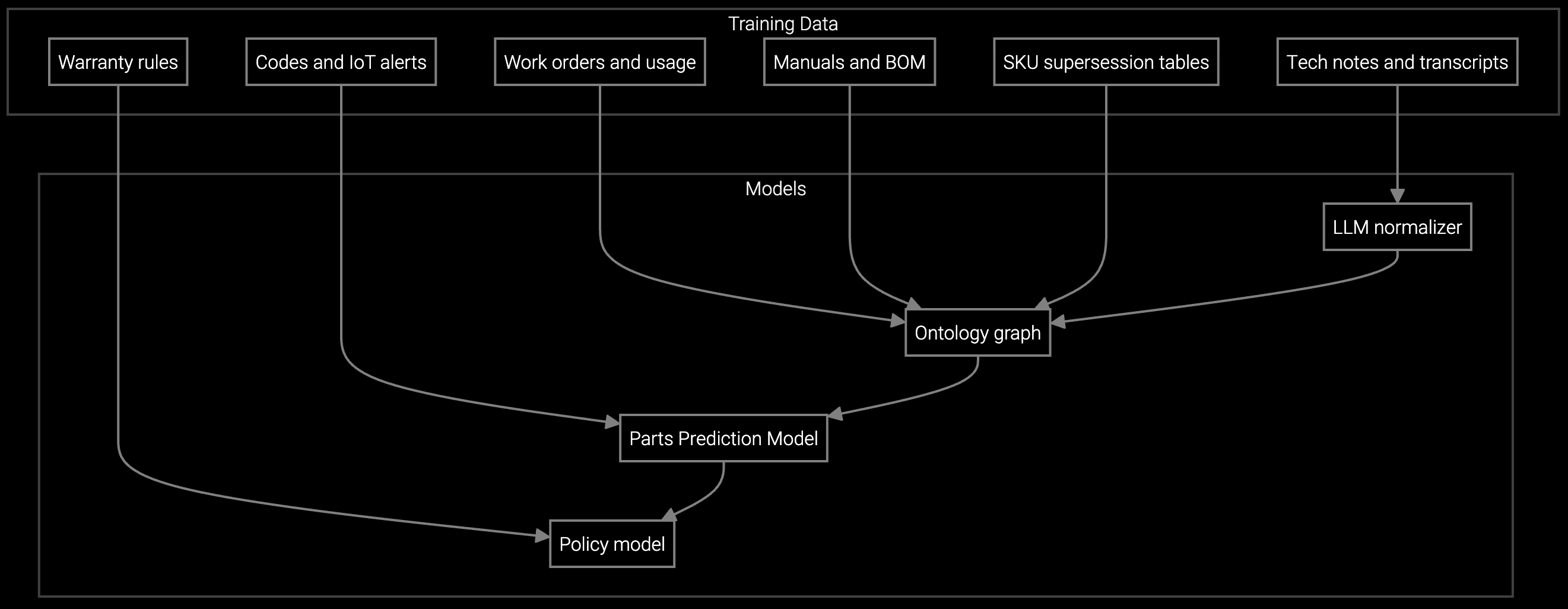
Predicts which chamber kits and consumables technicians need before dispatch to semiconductor fabs, improving first-time fix rates and reducing costly repeat visits.
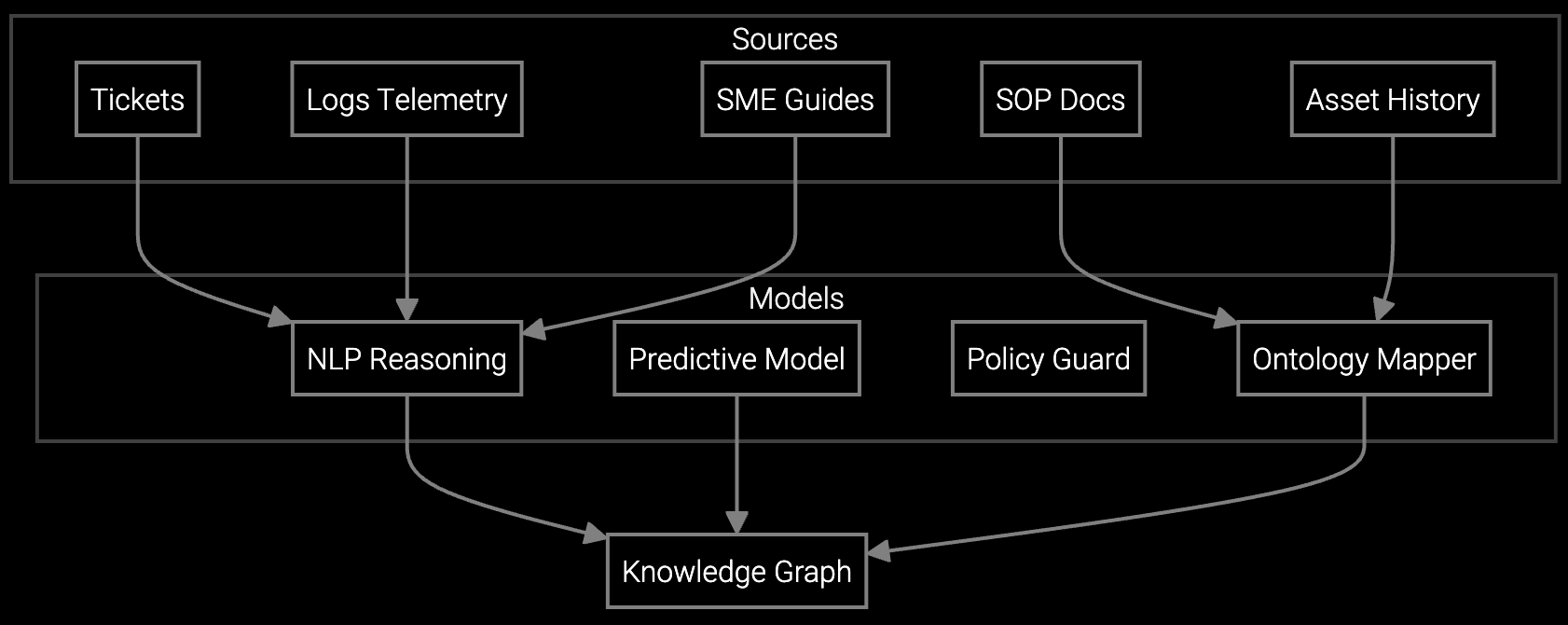
Correlates lithography and etch tool symptoms with historical failure patterns to identify root cause faster, reducing troubleshooting time and fab downtime.
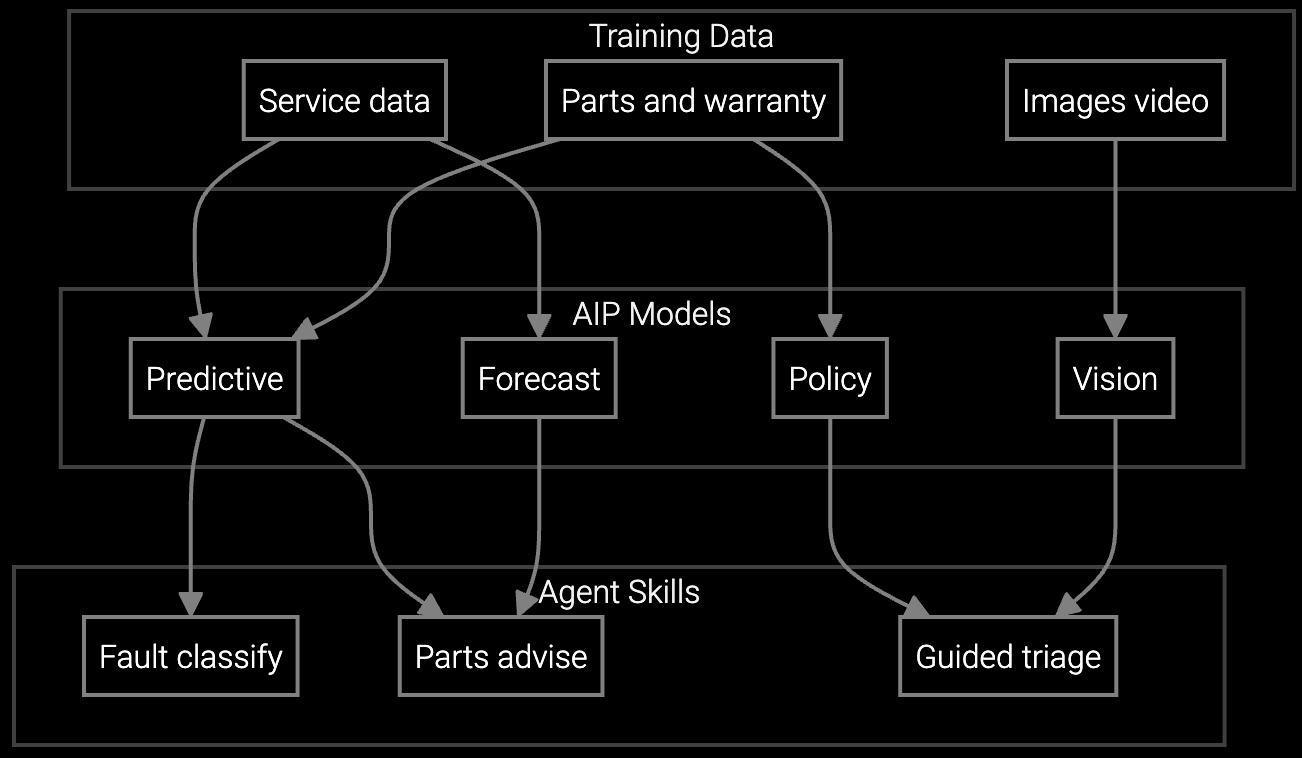
Mobile copilot provides real-time guidance on chamber replacements, recipe adjustments, and diagnostic procedures while on-site at the fab.
Semiconductor fabs operate 24/7 with tight production schedules. When a lithography system or etch tool goes down, every minute counts. AI cuts service costs in three ways: predicting failures before they cascade (avoiding emergency calls), pre-staging parts so technicians fix it right the first time (eliminating repeat visits), and routing the technician with chamber-specific expertise (reducing on-site troubleshooting time). The combination drives measurable ROI: lower truck roll frequency, higher first-time fix rates, and reduced parts inventory carrying costs.
The financial impact shows up fast. A typical fab running 200+ field service calls per month sees 35-40% cost reduction within 6 months. That's $2-3M in annual savings from avoided downtime, fewer repeat visits, and leaner parts inventory. When downtime costs $1M+ per hour, even small improvements in first-time fix rates deliver outsized returns.
Most semiconductor OEMs see measurable cost reduction within 4-6 months. First-time fix rates improve to 85%+ as parts prediction accuracy climbs, reducing repeat truck rolls. The combination of fewer visits and faster repairs delivers $2-3M in annual savings per fab.
Average cost per semiconductor field service visit ranges from $2,500-$4,000 including technician time, travel, and parts. AI reduces this by 35-40% through higher first-time fix rates and better parts prediction, bringing cost per visit down to $1,500-$2,400.
AI analyzes telemetry from lithography, etch, and deposition tools to predict which chamber components will fail and which parts the technician needs before dispatch. This pre-staging eliminates guesswork and drives first-time fix rates from 60-70% baseline to 85%+.
Yes. Predictive models forecast which chamber kits and consumables will be needed based on equipment usage patterns and failure history. This allows semiconductor OEMs to reduce parts inventory by 15-20% while maintaining high parts availability, cutting carrying costs by millions annually.
Track first-time fix rate, truck roll frequency, mean time to repair (MTTR), parts prediction accuracy, and cost per service visit. Compare baseline performance before AI to results after 3-6 months. Semiconductor OEMs typically see 35-40% reduction in total field service costs and $2-3M annual savings per fab.

How AI bridges the knowledge gap as experienced technicians retire.
Generative AI solutions for preserving institutional knowledge.

AI-powered parts prediction for higher FTFR.
Talk to our team about cost modeling specific to your fab equipment and service volumes.
Schedule ROI Analysis