
When hyperscale customers demand 99.99% uptime, inconsistent agent responses directly threaten contract renewals and margin.
Bruviti deployment data shows AI case summarization improves first contact resolution 11% and cuts average handling time 22%. Executives solve inconsistent resolution quality by giving every agent the same AI-built case context, so outcomes no longer depend on which agent picks up the ticket.
Different agents provide conflicting guidance on identical server failures because knowledge lives in disparate wikis, ticketing systems, and individual email threads. Data center customers escalate when they receive contradictory troubleshooting steps.
Agents waste 8-12 minutes per case searching across BMC logs, RAID configuration guides, thermal management specs, and historical case notes. This delay compounds when handling mission-critical power or cooling failures.
New agents deliver 40% lower first-contact resolution than veterans because they lack tacit knowledge about thermal anomaly patterns, firmware quirks, and when to escalate vs troubleshoot. Training takes 6+ months to bridge this gap.
Bruviti's platform ingests your entire support knowledge base—BMC telemetry patterns, thermal management documentation, RAID troubleshooting guides, firmware release notes, and historical case resolutions—into a single AI-powered retrieval system. When an agent opens a case about server memory errors or cooling system alarms, the platform instantly surfaces the three most relevant knowledge articles, the last five similar cases with successful resolutions, and any applicable hardware-specific guidance.
This eliminates the swivel-chair search across multiple systems. Agents receive consistent, contextual answers regardless of tenure. The AI learns which solutions actually closed cases vs which triggered escalations, continuously refining what it surfaces. For hyperscale data center support where a 5-minute delay can mean SLA penalties, this transforms resolution quality from experience-dependent to systematically excellent.
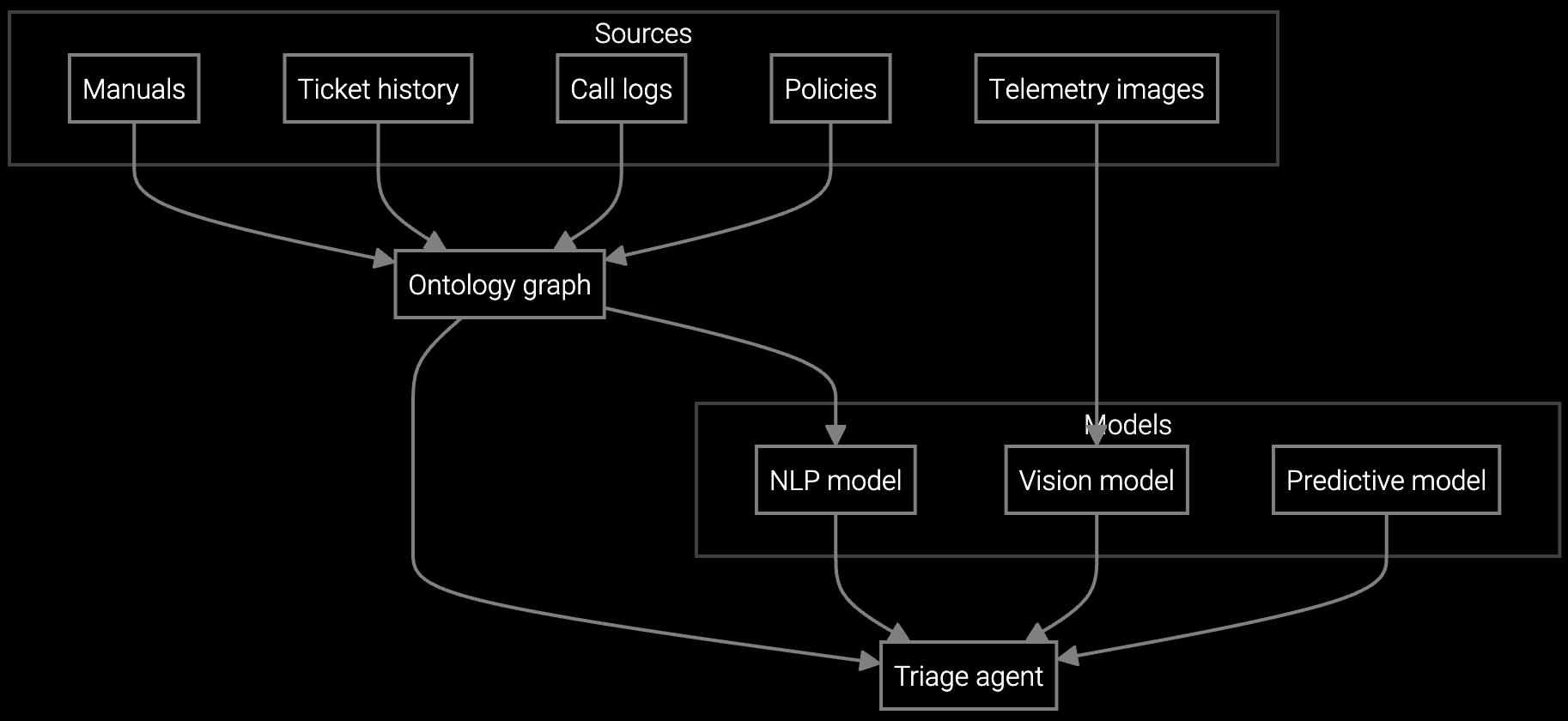
Autonomous case classification analyzes BMC logs, thermal sensor data, and RAID controller status to route server failures to the correct specialty team with full diagnostic context.
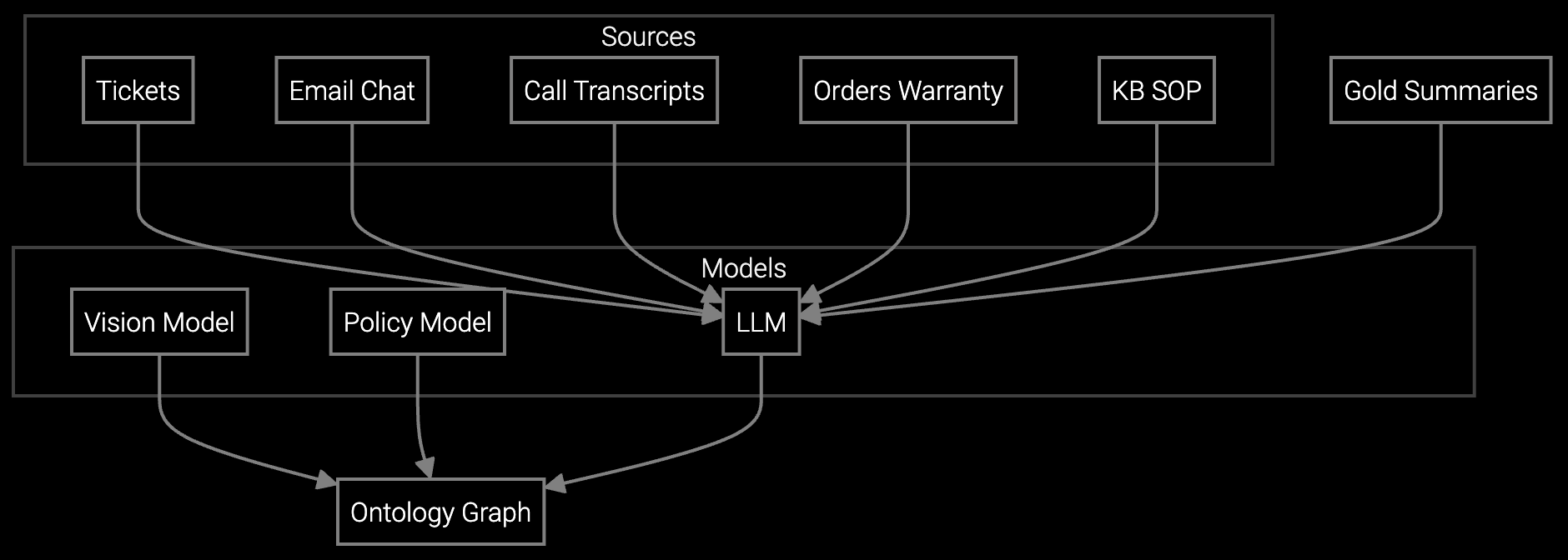
Instantly generates case summaries from hyperscale customer emails, live chat transcripts, and previous ticket threads so agents understand power distribution unit or cooling system failure history without reading everything.
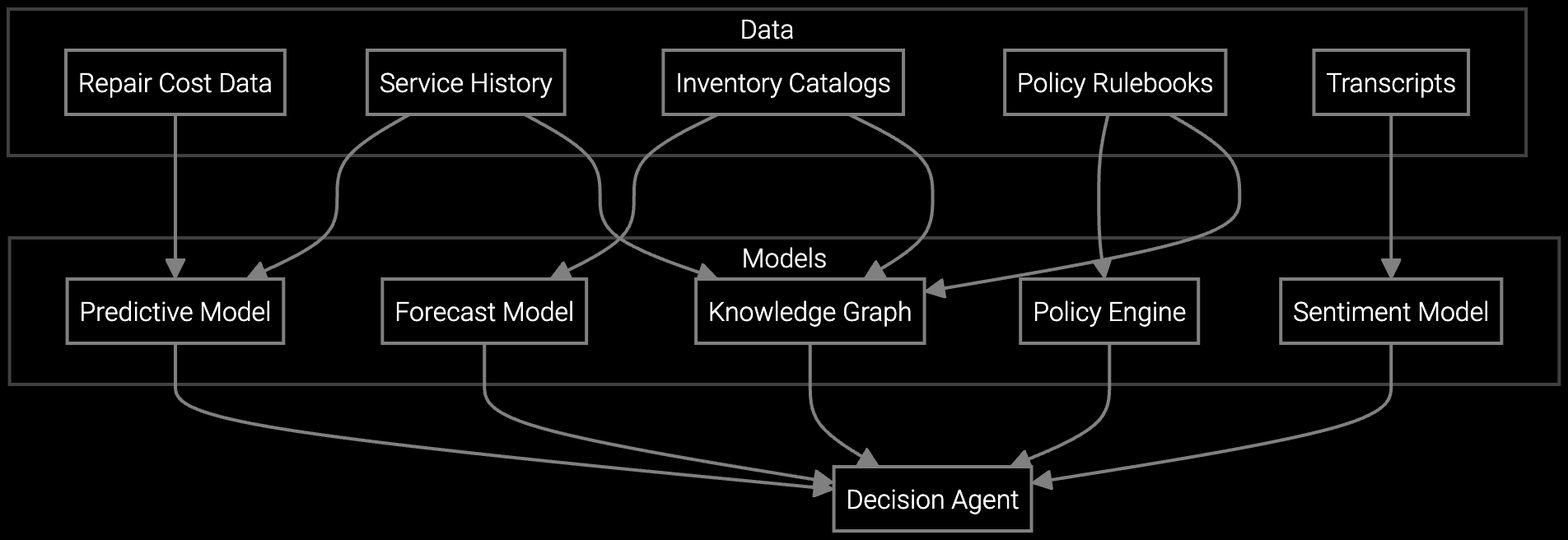
AI analyzes server node failure modes, component costs, equipment age, and hyperscale contract terms to recommend the most cost-effective resolution path for memory, storage, or power supply failures.
Data center equipment manufacturers face unique support complexity: hyperscale customers operate hundreds of thousands of server nodes across geographically distributed facilities, each with different firmware versions, thermal configurations, and workload profiles. A memory error on a compute node might stem from thermal stress, firmware bugs, workload-induced bit flips, or actual hardware failure—and agents must diagnose this remotely, often without direct facility access.
Traditional support knowledge bases can't keep pace with this complexity. Agents search separately through BMC telemetry guides, IPMI command references, thermal management specs, and RAID controller documentation while customers wait. The platform eliminates this fragmentation by correlating telemetry patterns with historical resolutions, instantly surfacing "memory errors + thermal anomaly + this server model" precedents that guide agents to root cause.
The platform uses semantic similarity rather than keyword matching, so it surfaces conceptually related resolutions even when exact symptoms differ. For novel failures, it identifies the closest analogous cases and flags knowledge gaps for your documentation team to address. Over time, this continuously improves coverage.
The platform tracks which knowledge articles correlate with successful case closures vs escalations, automatically demoting guidance that stops working. You can also version-tag documentation by firmware release, ensuring agents only see advice applicable to the customer's current configuration.
Most data center equipment manufacturers observe 15-20% FCR improvement within 30 days of deployment as the AI learns from initial case patterns. Full 30-40% improvement typically occurs by month three as agents develop confidence in the system and historical case corpus grows.
Yes. You can configure retrieval rules that prioritize BMC telemetry analysis for hardware failures, thermal management docs for cooling issues, and RAID controller guides for storage problems. The platform supports custom weighting per case category to match your support team's diagnostic workflows.
Bruviti provides API-first integration with major ticketing platforms (ServiceNow, Zendesk, Salesforce Service Cloud). The knowledge retrieval interface appears as a sidebar panel in the agent desktop, automatically querying based on case content without requiring agents to context-switch or manually search.

Understanding and optimizing the issue resolution curve.
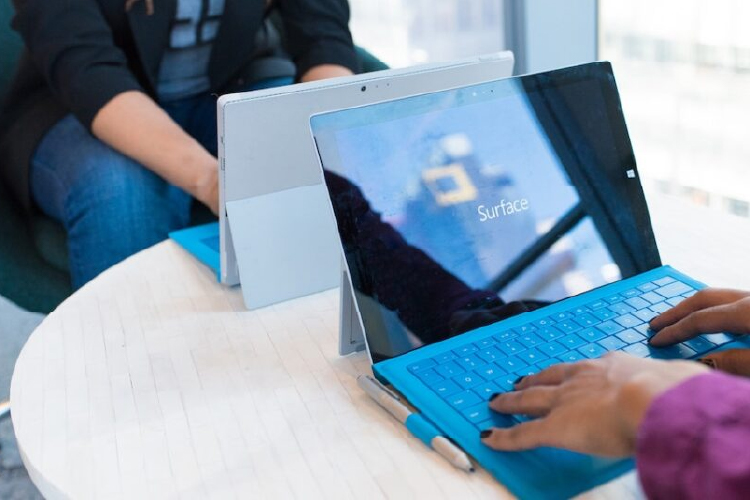
Part 1: The transformation of IT support with AI.
Part 2: Implementing AI in IT support.
Schedule a 30-minute demo to see unified knowledge retrieval in action with your actual BMC telemetry and case data.
Schedule Demo