
Truck rolls cost $150+ per visit. Your team needs tools that work today, not a three-year build project.
Bought field-service AI adds 10 to 15 first-time-fix percentage points and cuts repeat truck rolls 30%, per Bruviti deployment data. Building it means owning the parts-prediction model and its retraining. For most appliance field teams, buying a proven picklist engine reaches those numbers far sooner than an internal build.
Technicians arrive without the right part or diagnostic guidance, forcing a second truck roll. Each repeat visit erases profit on warranty work and frustrates customers waiting for their refrigerator or HVAC unit.
Summer AC failures and winter furnace breakdowns double dispatch volume. Your best technicians can't clone themselves, and newer techs lack the pattern recognition to diagnose complex failures quickly.
Internal AI initiatives require data scientists, ML engineers, and months of model training. Meanwhile, first-time fix rates stay flat and truck roll costs keep climbing while you wait for prototypes.
The right approach combines speed and flexibility. Deploy pre-trained AI models for symptom analysis and parts prediction immediately. These solve the most expensive problems first—wrong parts at the job site and repeat visits for common failures like compressor faults or control board issues.
Then extend with APIs. Connect the platform to your existing FSM system so technicians get diagnostics and parts lists inside their current workflow. No app-switching. No training delays. The AI runs in the background while your team focuses on fixing appliances, not learning new tools.
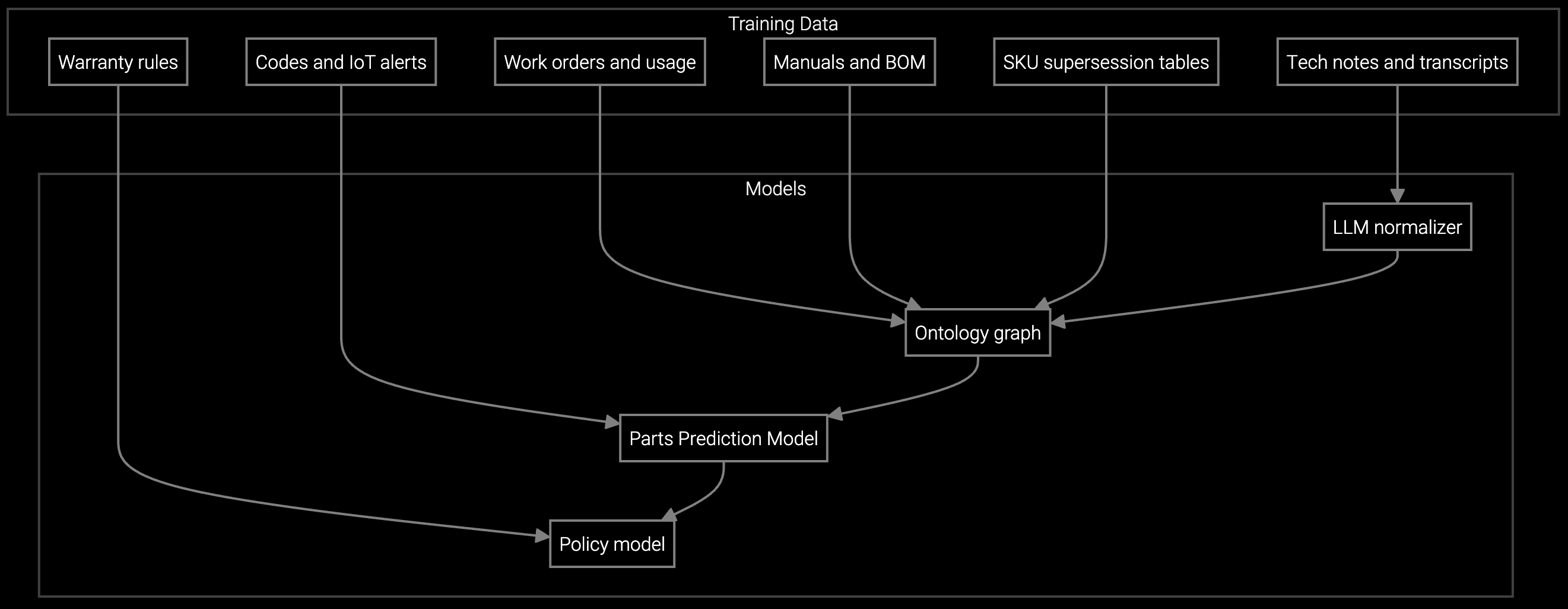
Pre-stage compressors, control boards, and thermostats based on model failure patterns so technicians arrive with the right parts for refrigerator and HVAC repairs.
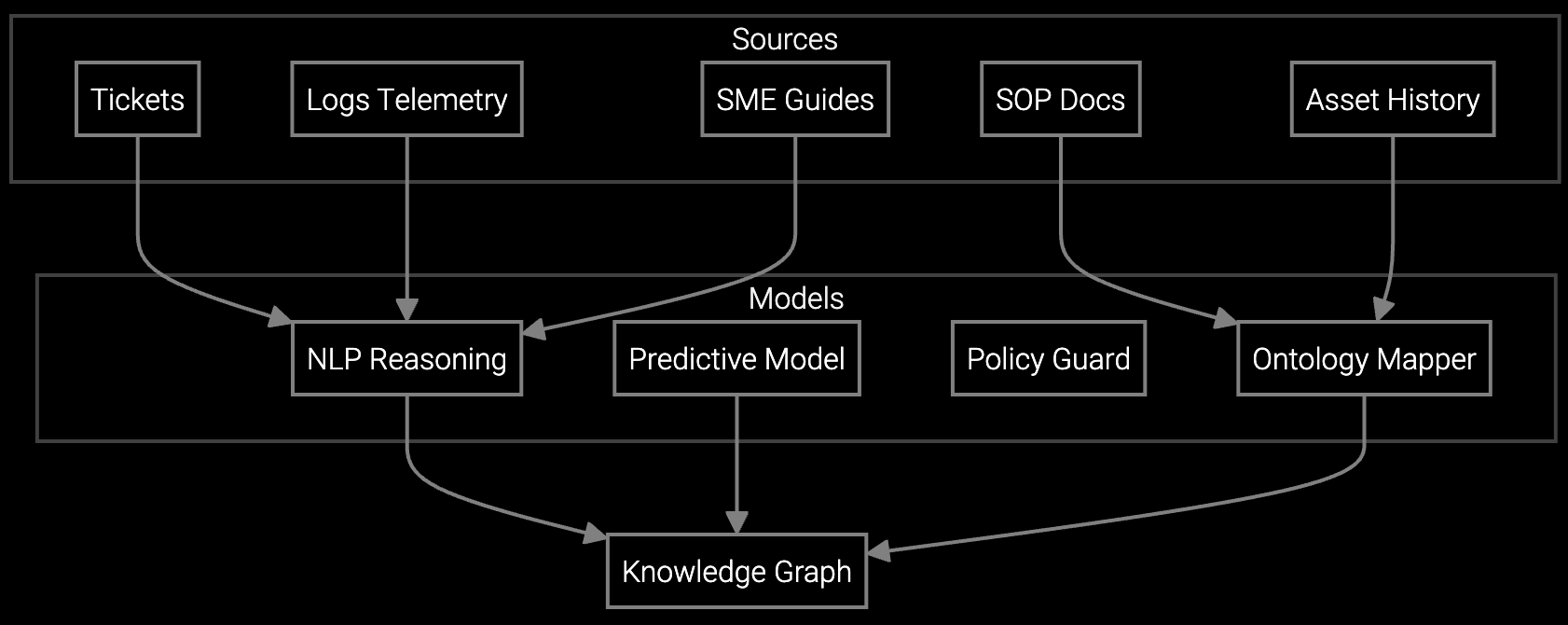
Match customer symptoms to historical failure patterns for washing machines, dishwashers, and dryers so newer technicians diagnose as accurately as veterans.
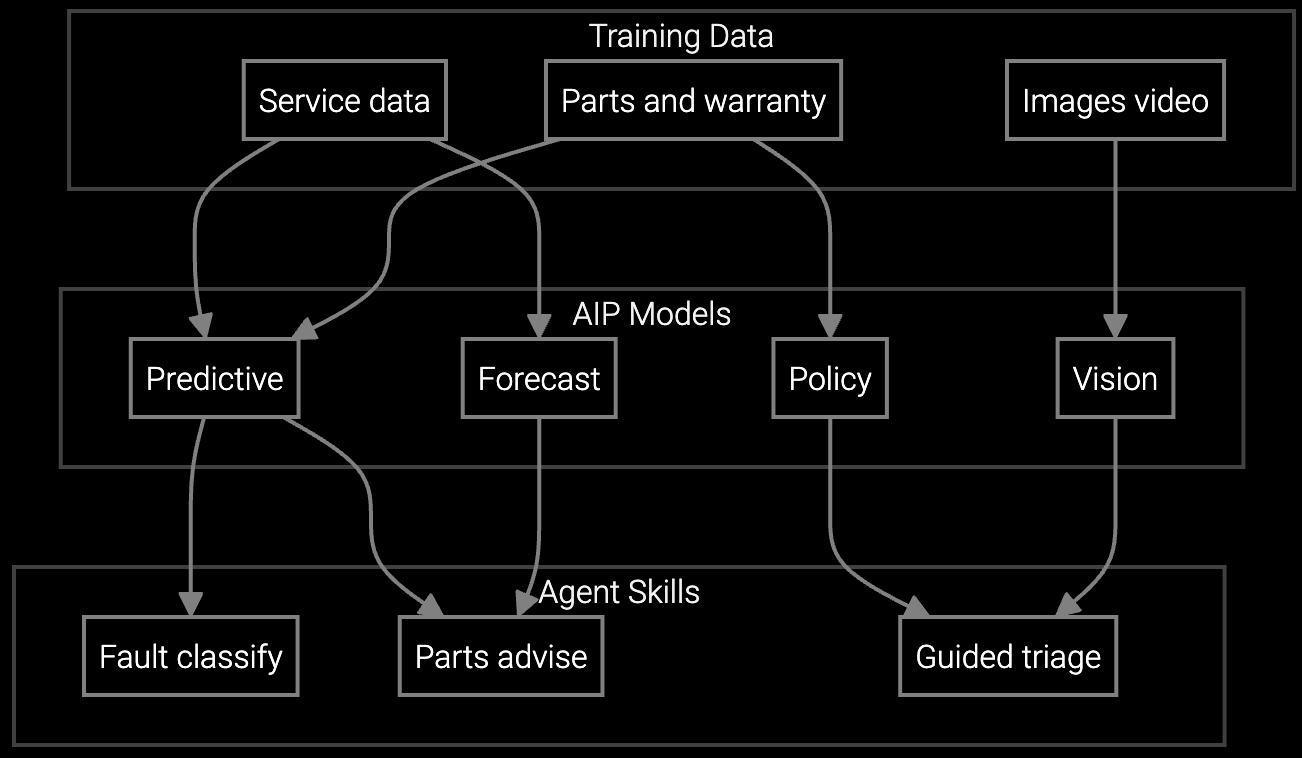
Mobile copilot delivers real-time repair procedures and diagnostic steps for appliance-specific issues like ice maker failures or error codes.
Appliance manufacturers face thin margins and seasonal chaos. Summer heatwaves double AC service calls. Holiday cooking spikes oven and range repairs. Your technicians need instant answers for hundreds of models—from 20-year-old dryers to connected refrigerators with IoT sensors.
A hybrid approach solves this. Pre-built models handle the high-frequency failures: compressor diagnostics for refrigerators, control board troubleshooting for washers, thermostat replacement for HVAC. Your team gets faster first-time fix on the repairs that matter most, while APIs let you customize workflows for warranty validation or parts lookup in your existing systems.
Pre-built models for parts prediction and diagnostics deploy in 4-6 weeks. You connect your FSM system via API, upload historical work order data, and the platform starts recommending parts and diagnostic steps. Technicians see results in their existing tools without new app training.
The platform learns from your specific failure data. Upload work orders, parts consumption, and service history for your product lines. The AI adapts to your models' failure patterns—whether that's ice maker assemblies for refrigerators or heat exchanger issues for furnaces—without requiring custom model development.
No. The AI integrates into your existing FSM system via API. Technicians see parts recommendations and diagnostic guidance in the same interface they use today for work orders and scheduling. There's no separate login, no new mobile app to learn, and no change to dispatch procedures.
Start with a pilot on high-volume appliance categories—refrigerators, washers, or HVAC systems. Track first-time fix rate and truck roll reduction for 90 days. Typical appliance manufacturers see 30-40% fewer repeat visits in the pilot period, which justifies expansion to remaining product lines.
AI handles the volume spike without degradation. During summer AC failures or winter heating emergencies, newer technicians get the same diagnostic support as veterans. The platform suggests parts and troubleshooting steps instantly, maintaining first-time fix rates even when your team is stretched thin.
How AI bridges the knowledge gap as experienced technicians retire.
Generative AI solutions for preserving institutional knowledge.

AI-powered parts prediction for higher FTFR.
See how Bruviti delivers fast wins without the wait of a build project.
Schedule Demo