
With technician expertise walking out the door and first-time fix rates stalling, your architecture choice determines whether you deploy in months or years.
Bought field-service AI lifted first-time fix rate by more than 10% after the Bruviti Parts AI Agent deployment, per Bruviti deployment data. Building it in-house means recreating fault-to-parts models across thousands of SKUs. The buy case wins when a pretrained platform already predicts parts and decides repair-versus-replace in under 5 minutes.
Training foundation models for appliance diagnostics requires collecting decades of failure data across product lines, annotating millions of service records, and assembling ML teams with domain expertise. Most teams underestimate the infrastructure and ongoing retraining costs.
Black-box SaaS platforms force you to route all service data through proprietary APIs with no model access, custom training, or data portability. When the vendor sunsets features or raises prices, your entire technician workflow is hostage.
Legacy FSM systems, warranty databases, and ERP data lakes each require custom connectors. Without API-first design, each new data source adds weeks of integration work and creates brittle point-to-point dependencies that break during upgrades.
Bruviti's platform combines pre-trained service AI models with headless architecture that integrates into existing FSM and ERP systems. You deploy parts prediction, technician assist, and knowledge capture in weeks rather than building from scratch, but retain full control through Python and TypeScript SDKs that let you extend, retrain, and customize models on your own data.
The architecture separates model inference from your application layer through REST APIs and event-driven webhooks. Your technician mobile app, dispatch system, or customer portal calls Bruviti endpoints for predictions while your data stays in your warehouse. If you outgrow a component, you replace one microservice without rewriting your entire stack.
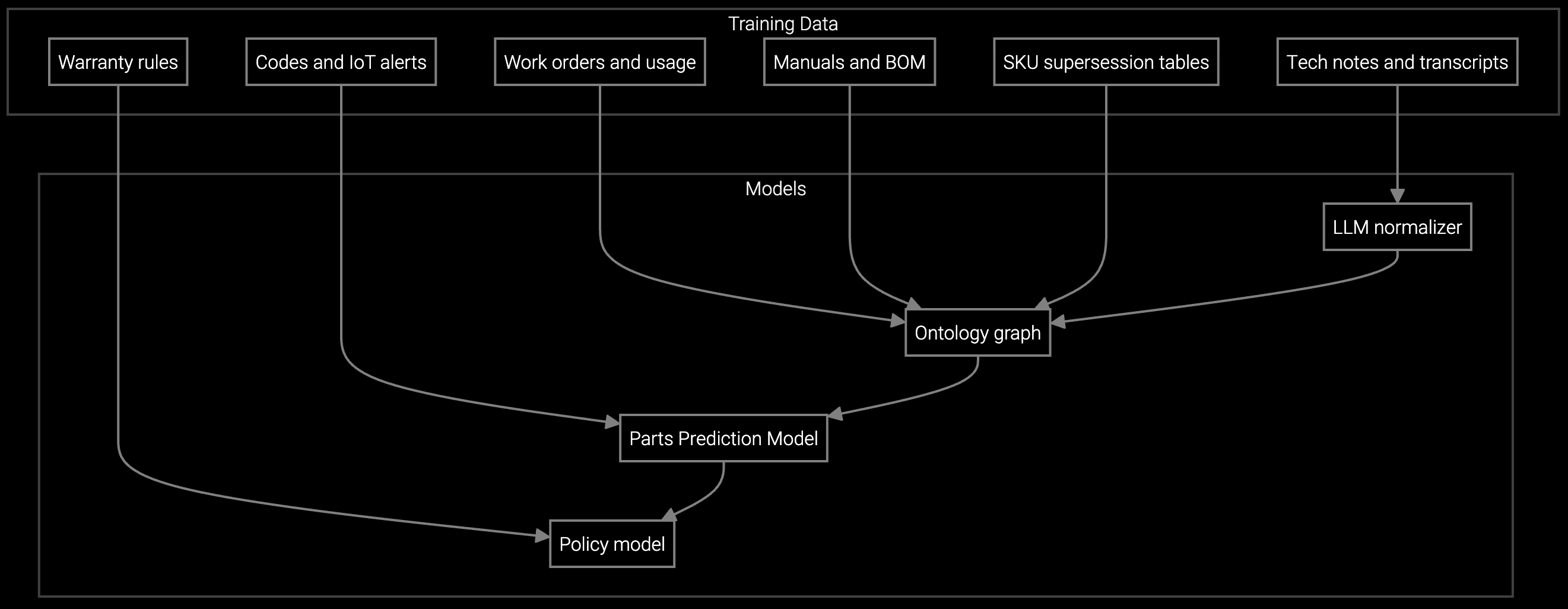
Pre-trained models predict compressor failures, heating element burnouts, and control board issues from symptom descriptions and model history, ensuring technicians carry the right parts for HVAC and refrigeration repairs.
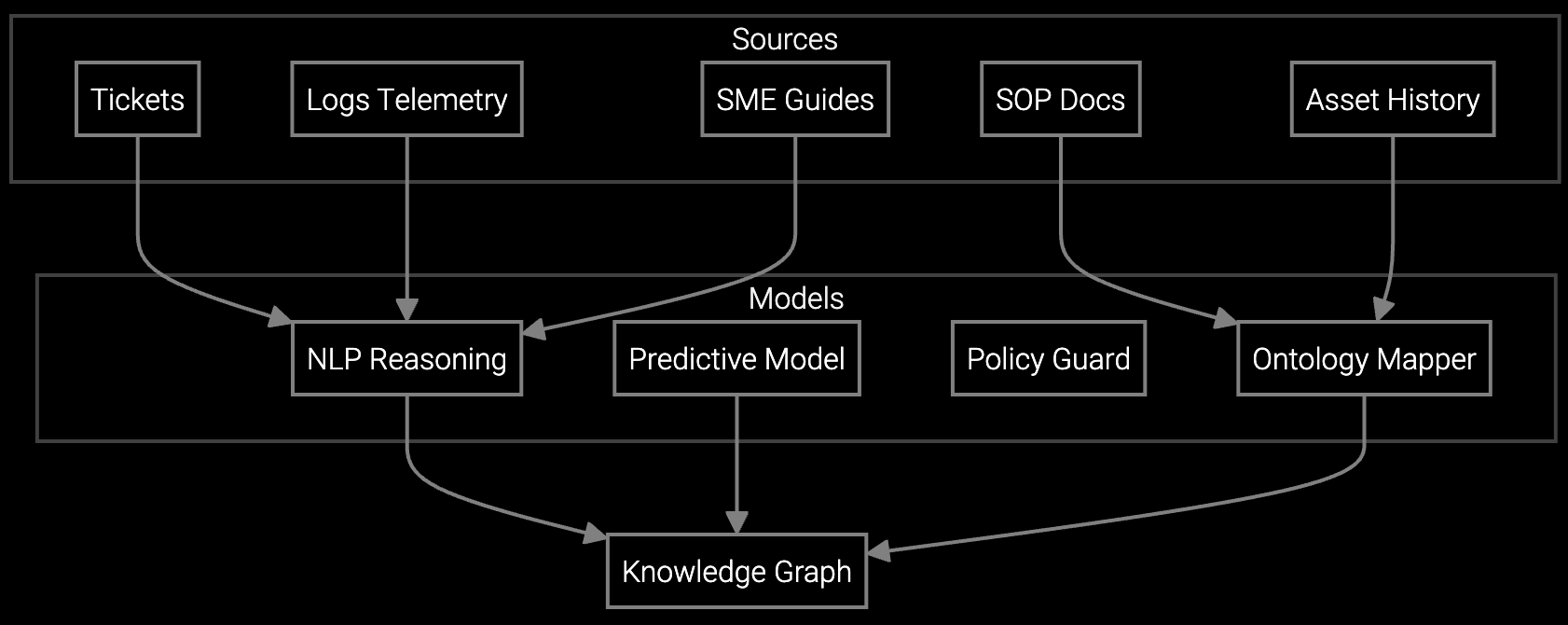
Correlates error codes, symptom patterns, and repair history across decades of appliance models to identify root cause faster, capturing retiring technician expertise before it walks out the door.
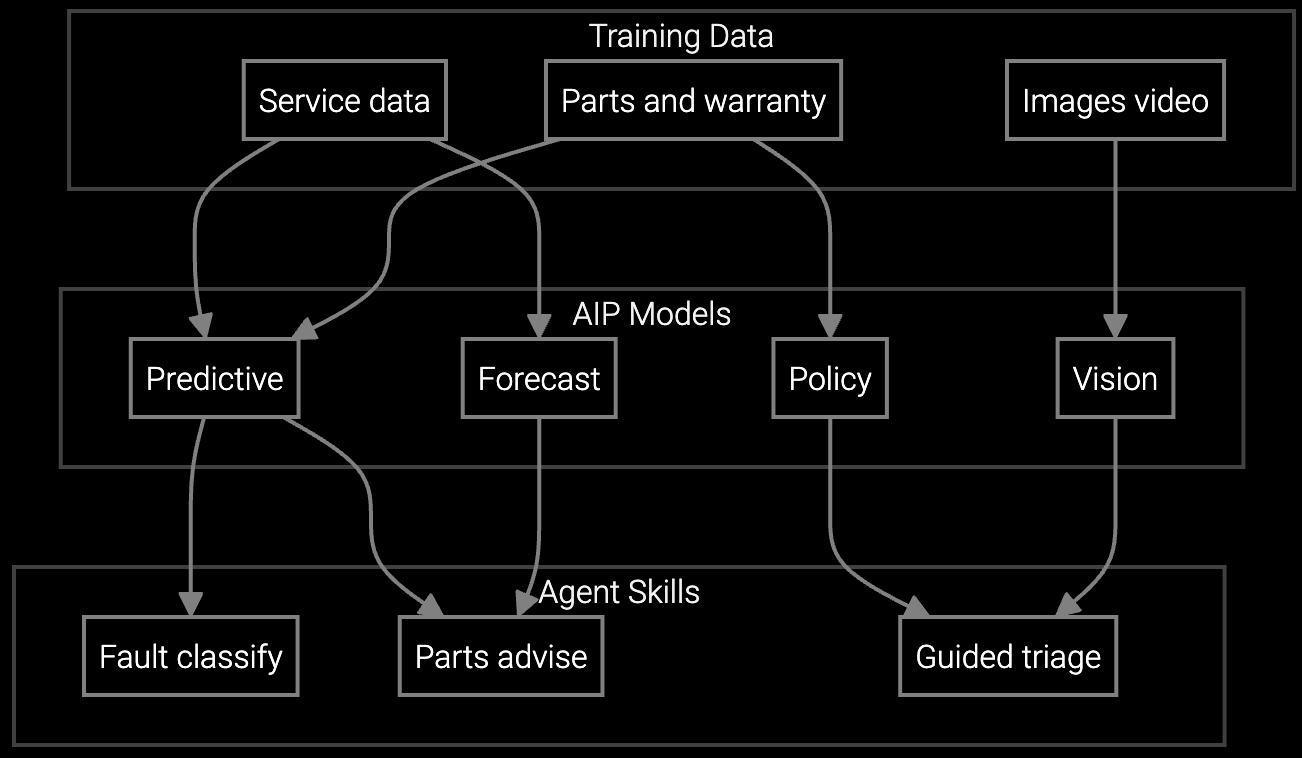
Mobile SDK provides real-time diagnostic guidance, repair procedures, and warranty entitlement checks on-site, extending through APIs you control so you can add custom workflows without vendor approval.
Appliance OEMs supporting millions of installed units across decades of product lines face unique scaling challenges. Pre-trained models must generalize across refrigerator compressor designs from the 1990s through today's smart appliances while still allowing fine-tuning on proprietary failure modes specific to your newest HVAC line.
The API architecture handles seasonal spikes in service volume without requiring you to manage model scaling infrastructure. When heat waves drive air conditioner service calls up 300%, the platform auto-scales inference capacity while your FSM system continues making the same REST calls.
Most appliance OEMs complete initial integration in 8-12 weeks. The platform provides REST APIs and pre-built connectors for common FSM systems like ServiceMax and Oracle Field Service. Your team uses Python or TypeScript SDKs to map work order fields, technician schedules, and parts inventory to Bruviti endpoints without rewriting core FSM logic.
Yes. The Python SDK includes model fine-tuning APIs that let you retrain diagnostics and parts prediction on your own service history. Base models provide generalized appliance expertise, then you add your specific product lines, warranty patterns, and regional failure modes. Models stay in your environment with no data leaving your infrastructure.
The headless architecture means your technician apps and dispatch systems call standard REST APIs, not proprietary interfaces. If you decide to switch providers or build your own models, you replace the inference endpoint while your application code stays unchanged. All training data and custom models remain in your data lake with full portability.
Pricing tiers based on API calls and model inference volume with transparent per-transaction costs. Most appliance OEMs start with a pilot covering 500 technicians, then expand across product lines as ROI proves out. No surprise enterprise licensing fees or forced upgrades when you cross arbitrary user thresholds.
Initial setup requires a Python or TypeScript developer familiar with REST APIs and your FSM system. Ongoing maintenance is minimal since model retraining happens through SDK scripts rather than manual annotation. Most teams assign one backend engineer part-time to manage integrations and monitor API performance.

How AI bridges the knowledge gap as experienced technicians retire.

Generative AI solutions for preserving institutional knowledge.

AI-powered parts prediction for higher FTFR.
Review API documentation, integration patterns, and SDK examples with our technical team.
Schedule Technical Review