
Senior technicians retire in 18 months—your window to capture decades of HVAC and appliance expertise closes fast.
AI parts prediction lifts first-time fix rate from 75-80% to 88%, per Bruviti deployment data, by putting the right part on the truck before dispatch. For appliance makers weighing build versus buy, that proven lift is the decision point: a pre-trained field-service platform delivers it in months, not the quarters a ground-up build needs.
Senior technicians who know every quirk of legacy compressor models and seasonal HVAC failures are retiring. Their tribal knowledge disappears with them, leaving junior technicians dependent on incomplete manuals and escalation queues.
Building AI from scratch demands ML engineers, data scientists, and infrastructure teams. Most appliance manufacturers lack this bench strength, causing 18-24 month delays while competitors gain market share with faster time-to-value solutions.
Closed vendor platforms force you into their workflow, data structures, and pricing models. When your business needs diverge from their roadmap, you're stuck paying for features you don't need while missing the ones you do.
The binary build-or-buy framing misses a third option: API-first platforms that combine pre-trained models with extensibility. Bruviti's approach lets appliance OEMs deploy proven field service AI immediately—parts prediction, root cause analysis, and mobile technician assist—while retaining the ability to customize workflows, integrate proprietary data feeds, and evolve as your strategy matures.
This matters because your competitive advantage comes from applied expertise in appliance service, not from reinventing machine learning infrastructure. Deploy fast with pre-built capabilities proven across HVAC seasonal surges and refrigeration failures. Then extend the platform to capture your senior technicians' knowledge before they retire, embedding their diagnostic patterns into the AI that guides your entire mobile workforce.
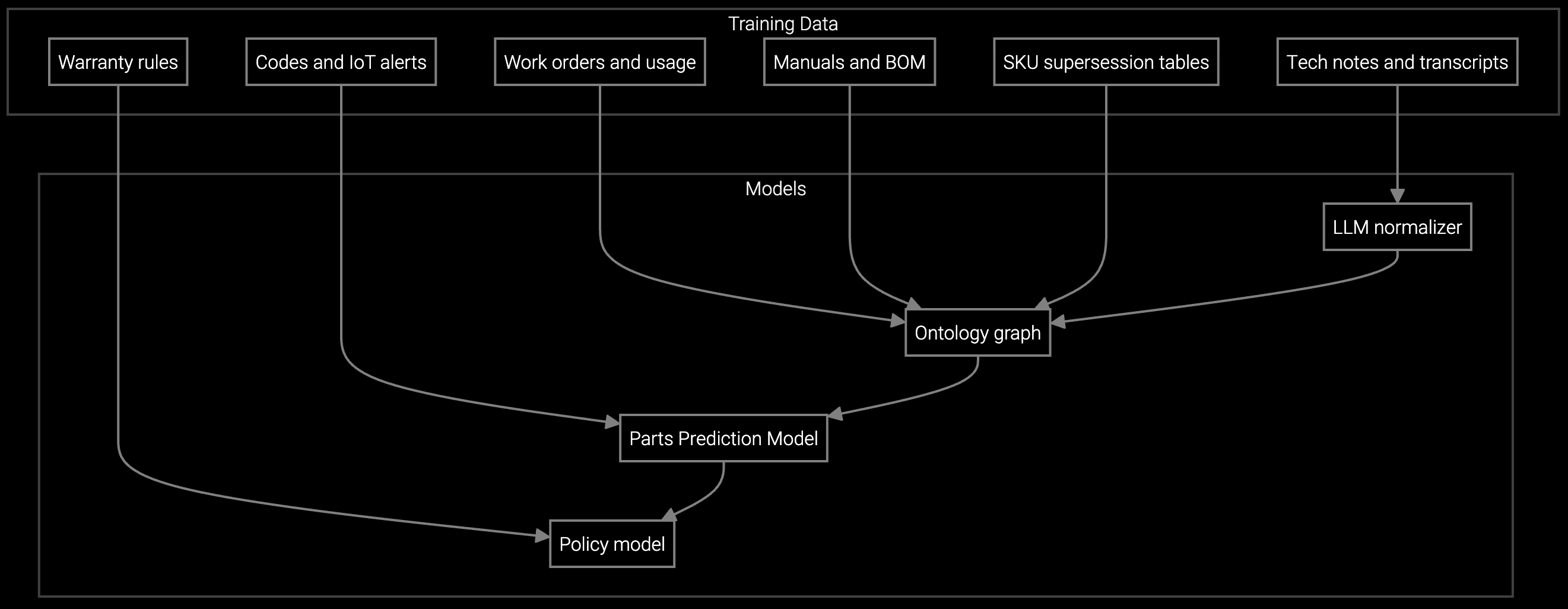
Pre-stage the right compressor or igniter before technicians dispatch to seasonal HVAC failures, eliminating return visits for missing parts.
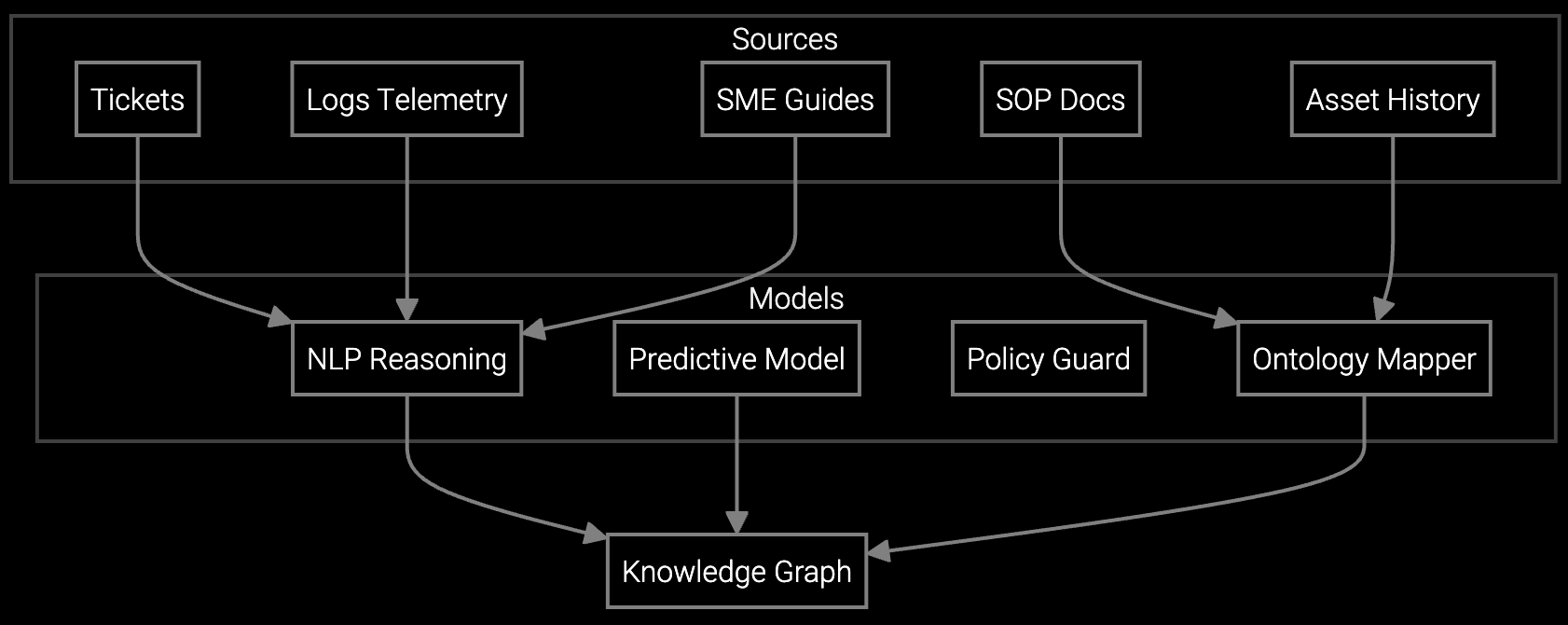
Correlate error codes with historical appliance failure patterns and captured technician expertise to pinpoint root cause faster.
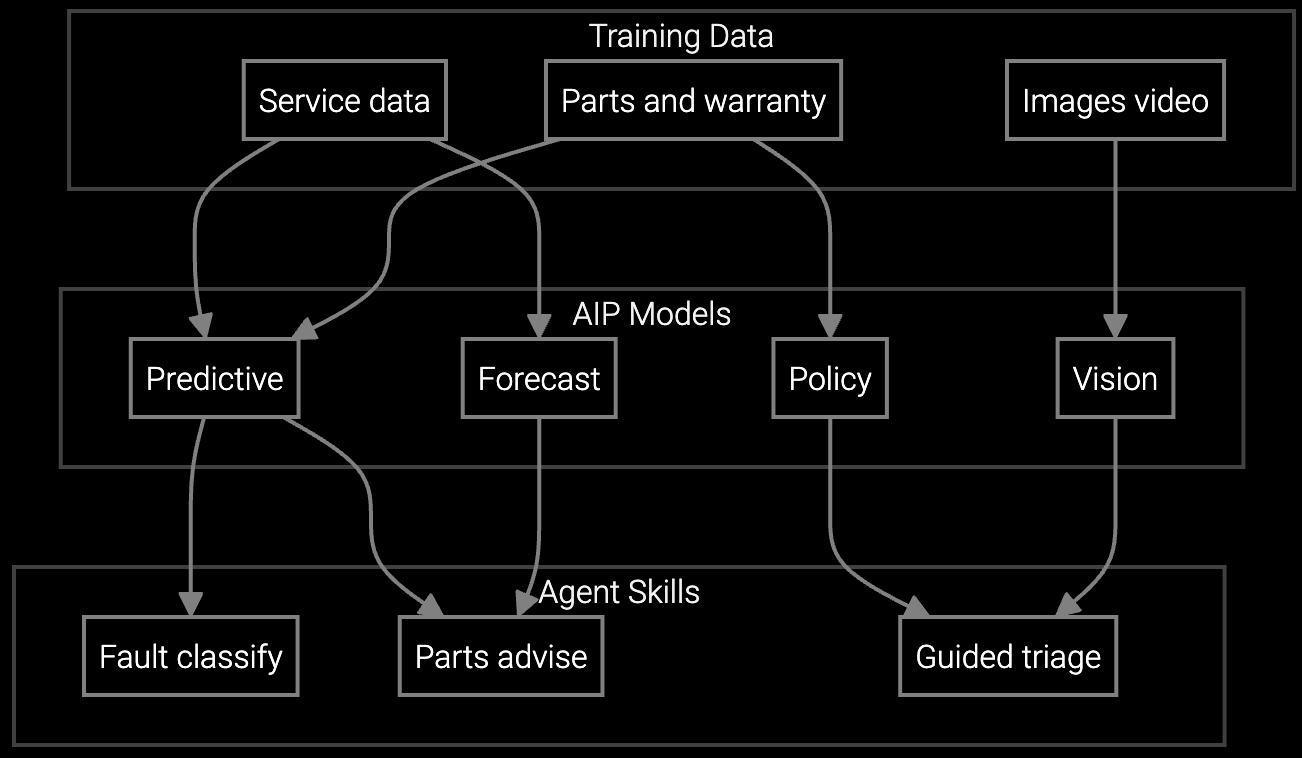
Mobile copilot delivers real-time repair guidance and diagnostic recommendations on-site, bridging the expertise gap as senior staff retire.
Seasonal HVAC demand spikes and warranty cost pressure make speed to value critical. You can't wait 24 months to build custom AI while competitors deploy faster solutions. But you also can't accept vendor lock-in that prevents you from integrating proprietary telemetry from connected appliances or customizing workflows for commercial kitchen equipment versus residential HVAC.
The API-first approach resolves this tension. Start with pre-trained parts prediction that immediately reduces truck rolls for missing refrigerator compressors. Simultaneously, use knowledge capture APIs to record your senior technicians' diagnostic reasoning on complex commercial oven repairs. Within 90 days, you've reduced repeat visits and begun building proprietary IP that competitors can't replicate.
Pre-built platforms deliver measurable truck roll reduction within 60-90 days of deployment. Custom-built solutions typically require 18-24 months before producing business value, creating significant competitive risk during the development period.
API-first platforms let you start with proven capabilities while customizing decision logic, integrating proprietary data sources, and extending the platform to match your specific dispatch rules or warranty policies. You gain speed without sacrificing differentiation.
Knowledge distillation APIs record diagnostic reasoning during actual service calls, embedding tribal knowledge into AI models. This preserves expertise from senior technicians as it's applied in the field, rather than trying to extract it through interviews after retirement.
Modern platforms provide REST APIs that connect to field service management systems, ERP, and parts inventory platforms. This lets you add AI capabilities without replacing core infrastructure or disrupting established workflows.
API-first architectures minimize lock-in by exposing all functionality through open interfaces. Your custom logic, data integrations, and captured knowledge remain portable. Evaluate platforms based on API completeness and data export capabilities before committing.

How AI bridges the knowledge gap as experienced technicians retire.

Generative AI solutions for preserving institutional knowledge.

AI-powered parts prediction for higher FTFR.
Speak with Bruviti's strategy team to evaluate build, buy, and hybrid approaches for your appliance service organization.
Schedule Strategy Session