
Network downtime costs thousands per minute — your field service workflow determines whether technicians fix it right the first time.
AI-generated parts picklists hit 70% coverage at 85% precision, per Bruviti deployment data. A connected network equipment workflow runs fault intake, diagnosis, parts prediction, and dispatch as one chain, so each technician arrives with the right parts list and the throughput of the whole service operation rises.
Technicians receive work orders with incomplete device history, firmware versions, and log context. They spend the first 20 minutes on-site reconstructing what the NOC already analyzed. This repeats for every dispatch.
Field service workflows don't trigger parts prediction before dispatch. Technicians arrive at remote cell towers or data centers without the right optics, power supplies, or replacement modules, forcing second truck rolls.
Firmware-specific troubleshooting steps and RMA triage logic live in senior technician heads or scattered Confluence pages. Junior technicians escalate resolvable issues because the workflow doesn't surface the right procedure at decision points.
Bruviti's headless architecture connects field service management, inventory, SNMP telemetry, and knowledge systems through event-driven APIs. When a work order triggers, the platform orchestrates: log analysis for root cause hints, parts prediction based on device history, and technician assignment weighted by expertise match. The technician receives a mobile-optimized resolution case with complete device context, predicted parts list, and firmware-specific procedures — no manual handoff steps.
You build the workflow rules in Python or TypeScript using standard SDKs. Deploy custom logic for parts substitution, escalation triggers, or SLA prioritization without touching our codebase. The platform exposes webhook endpoints for real-time events (job completion, parts consumption, diagnostics results) so your dashboards and reporting tools stay synchronized. Data stays in your data lake — we process it in-flight and return enriched context without persistence.
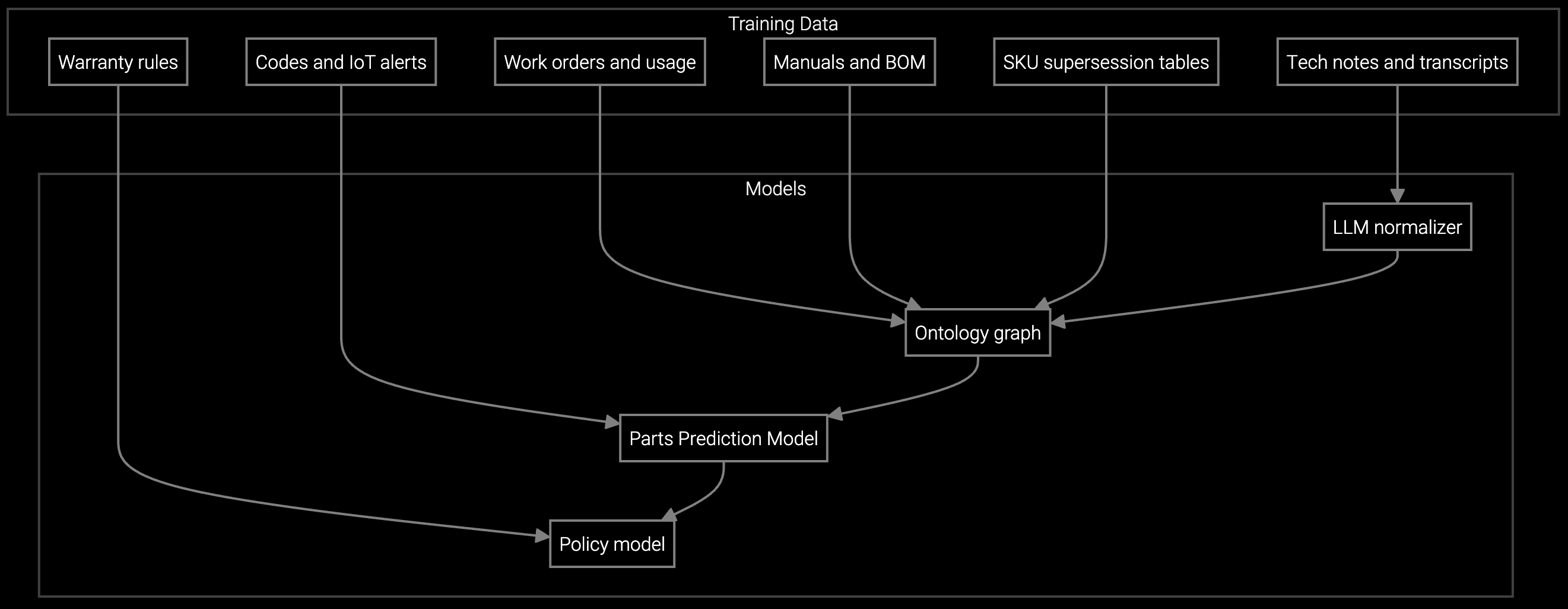
Predicts which transceivers, power modules, or line cards technicians need before dispatch to network sites, improving first-time fix rates and eliminating parts-related return trips.
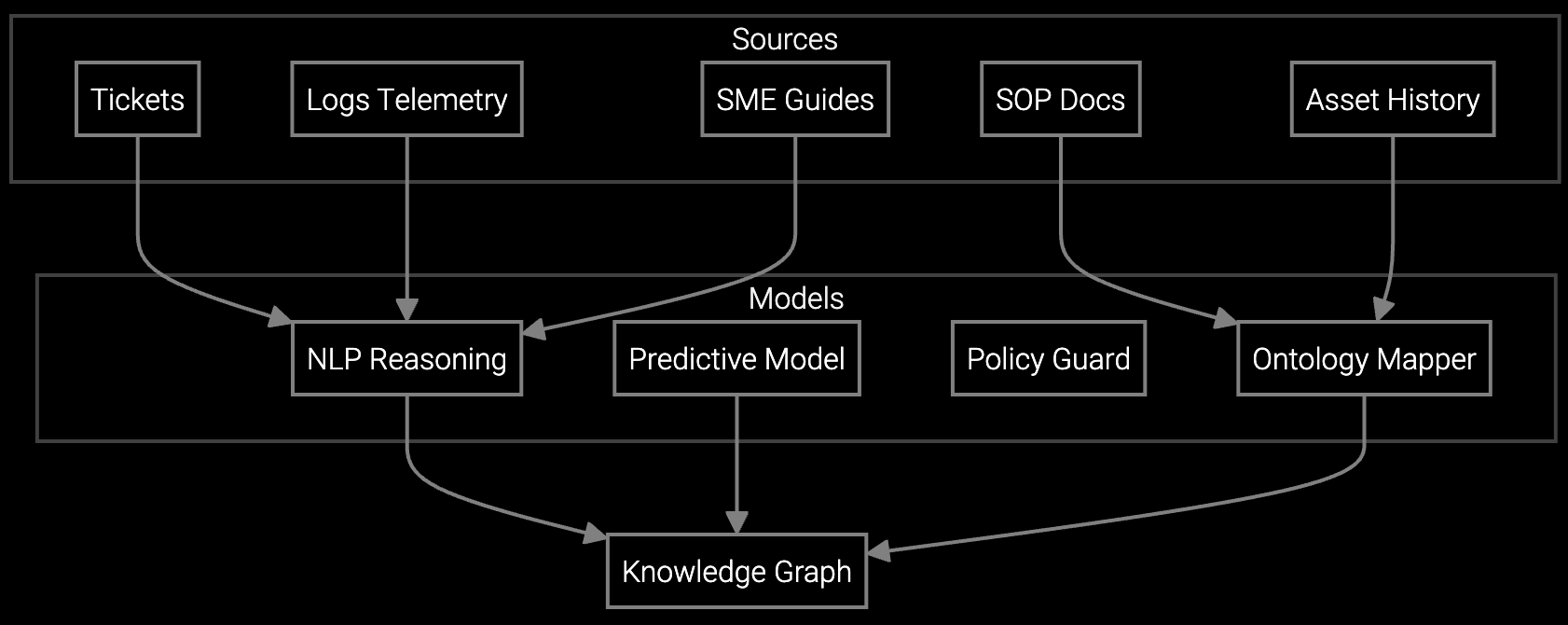
Correlates SNMP trap patterns and syslog sequences with historical firmware failure modes to identify root cause faster for routers and switches.
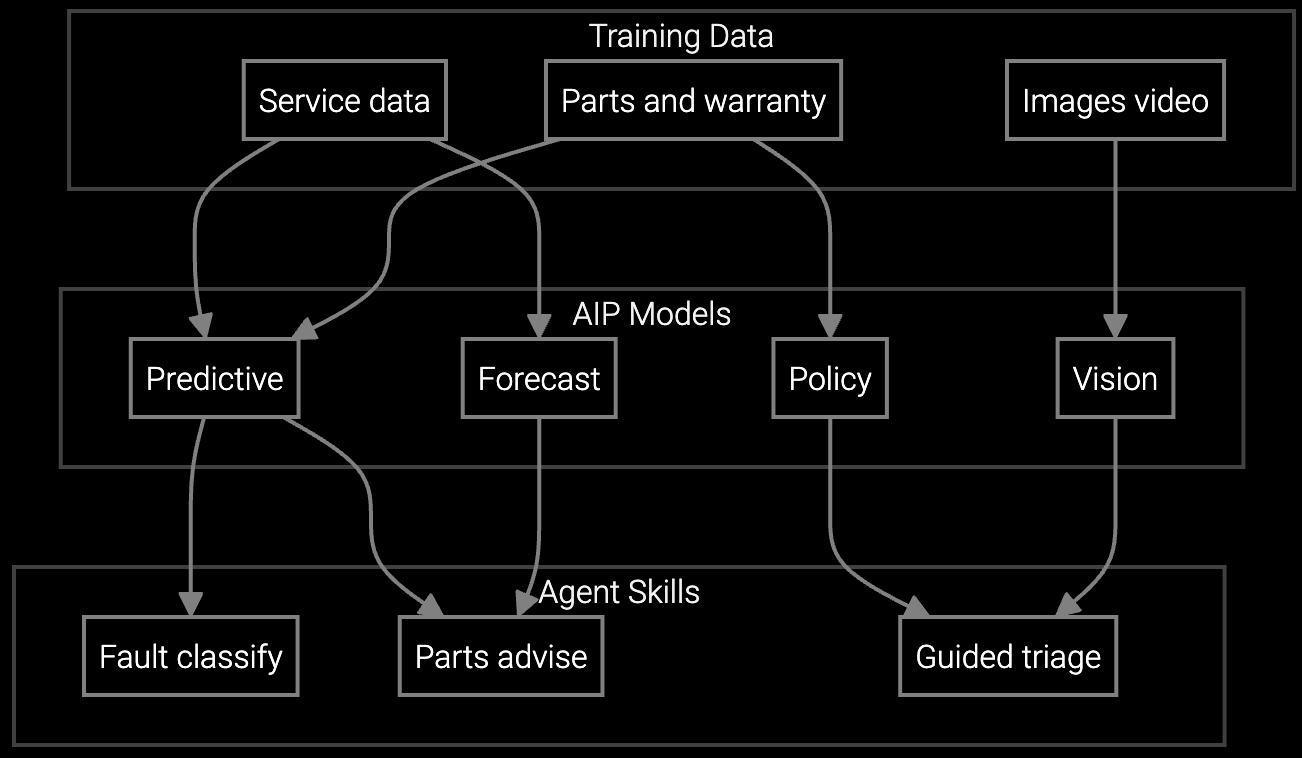
Mobile copilot provides real-time firmware-specific repair procedures, RMA eligibility checks, and diagnostic recommendations on-site at cell towers and data centers.
Network equipment manufacturers face 24/7 uptime SLAs where every minute of downtime costs enterprise customers thousands. Field service workflows must orchestrate across NOC diagnostics, depot parts inventory, technician expertise matching, and on-site troubleshooting without manual coordination delays. The first automation target: carrier-grade router failures where SNMP telemetry reveals predictable failure signatures days before customer impact.
API integrations pull real-time device configuration from your CMDB, cross-reference firmware CVE databases for security-driven RMAs, and trigger parts staging when log patterns match known failure modes. Technicians arrive with the correct SFP+ modules or power supplies already loaded, guided by procedures specific to the exact firmware version running on the failing device. This cuts MTTR from hours to minutes for Tier 1 ISPs.
Bruviti exposes RESTful APIs and webhook endpoints that connect to your FSM via standard integration patterns. When your FSM creates a work order, it triggers our workflow orchestration engine, which enriches the order with diagnostic context, parts predictions, and procedure recommendations before dispatching to the technician. You control the integration logic using our Python or TypeScript SDKs.
Yes. The platform provides workflow rule builders accessible via SDK where you define custom logic for parts substitution policies, SLA-based priority routing, and escalation thresholds. You deploy these rules as versioned code in your CI/CD pipeline, not through vendor UI configuration. Changes take effect immediately without vendor approval cycles.
No. Bruviti processes telemetry and work order data in-flight and returns enriched context without storing your data. SNMP traps, syslog streams, and device configurations flow through our analysis engine via encrypted API calls, then results return to your systems. You maintain full data sovereignty and can audit processing via our open API logs.
The workflow engine matches device firmware version to procedure libraries during work order creation. Technicians receive mobile-optimized guidance with firmware-specific troubleshooting steps, configuration rollback commands, and known issue workarounds. You populate procedure content via API using your existing documentation sources — Confluence, SharePoint, or custom knowledge bases.
Track first-time fix rate improvement, repeat truck roll reduction, and average on-site time decrease. Network OEMs typically see 12-18 point FTF lift within 90 days for router and switch failures, driven by better parts prediction and procedure surfacing. Measure before-and-after MTTR for critical device categories to quantify SLA compliance improvement.

How AI bridges the knowledge gap as experienced technicians retire.

Generative AI solutions for preserving institutional knowledge.

AI-powered parts prediction for higher FTFR.
See how Bruviti's API-first platform integrates with your FSM, inventory, and telemetry systems in 30 minutes.
Schedule Technical Demo