
Every repeat visit erodes margin and damages your brand with homeowners facing extended appliance downtime.
AI repair-versus-replace decisioning cuts follow-on appliance visits by 20 to 30% and reduces cost to serve 10 to 15%, per Bruviti deployment data, by solving the root cause of low first-time fix: the wrong diagnosis at the door. More than 60% of repair-versus-replace calls are auto-decided with explainable outcomes, so technicians fix it once.
Technicians arrive at customer homes without the correct replacement components, forcing return visits that double labor costs and extend customer downtime. Refrigerator compressor failures and HVAC control board issues drive the highest repeat visit rates.
Senior technicians retiring with decades of appliance troubleshooting knowledge leave junior staff unable to diagnose complex issues on first visit. Connected appliance failures and intermittent electrical faults challenge less experienced workforce.
Technicians dispatched without complete service history, warranty status, or previous failure patterns spend billable time gathering information that should be available before arrival. This extends on-site time and reduces daily service capacity.
Bruviti's platform analyzes historical failure patterns across your installed base to predict which parts technicians will need before dispatch. The system correlates symptom codes, model families, and component lifecycles to pre-stage correct replacement parts, reducing return visits caused by missing components. For appliance manufacturers serving high-volume residential markets, this transforms technician effectiveness.
The platform delivers real-time diagnostic guidance to technicians' mobile devices on-site, drawing from captured tribal knowledge and successful repair procedures. When facing complex refrigeration diagnostics or HVAC electrical issues, technicians receive step-by-step troubleshooting paths validated by your most experienced workforce. This accelerates resolution without requiring senior expertise on every call, protecting margin while maintaining customer satisfaction during peak seasonal demand.
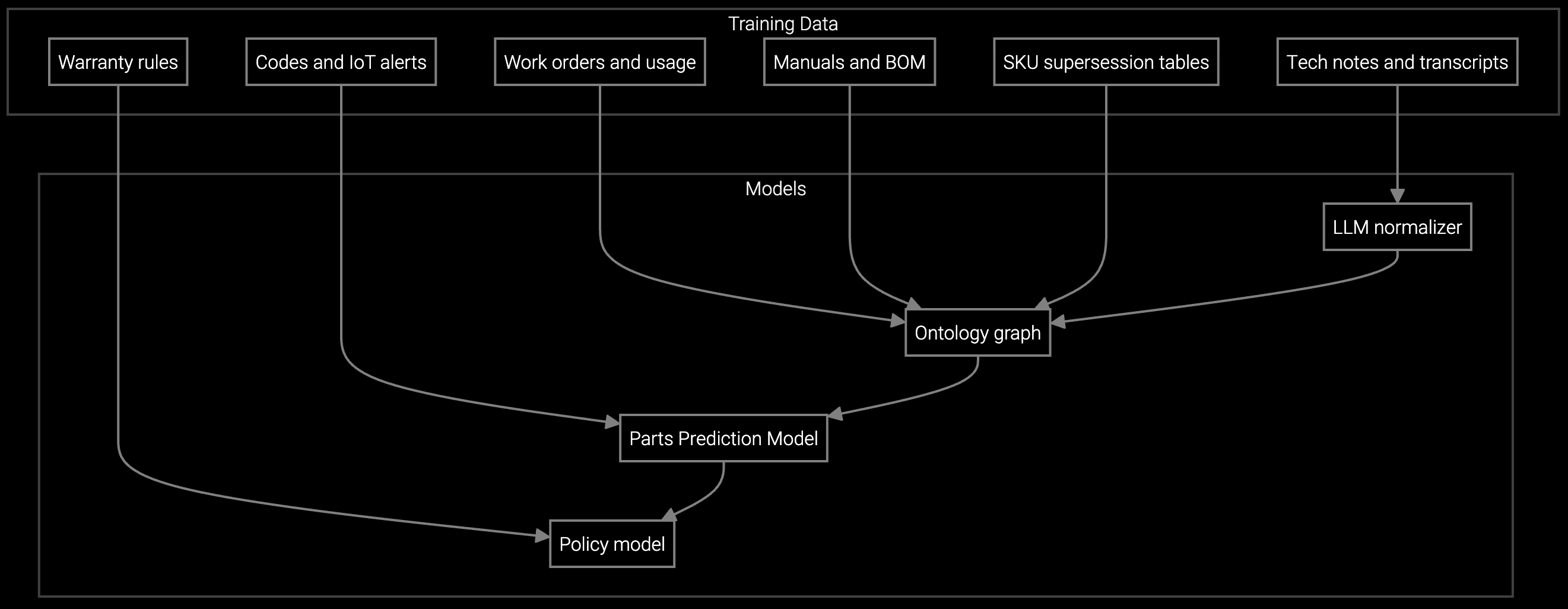
Predicts which refrigerator compressors, washer pumps, or HVAC control boards technicians need before dispatch, based on symptom analysis and model-specific failure patterns for residential appliances.
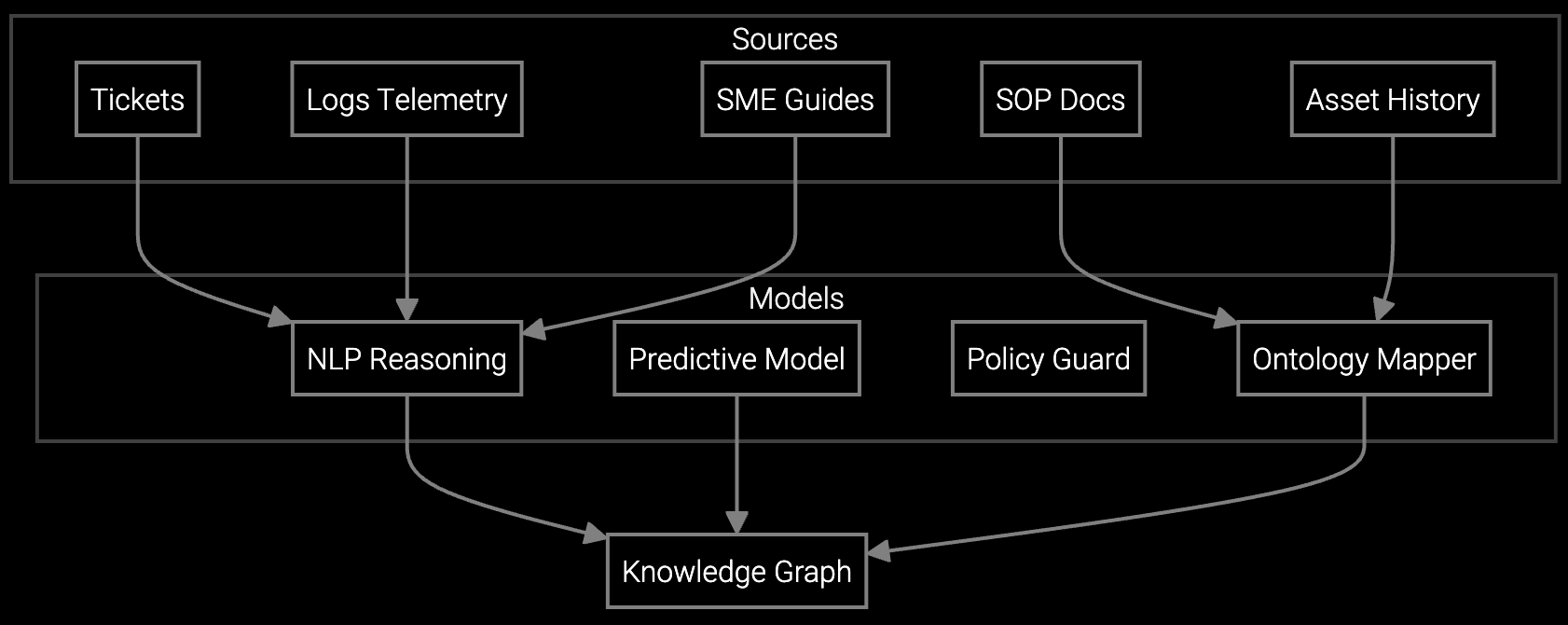
Correlates dishwasher error codes, refrigerator temperature anomalies, and HVAC performance symptoms with historical failure patterns to identify root cause faster for in-home repairs.
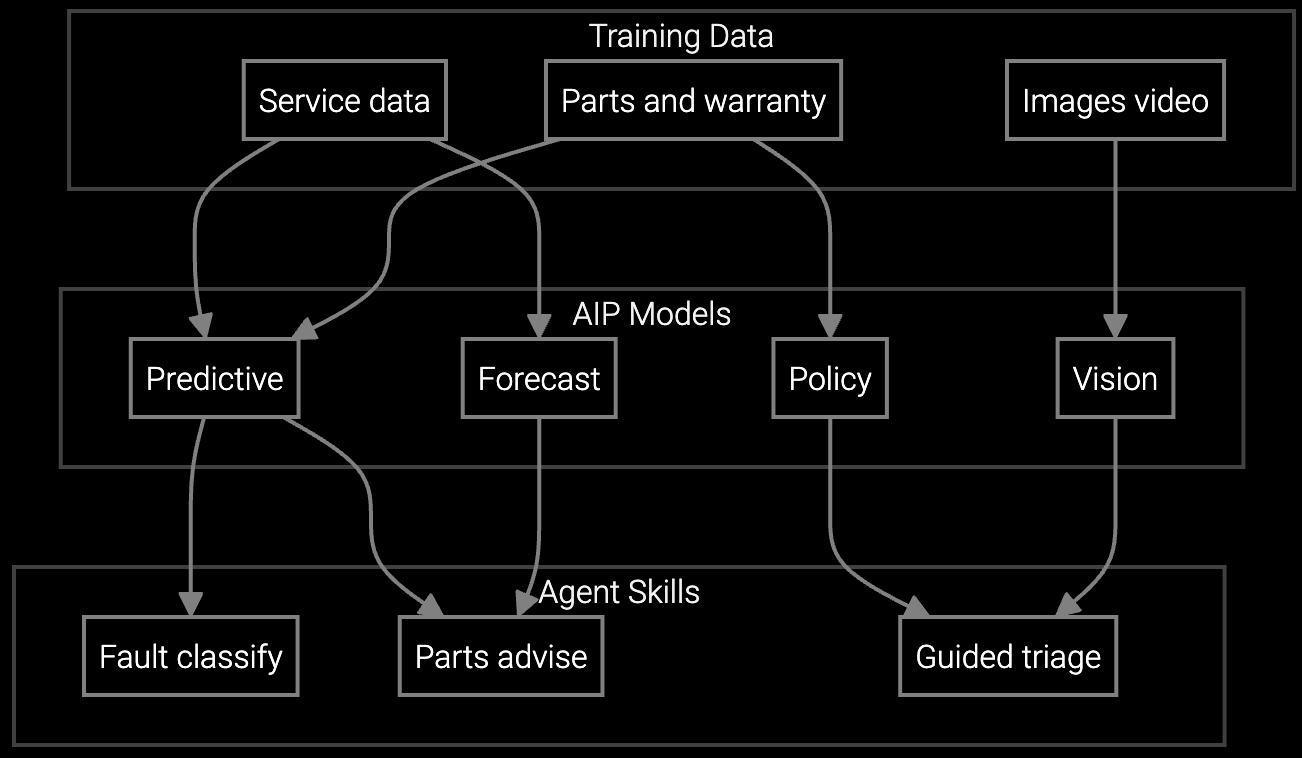
Mobile copilot provides real-time guidance for complex appliance diagnostics, including connected device troubleshooting and repair procedures captured from retiring senior technicians.
Appliance manufacturers face distinct first-time fix challenges driven by high service volume, thin margins, and consumer expectations for rapid resolution. Refrigerator failures during summer heat and HVAC breakdowns during temperature extremes create seasonal demand spikes where technician effectiveness directly impacts customer satisfaction scores and warranty cost containment.
Connected appliances add diagnostic complexity as IoT connectivity failures, software glitches, and sensor malfunctions require different expertise than traditional mechanical repairs. Technicians trained on conventional refrigeration or HVAC systems struggle with hybrid failures involving both physical components and digital interfaces, driving repeat visits that erode already-thin service margins.
The platform analyzes symptom descriptions, error codes, service history, and component lifecycle data across similar model families to identify failure patterns. It correlates these patterns with parts consumption records from successful first-time fixes, generating probabilistic recommendations for pre-staging. For appliances, this includes predicting compressor failures from temperature instability patterns or control board issues from error code sequences.
Most appliance manufacturers see measurable first-time fix rate improvement within 90 days of deployment on pilot product lines. Full ROI realization—including warranty cost reduction and technician utilization gains—typically requires two seasonal cycles to capture both HVAC peak summer demand and refrigeration winter baseline performance. CFO-acceptable payback periods range from 8-14 months depending on service volume and current first-time fix baseline.
The platform uses mobile observation to capture successful repair procedures as senior technicians complete actual service calls. It records diagnostic decision trees, troubleshooting sequences, and workaround techniques without requiring manual documentation. This creates reusable knowledge assets that guide less experienced technicians through complex refrigeration diagnostics or HVAC electrical troubleshooting that previously required years of field experience.
Yes, the platform integrates IoT telemetry data with traditional symptom analysis to diagnose hybrid failures. It correlates connectivity issues, sensor reading anomalies, and firmware versions with physical component failures to provide comprehensive diagnostic guidance. This addresses the growing challenge of connected refrigerators, smart HVAC systems, and WiFi-enabled kitchen appliances where failure modes span both digital and mechanical domains.
Higher first-time fix rates reduce warranty costs through multiple mechanisms: fewer repeat visits under extended service contracts, reduced parts consumption from accurate first-attempt diagnosis, and lower customer escalations that trigger goodwill replacements. Appliance manufacturers typically see warranty cost per unit decline 12-16% when first-time fix rates improve from 60-65% baseline to 75-80% target range, directly impacting CFO-reported warranty reserve requirements.

How AI bridges the knowledge gap as experienced technicians retire.

Generative AI solutions for preserving institutional knowledge.

AI-powered parts prediction for higher FTFR.
See how Bruviti helps appliance manufacturers improve first-time fix rates and protect service margins.
Schedule Executive Briefing