
Network downtime costs millions per hour. Technicians need instant answers when switches fail at 3 AM.
AI diagnostics auto-triage 60% of faults and speed resolution 20 to 30%, per Bruviti deployment data. Network field service teams deploy guided diagnostics that read the fault, suggest the fix, and flag the part needed, so technicians spend less time diagnosing on site and more time closing the call on the first visit.
Technicians arrive at network equipment with symptom codes but must search through 800-page configuration guides on laptops. Finding the right troubleshooting procedure takes longer than the actual fix.
Network gear fails in hard-to-reach locations. Technicians arrive with standard kits but need specialized optics or line cards. They complete diagnostics only to schedule a return trip for parts.
Senior network technicians who troubleshot legacy optical transport gear for 15 years are retiring. Their knowledge of firmware quirks and field workarounds exists only in memory.
Deploy Bruviti's mobile copilot directly to technician devices without disrupting existing workflows. The platform integrates with your FSM system to pull work orders, connects to SNMP traps and syslog feeds for live device status, and surfaces the exact troubleshooting procedure matched to the failure signature. Technicians open the app, see the job context, and get step-by-step guidance.
Start with a pilot team focused on one equipment category like routers or switches. Run for 30 days capturing every case. The platform learns from technician actions and corrections, building a knowledge base of actual field solutions. After validating first-time fix improvement and reduced documentation search time, expand to additional teams and equipment types. The system adapts to your terminology, part numbers, and documented workarounds.
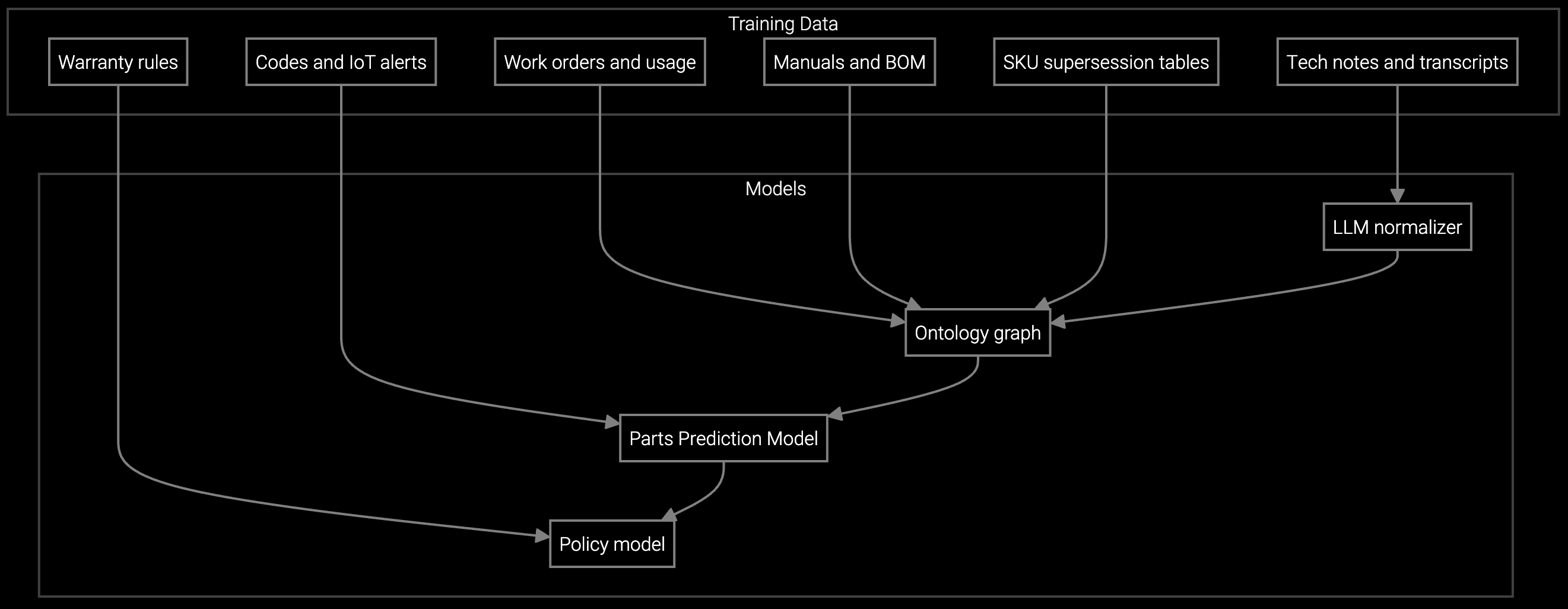
Predicts which optical transceivers or line cards technicians need for network equipment failures before dispatch, based on error logs and failure patterns.
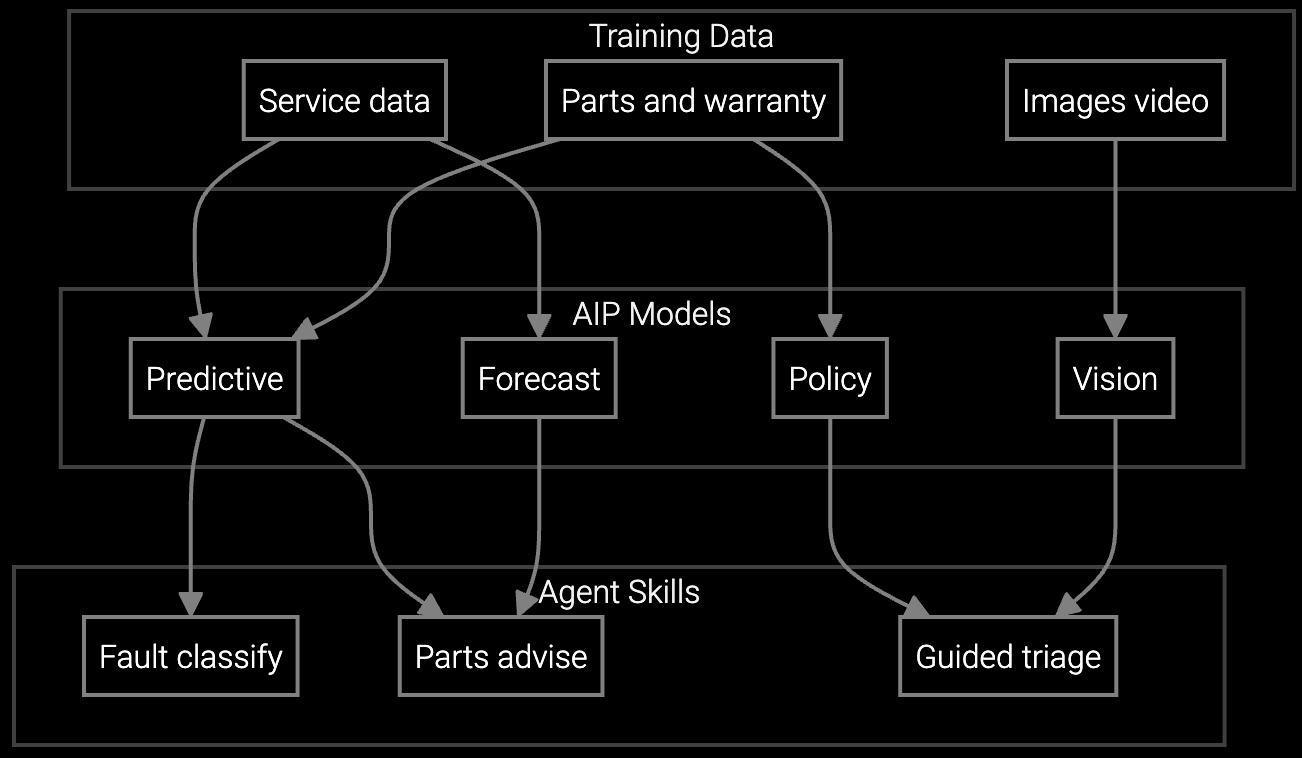
Mobile copilot provides router configuration procedures, firmware rollback steps, and diagnostic commands specific to installed network equipment on-site.
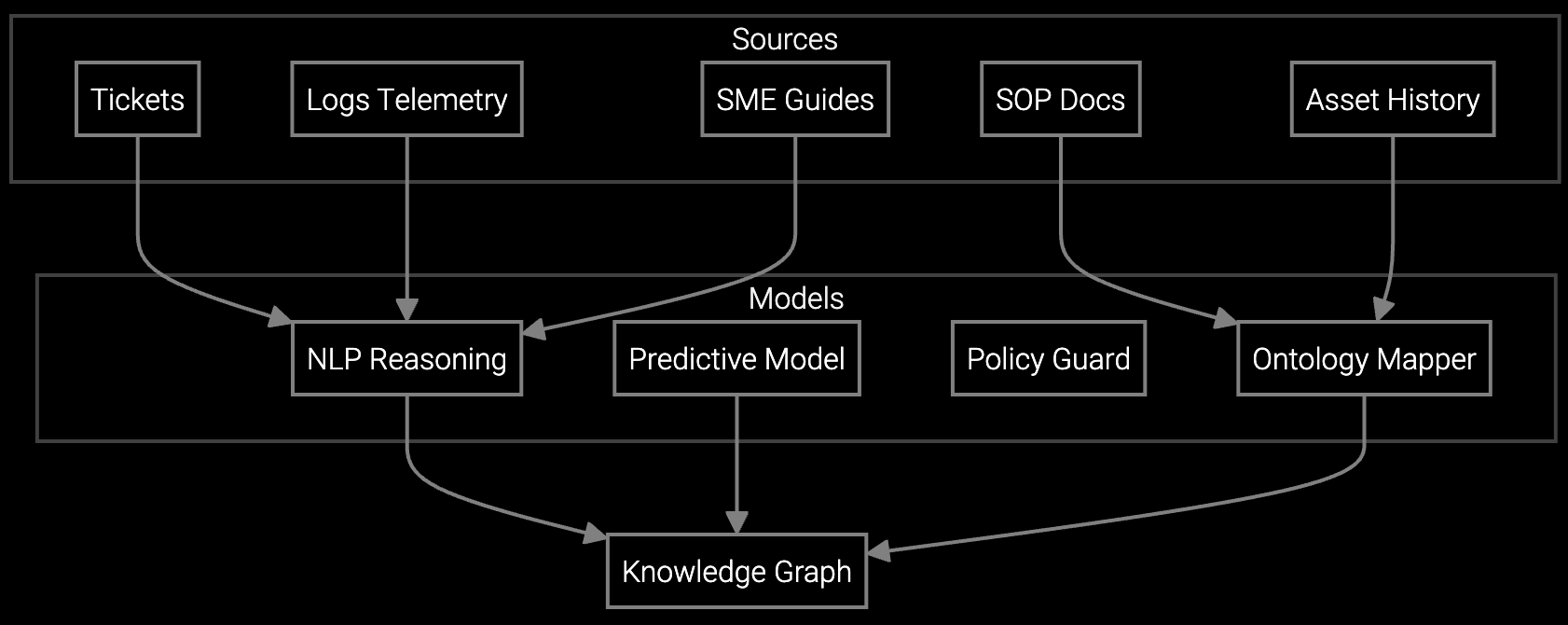
Correlates SNMP trap sequences and syslog patterns with historical switch failures and senior technician notes to identify root cause faster.
Network equipment OEMs support routers, switches, and optical transport gear deployed in remote NOCs, data centers, and telecom sites requiring 99.999% uptime. Failures trigger immediate technician dispatch because downtime impacts thousands of end users. Technicians diagnose complex firmware interactions, configuration errors, and hardware faults while customers monitor restoration progress.
Bruviti integrates with existing SNMP monitoring, syslog aggregation, and FSM dispatch systems. The platform ingests error logs, firmware versions, and configuration snapshots to provide technicians with device-specific troubleshooting. When a switch reports a spanning-tree loop or a router shows BGP flapping, technicians receive the exact diagnostic procedure and likely root cause based on that firmware version and network topology.
Initial setup takes 2 weeks including FSM integration and SNMP feed connection. Pilot teams start using the mobile copilot immediately. The platform learns from live cases during a 30-day training period before expanding to additional teams.
Bruviti deploys to existing iOS and Android devices. Technicians access the copilot through a mobile app or web interface on their current equipment. No specialized hardware required.
Minimum viable deployment requires FSM work order integration via REST API and read-only access to SNMP traps or syslog feeds. Optional integrations include parts inventory systems and configuration management databases for enhanced context.
Track first-time fix rate, average documentation time per job, and technician-reported satisfaction weekly. Compare pilot team metrics to baseline from 90 days prior. Target 15% FTF improvement and 70% reduction in manual search time within 30 days.
The platform records every diagnostic decision, workaround, and field note from senior technicians during normal job completion. This creates a searchable knowledge base encoding their expertise. Junior technicians access this captured knowledge through the mobile copilot when facing similar network failures.
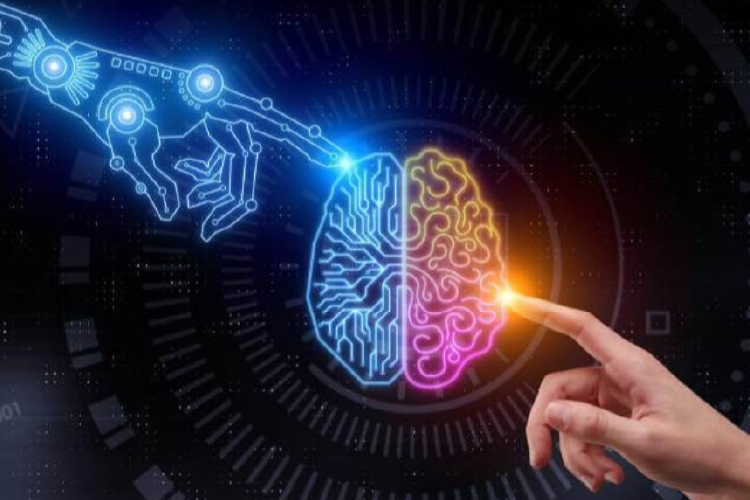
How AI bridges the knowledge gap as experienced technicians retire.
Generative AI solutions for preserving institutional knowledge.
AI-powered parts prediction for higher FTFR.
See how a 30-day pilot improves first-time fix rates and captures expertise before it walks out the door.
Schedule Demo