
When fab downtime costs exceed $1M per hour, sending technicians back for missing parts or expertise gaps is a margin killer.
Bruviti deployment data shows first-time fix rates climbing from 75-80% to 88% once AI guides field diagnostics and parts. For semiconductor OEMs, every avoided second visit protects a fab tool that loses thousands per idle minute, making FTFR the single metric that pays back an AI field-service program fastest.
Senior technicians with decades of lithography and etch tool experience are retiring faster than knowledge can be transferred. New hires face 18-24 month learning curves on complex equipment recipes and failure modes.
Chamber kits, RF generators, and FOUP components require precise prediction. Technicians arrive on-site only to discover the failed part differs from the initial diagnosis, triggering emergency shipments and extended fab downtime.
EUV and advanced node tools involve hundreds of subsystems with interdependent failure modes. Technicians spend hours diagnosing cascading issues across vacuum systems, optics, and contamination control without complete historical context.
Bruviti's platform captures retiring technician expertise into searchable knowledge systems that predict parts requirements before dispatch. The AI analyzes telemetry from lithography steppers, etch chambers, and metrology tools to correlate sensor drift patterns with historical failure modes documented by senior engineers.
When a work order arrives, the platform surfaces the three most likely root causes based on symptom matching across 10+ years of service history, pre-stages the correct chamber kits or consumables, and delivers mobile guidance to technicians on-site. This preserves institutional knowledge while reducing the operational cost of expertise loss and emergency parts shipments.
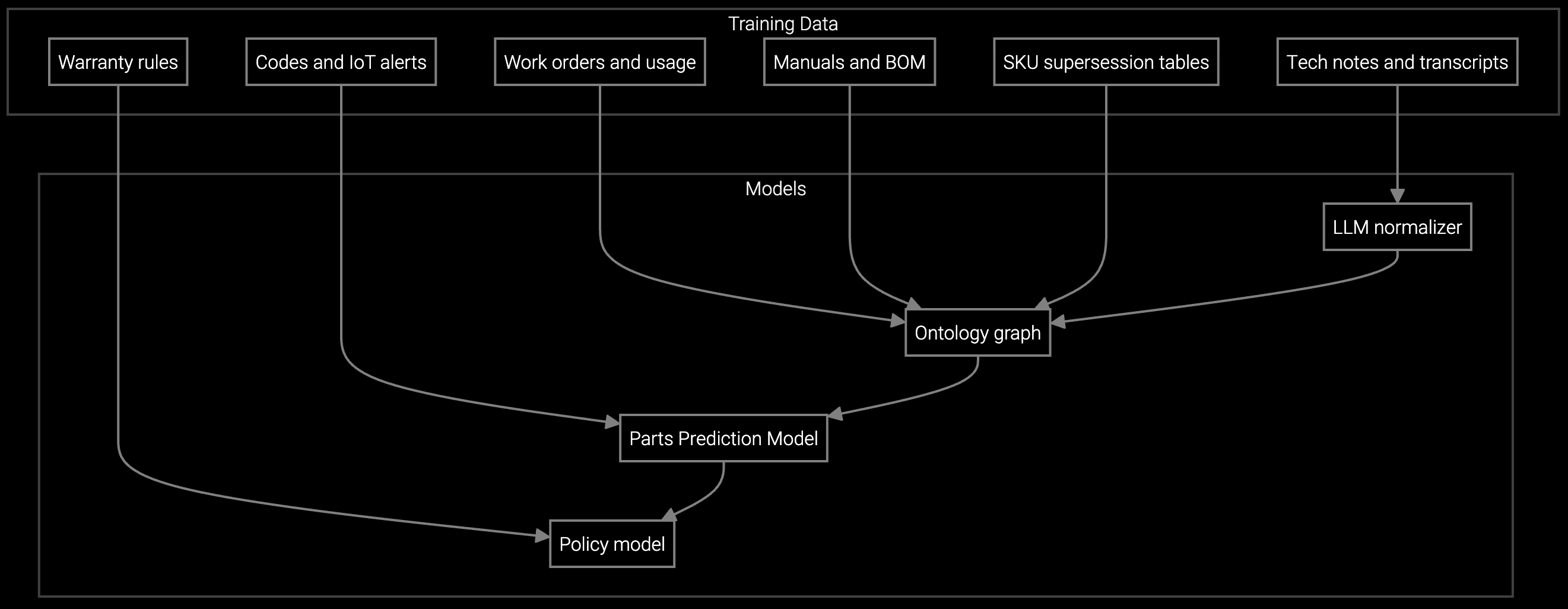
Predicts chamber kits, RF components, and FOUP parts for lithography and etch tools before technician dispatch, reducing emergency shipments to semiconductor fabs.
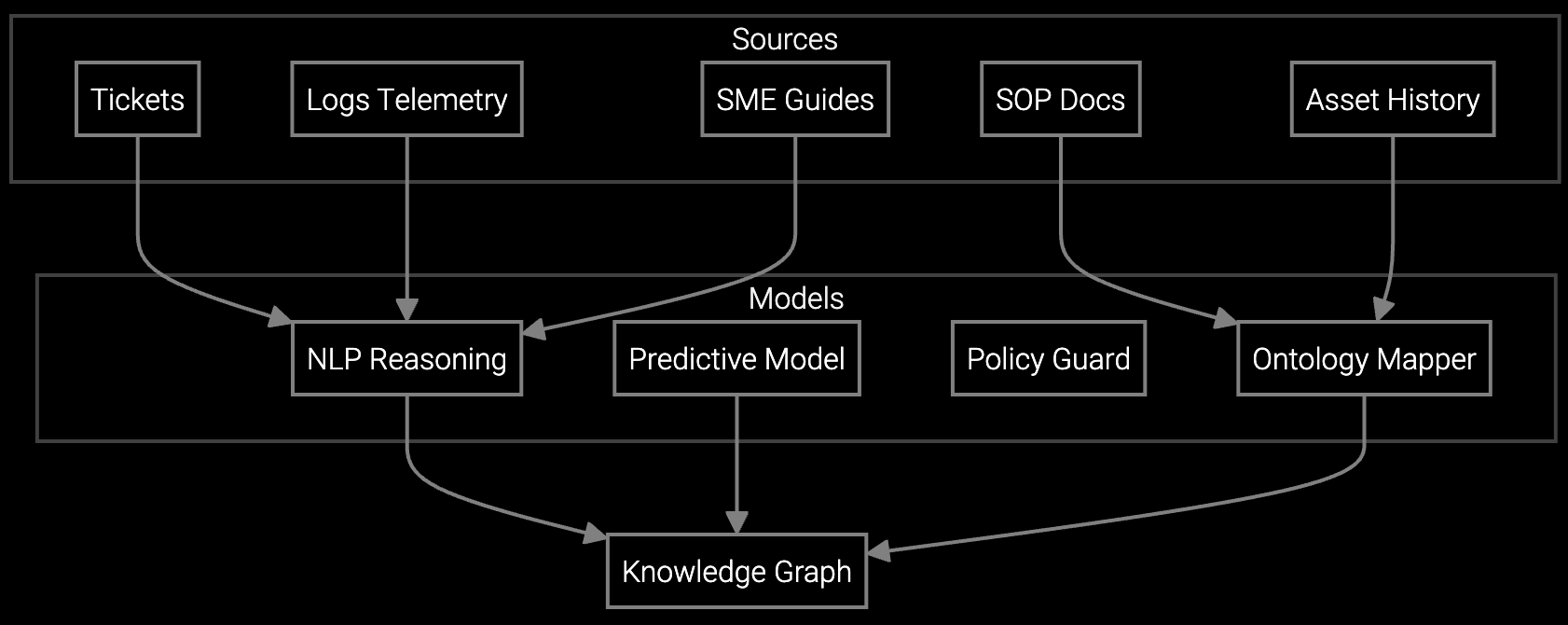
Correlates EUV tool symptoms with historical failure patterns and senior technician troubleshooting logs to isolate root cause in complex cascade failures.
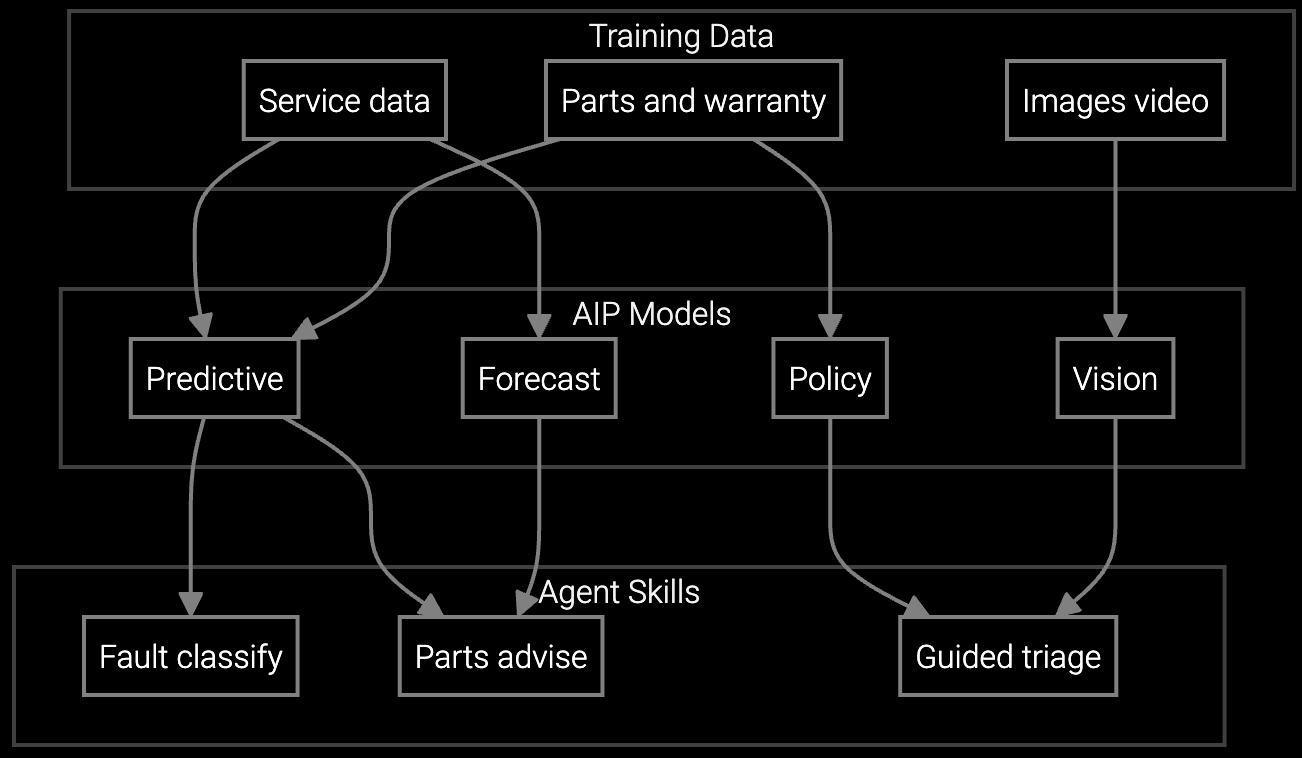
Delivers real-time procedural guidance and diagnostic recommendations on mobile devices for on-site semiconductor equipment repair at customer fabs.
Semiconductor OEMs support lithography systems, etch tools, deposition equipment, and metrology instruments where unplanned downtime cascades through wafer production schedules. When a 5nm process line halts due to EUV source failure or chamber contamination, every hour of extended diagnosis costs the fab customer over $1M in lost throughput.
The platform ingests telemetry from vacuum sensors, RF power monitors, gas flow controllers, and particle counters to detect anomalies before they trigger equipment faults. By correlating these signals with documented repair procedures from retiring process engineers, the AI reduces on-site troubleshooting time for complex interdependencies like optics alignment drift or recipe parameter creep across multi-chamber tools.
The combination of equipment complexity, expertise loss from retiring technicians, and inaccurate parts predictions creates a perfect storm. EUV and advanced node tools involve hundreds of subsystems with cascading failure modes that require years of tribal knowledge to diagnose correctly. When senior technicians retire, that expertise disappears, leaving newer technicians without the pattern recognition needed to predict which chamber components or consumables will actually need replacement on-site.
The platform analyzes historical service records, equipment telemetry patterns, and technician notes to identify which parts combinations correlate with specific symptom clusters. When a new work order arrives describing vacuum pressure drift or RF power instability, the AI matches the symptom signature against thousands of prior repairs to predict the correct chamber kit, generator module, or FOUP component with 85%+ accuracy. Technicians arrive with the right parts the first time, eliminating follow-up visits for missing components.
Retiring technicians carry decades of troubleshooting heuristics that never make it into official repair manuals. The platform captures this expertise through structured debriefs after complex repairs, converting tribal knowledge into searchable decision trees. When a newer technician encounters an ambiguous fault code or unexpected tool behavior, they access the same diagnostic logic that a 25-year veteran would apply, improving root cause identification speed and on-site repair confidence.
Pilot deployments on high-value tool categories like lithography or etch systems typically show 15-20% FTF improvement within 90 days as the AI learns from initial repairs and technician feedback loops. Full-scale deployments across all tool types reach 35-40% improvement by month six once knowledge capture covers the majority of common and edge-case failure modes. The fastest gains come from prioritizing tools with the highest downtime costs and most frequent repeat visit patterns.
Bruviti integrates with existing field service management systems, parts inventory databases, and equipment telemetry feeds without requiring wholesale platform replacement. The primary requirement is structured access to historical work orders, technician notes, and tool sensor data. Most semiconductor OEMs already collect this data but lack the AI layer to extract predictive patterns. Implementation involves API connections to FSM and ERP systems plus mobile app deployment for technician guidance, typically completed in 6-8 weeks.

How AI bridges the knowledge gap as experienced technicians retire.
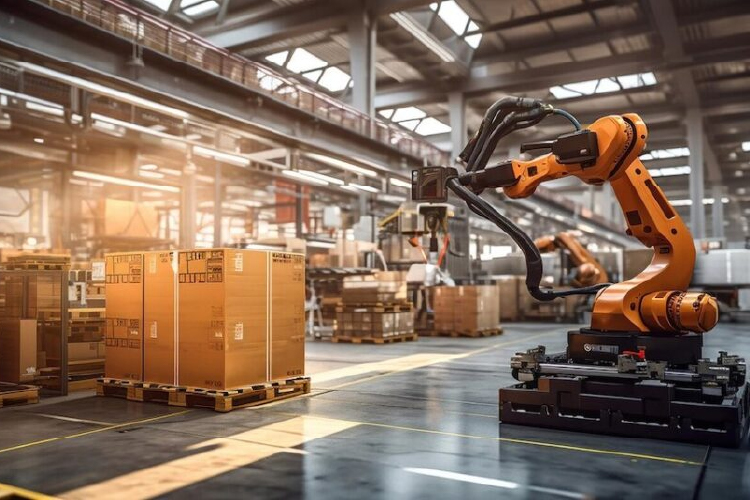
Generative AI solutions for preserving institutional knowledge.

AI-powered parts prediction for higher FTFR.
See how semiconductor OEMs are reducing repeat truck rolls by 40% while preserving retiring technician expertise.
Schedule Executive Briefing