
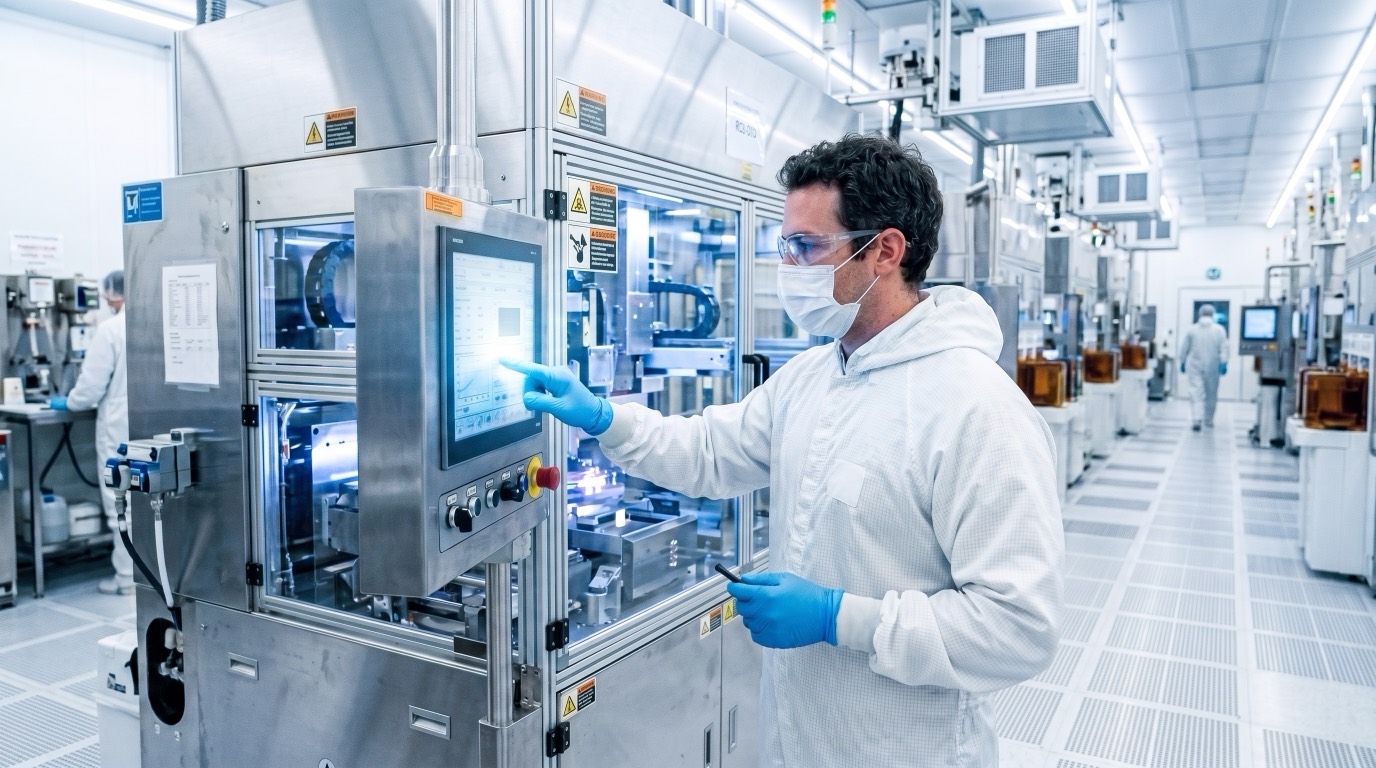


Deploy AI Diagnostics for Semiconductor Field Techs: Schedule in Under 3 Minutes
Fab downtime costs $1M per hour—technicians need real-time intelligence when chamber components fail at 3 AM.
In Brief
AI predictive-maintenance scheduling generates an optimized plan per fab area in under 3 minutes, per Bruviti deployment data. Builders wire fault telemetry, parts data, and tech availability into a single diagnostics layer so semiconductor field technicians arrive with the right fix the first time, cutting dispatch latency on high-cost tools.
Implementation Challenges for Semiconductor Field Service AI
Legacy FSM System Lock-In
Existing field service management platforms control dispatch and work orders but lack AI capabilities. Replacing them disrupts technician workflows and risks losing years of job history. You need extensibility without vendor switching.
Tool Telemetry Data Silos
Process data from lithography, etch, and metrology equipment lives in separate OEM portals. Technicians manually cross-reference chamber logs, recipe parameters, and alarm codes across three systems before diagnosing root cause.
Tribal Knowledge Evaporation
Senior process engineers who know recipe drift patterns and contamination sources are retiring. Junior technicians lack context to interpret wafer metrology anomalies or chamber seasoning cycles, causing repeat visits for solvable issues.
Headless AI Architecture for Field Service Integration
Bruviti's platform provides API-first AI capabilities that layer onto existing field service infrastructure without forcing a rip-and-replace. Use Python or TypeScript SDKs to connect tool telemetry streams, job history databases, and mobile workforce apps. The platform ingests EUV lithography sensor data, etch chamber logs, and metrology results to build diagnostic models that run locally or on-premise.
Deploy mobile copilots that deliver root cause guidance and parts predictions to technician tablets during on-site visits. The SDK handles model inference, telemetry parsing, and knowledge retrieval while your team maintains full control over data storage and model retraining pipelines. No vendor lock-in—your code, your infrastructure, your data sovereignty.
Why Builders Choose This Approach
- +
Deploy in 6 weeks using standard REST APIs and Python libraries, avoiding 18-month FSM migrations.
- +
Reduce repeat visits 40% by surfacing tribal knowledge at point of failure, protecting margin on service contracts.
- +
Maintain data sovereignty with on-premise model inference, meeting semiconductor IP and export control requirements.
See It In Action
Service Parts Prediction
Predict chamber kits, showerheads, and RF generators needed before dispatch, reducing truck rolls for lithography and etch tools by 35%.
Knowledge-Driven Root Cause Analysis
Correlate wafer yield drops with recipe parameter drift and contamination events using historical failure patterns from senior engineers.
Decision Support for Field Technicians
Deliver real-time diagnostic guidance and chamber seasoning procedures to mobile devices during 2 AM fab emergencies.
Semiconductor-Specific Implementation Patterns
Fab Equipment Telemetry Integration
Semiconductor tool OEMs generate process telemetry at millisecond intervals—chamber temperature, gas flow rates, RF power, and wafer position data. Use the platform's Python SDK to ingest SECS/GEM streams, parse recipe parameter logs, and correlate metrology results from optical inspection tools. The SDK handles schema normalization across Applied Materials, Lam Research, and ASML equipment formats.
Deploy diagnostic models that detect chamber component degradation before OEE drops. Technicians receive mobile alerts when plasma uniformity drifts or consumable parts approach end-of-life thresholds, enabling proactive PM scheduling that avoids unplanned downtime during production runs.
Implementation Roadmap
- +
Pilot on highest-downtime tool type first—typically etch or lithography—to prove ROI before scaling fabrication-wide.
- +
Connect SECS/GEM telemetry feeds and ERP parts databases using REST APIs, unlocking predictive parts staging for PMs.
- +
Track first-time fix rate and MTTR for target tools over 90 days to quantify technician effectiveness gains.